


This is CNBC’s Morning Squawk newsletter. Subscribe here to receive future editions in your inbox.
Happy Monday. This article about the future of film studios’ animated slates was the reminder I needed to go see “Hoppers,” as it feels like I’m the only one of my friends who hasn’t.
Stock futures are higher this morning as Wall Street looks to rebound from a losing week.
Here are five key things investors need to know to start the trading day:
1. Hard truths
Traders work on the floor at the New York Stock Exchange (NYSE) in New York, US, on Monday, March 9, 2026.
Michael Nagle | Bloomberg | Getty Images
The S&P 500 and Nasdaq Composite both recorded their worst weeks of 2026 last week, as the U.S.-Iran war continued to weigh on investor sentiment. As CNBC’s Matt Peterson writes, the next few weeks will be crucial for the global oil market and, by extension, the U.S. economy.
Here’s what to know:
2. Check cleared
Security screening at Los Angeles International Airport on Friday, March 27, 2026.
Myung J. Chun | Los Angeles Times | Getty Images
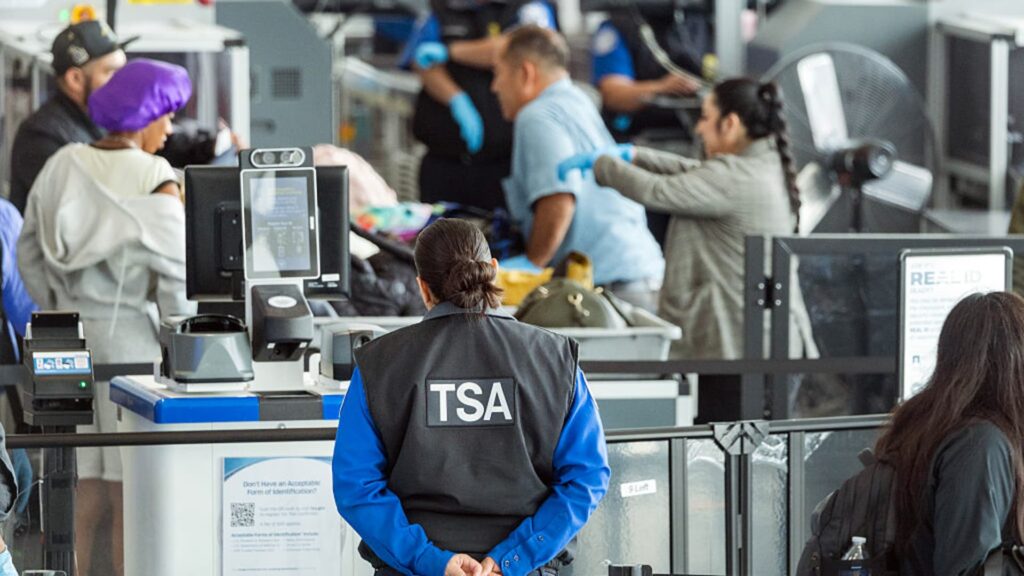
Trump signed an executive order over the weekend to pay Transportation Security Administration employees after a deal to end the partial government shutdown crumbled in Congress. TSA agents will begin getting paid as soon as today, the Department of Homeland Security said Friday.
As CNBC’s Leslie Josephs reports, travelers are having their patience tested. In addition to long wait times at airport security checkpoints, they may also have to be ready to shell out for higher fares due to rising oil prices.
Are you flying in the near future? Bookmark CNBC’s live TSA wait-time tracker.
3. In-sight
Mark Zuckerberg, CEO of Meta, is seen in the U.S. Capitol after a meeting in the office of Senate Majority Leader John Thune, R-S.D., on Thursday, March 26, 2026.
Tom Williams | CQ-Roll Call, Inc. | Getty Images
Meta‘s pair of courtroom defeats last week showed that tech companies can open themselves up to legal liability when they hire researchers to track how their products impact users. As CNBC’s Jonathan Vanian notes, that could have big implications for the artificial intelligence industry.
The two Meta cases shared a theme: The Facebook parent kept its insights on the dangers of its products under wraps. As former Meta executive Brian Boland told CNBC, the company appeared to portray a public image that contradicted what its internal research was showing.
AI companies have similarly invested in research to study the implications of widespread use of their technology in society. But with the precedent now set by Meta’s legal losses, these firms will have to ask themselves whether funding such research is worth the potential risk.
4. Vibe developing?
A screen displays the logo and trading information for Eli Lilly and Company on the floor at the New York Stock Exchange (NYSE) in New York City, U.S., Nov. 21, 2025.
Brendan McDermid | Reuters
Eli Lilly over the weekend struck a $2.75 billion deal with Insilico Medicine focused on bringing drugs developed with AI to the global market. Eli Lilly’s shares ticked higher before the bell this morning.
As CNBC’s Evelyn Chang reports, Insilico has developed more than two dozen drugs using generative AI tools, with nearly half in clinical stages. The two companies have collaborated since inking an AI-based software licensing agreement in 2023. Through the deal, Insilico will join Lilly’s Gateway Labs community focused on biotech development.
5. I choose you
PASADENA, CALIFORNIA – JANUARY 23: In this photo illustration, collectible Pokémon cards are viewed in a store on January 23, 2026 in Pasadena, California. A surge in value for Pokémon cards in recent years has triggered a string of robberies in Southern California, along with New York, Texas, and Massachusetts in recent months. (Photo Illustration by Mario Tama/Getty Images)
Mario Tama | Getty Images News | Getty Images
Influencer Logan Paul’s February sale of a Pikachu Illustrator card for more than $16 million caught investors’ attention. As CNBC’s Brandon Gomez writes, it exemplifies how flush the market is for rare Pokémon cards.
Card Ladder’s Pokémon card index far exceeded the S&P 500’s long-term average annual gain during booms seen around the pandemic and last year. The price surge can be explained by the increasing amount of well-off buyers willing to spend big for a small number of sought-after cards.
That’s helping fuel growth in the broader category of non-sport trading cards. Spending on these collectibles jumped 350% between 2020 and 2025, according to Circana.
The Daily Dividend
Here’s what we’re watching during the holiday-shortened trading week.
- Tuesday: McCormick earnings (before the bell); Beyond Meat and Nike earnings (after the bell); February Job Openings & Labor Turnover data
- Wednesday: March ADP jobs data; February retail sales data
- Friday: Stock market closed for Good Friday; March nonfarm payrolls report
— CNBC’s Sean Conlon, Matt Peterson, Jeff Cox, Spencer Kimball, Anniek Bao, Yee Ling Shan, April Roach, Sam Meredith, Dan Mangan, Leslie Josephs, Michele Luhn, Jonathan Vanian, Evelyn Chang and Brandon Gomez, as well as the Associated Press, contributed to this report. Josephine Rozzelle edited this edition.