


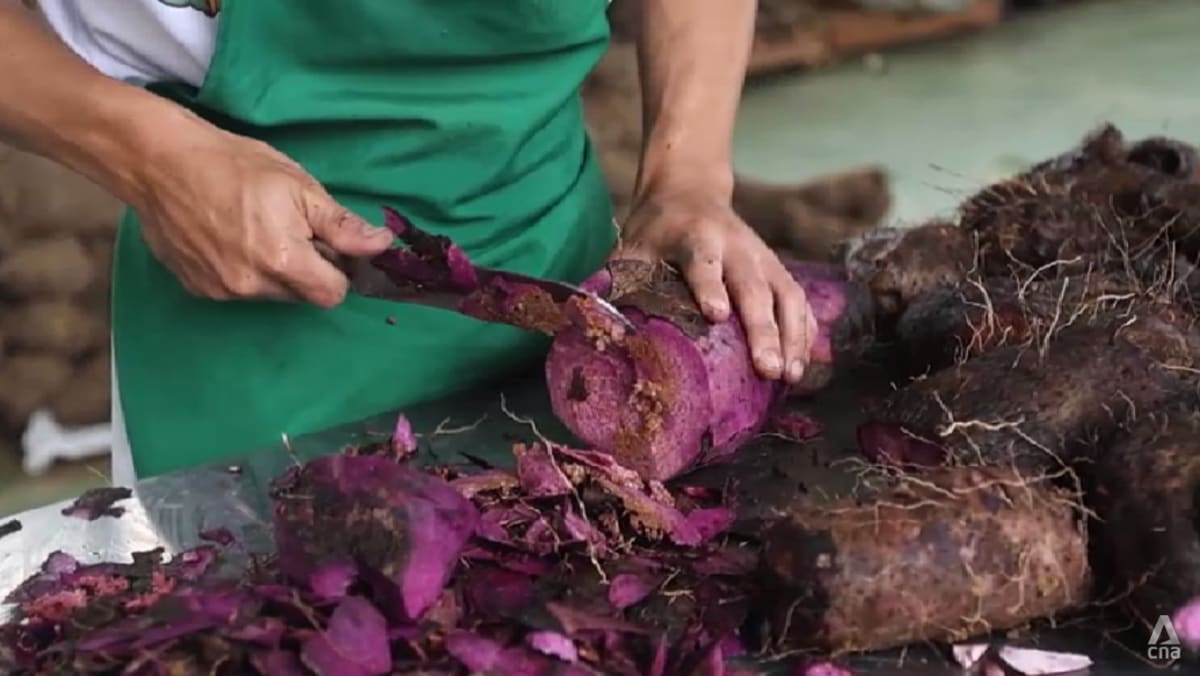
Local authorities are encouraging its cultivation as part of disaster preparedness.
“We suggest that they plant palawan. Because even if it takes a while to grow or harvest, it will be very useful when calamities strike,” said municipal agriculturist Crescencio Catayong.
There are also plans to institutionalise its production through a proposed root crop research centre.
PUSH FOR SUSTAINABLE FARMING
Experts say the Philippines should invest more in indigenous crops and sustainable farming practices, including organic cultivation.
“Our farmers opt to go organic because they can earn more from their crops, or the ube turns out more fleshy when they use organic fertiliser,” said organic agriculture specialist Graciel Gacutan.
Indigenous crops, often marginalised by higher-value agricultural products, could play a critical role in feeding communities as climate shocks worsen.
Whether Philippine-grown ube continues to appear in cafes and dessert shops worldwide may depend on one thing – supporting the farmers who grow it.
For those on the frontlines of climate change, the future of food may lie not just in high-demand crops, but in rediscovering the resilience of traditional ones.

