


NEWYou can now listen to Fox News articles!
A bold museum heist overseas is drawing global attention and raising new questions about whether similar crimes could happen in the United States.
Works attributed to masters like Pierre-Auguste Renoir, Paul Cézanne and Henri Matisse were swiped from the Magnani Rocca Foundation in Italy the night of March 22-23. The theft made international headlines, but an expert says the real story goes beyond the crime itself.
Geoff Kelly, a retired FBI agent who worked on the bureau’s Art Crime Team, told Fox News Digital that these types of crimes are more common than many people realize and not nearly as sophisticated as they may appear.
“Stealing the artwork is easy,” Kelly said. “Kicking in a door, breaking a window, and running off with it is not difficult.”
VIDEO SHOWS TERRIFYING MOMENT MASKED CALIFORNIA BURGLARS BLITZ HIGH-END STORE, ESCAPE IN LUXURY SUVS
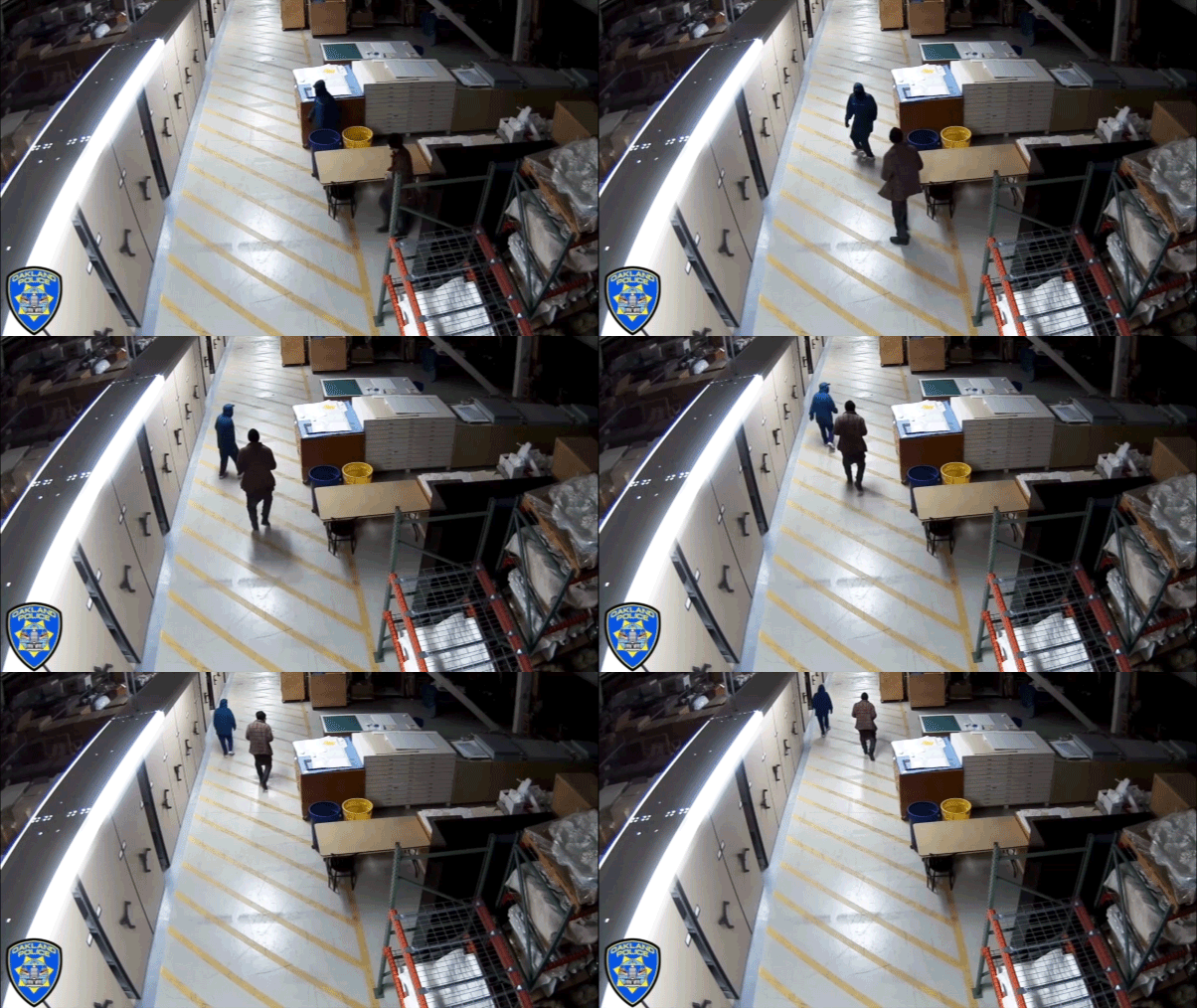
The suspects allegedly stole more than 1,000 historical artifacts from the museum, in what officials are calling a “crime of opportunity.” (Oakland Police Department/TMX)
That reality is fueling concerns about vulnerabilities inside museums, including in the U.S.
Kelly explained that museums face a built-in challenge when it comes to security. Unlike banks or vaults, they are designed to be open, accessible and inviting to the public—an environment that can also be exploited by criminals.
“Museums are always going to be vulnerable,” he said. “They’re not vaults—they’re designed to be open and welcoming.”
CRIMINALS ARE USING ZILLOW TO PLAN BREAK-INS. HERE’S HOW TO REMOVE YOUR HOME IN 10 MINUTES.
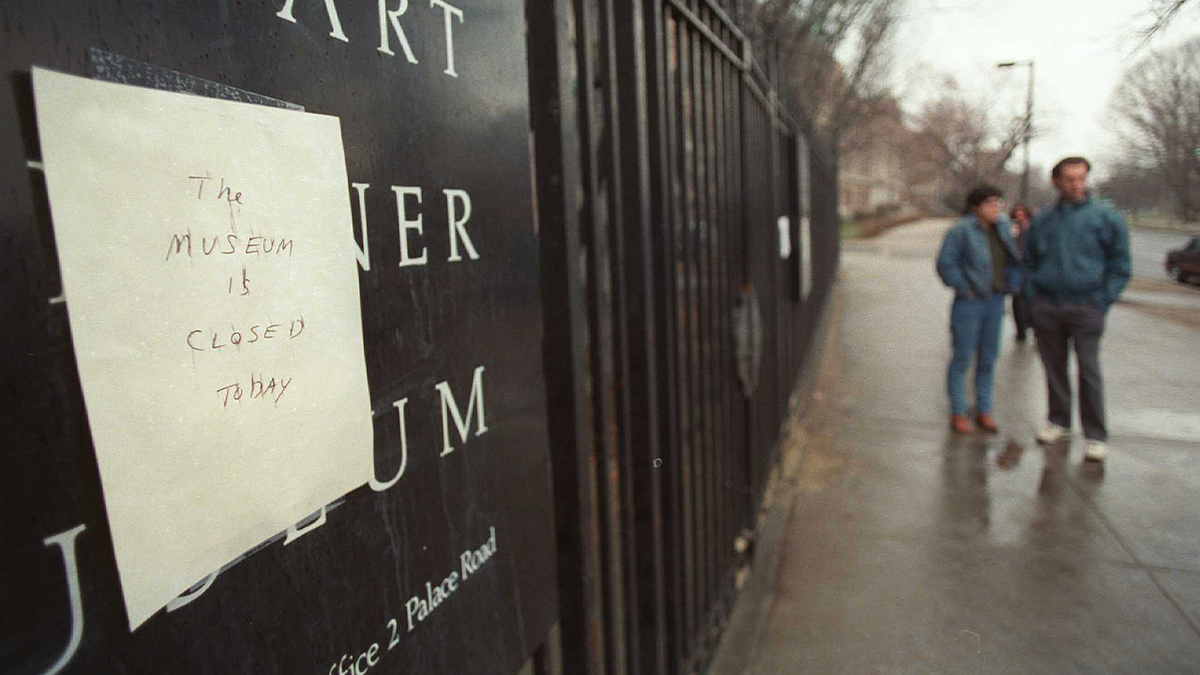
The Stewart Gardner Museum was closed due to a robbery in 1990. (Tom Herde/The Boston Globe via Getty Images)
The U.S. has seen its share of high-profile art thefts, including the infamous Isabella Stewart Gardner Museum robbery in Boston, where thieves made off with 13 works valued at roughly $500 million in March 1990, which still remains unsolved decades later, according to Boston.com. Kelly himself worked that case for years, underscoring how even major institutions can be targeted.
While Hollywood often portrays art heists as highly coordinated operations carried out by sophisticated crews, Kelly said many real-world cases are far more straightforward.
“These aren’t elaborate schemes,” he said. “A lot of times it’s smash-and-grab.”
FOUR MORE ARRESTED IN LOUVRE JEWEL HEIST, AUTHORITIES SAY
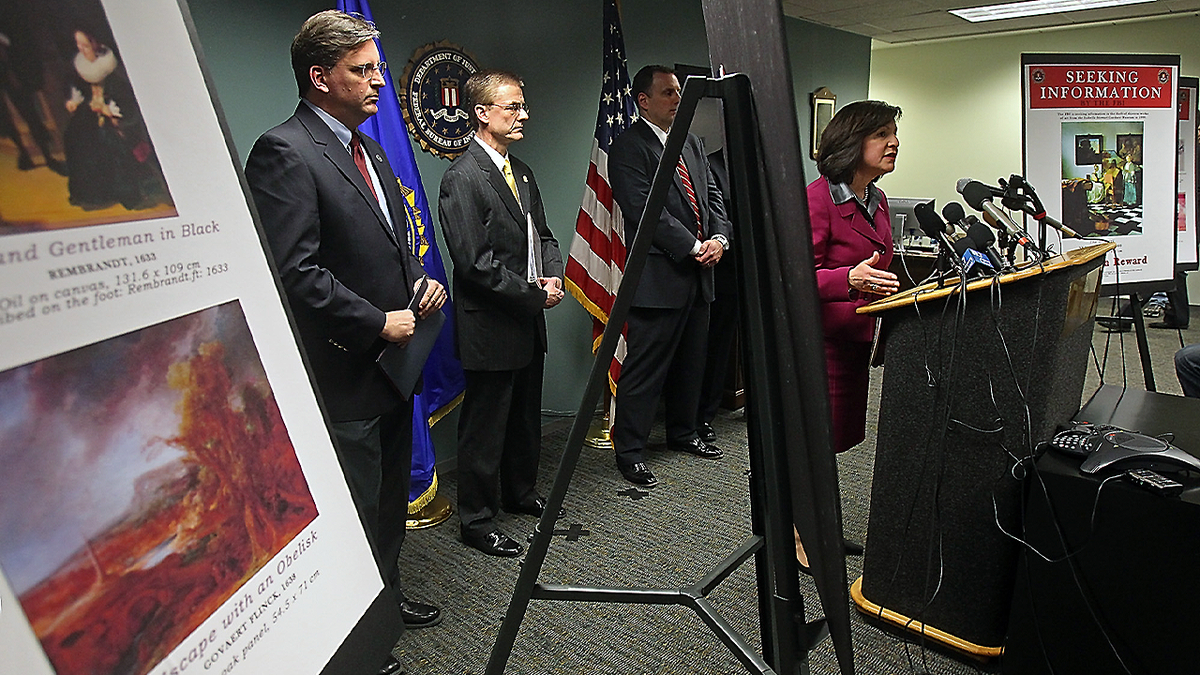
Anthony Amore, director of security at the Isabella Stewart Gardner Museum (left); Richard DesLauriers, special agent in charge of the Boston Field Office of the FBI (2nd from left); Jeff Kelly, FBI agent in charge of the art theft investigation; and U.S. Attorney Carmen Ortiz at a news conference in the FBI office on the state of the Isabella Stewart Gardner Museum art heist investigation, Friday, March 15, 2013. (John Wilcox/MediaNews Group/Boston Herald via Getty Images)
In some cases, thieves may have insider knowledge, whether from current or former employees or simply by observing security practices. But Kelly said many crimes rely on basic weaknesses that can be addressed with relatively simple fixes.
Kelly added that small changes, like keeping high-value pieces away from exits or using more secure mounting hardware, can make a meaningful difference by slowing down a thief and giving law enforcement more time to respond.
“Even those extra few seconds can matter,” Kelly said.
LOOTERS’ ARREST UNCOVERS 2,000-YEAR-OLD WORKSHOP NEAR JERUSALEM BIBLICAL PILGRIMAGE PATH
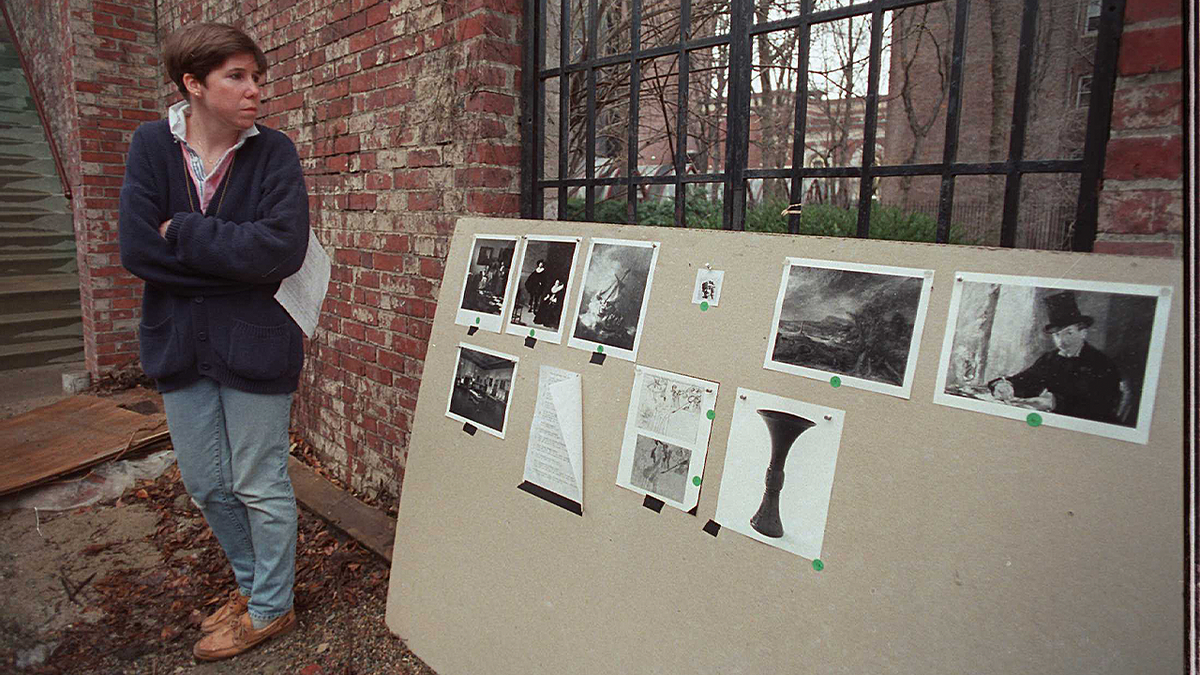
Karen Haas, acting curator of the Isabella Stewart Gardner Museum in Boston, during a news conference outside the museum to show photos of the stolen $300 million in artwork taken in an early morning robbery. (Tom Herde/The Boston Globe via Getty Images)
Kelly also noted that museums can be especially vulnerable after hours, when buildings are empty and security measures are put to the test. He said even basic, low-cost upgrades to surveillance and physical security can make a significant difference, adding that with today’s technology, it is increasingly difficult for criminals to avoid leaving a trail.
GET BREAKING NEWS BY EMAIL
Despite the bold nature of these thefts, Kelly says the biggest challenge for criminals often comes after they leave the museum.
“The most difficult thing of all is monetizing it,” Kelly said.
GOT A TIP?
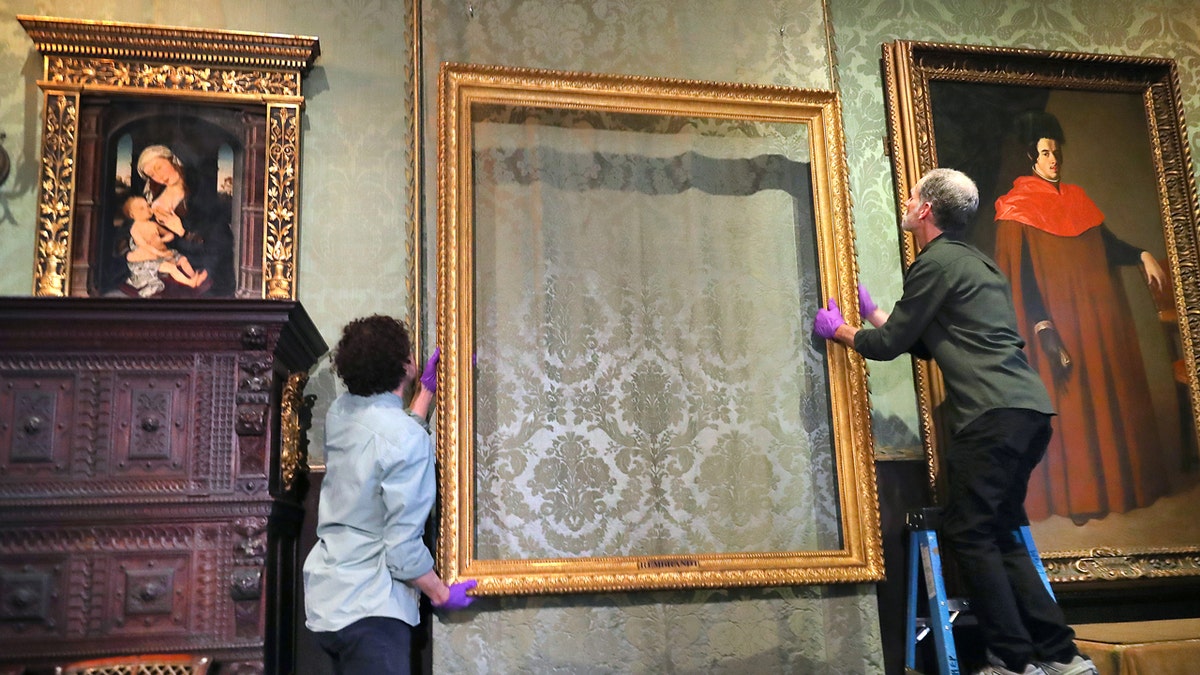
Isabella Stewart Gardner Museum conservators restore empty frames in advance of the 35th anniversary of 13 artworks being stolen from the museum in a brazen heist. (John Tlumacki/The Boston Globe)
Contrary to popular belief, Kelly said that there is little demand for well-known stolen masterpieces. Advances in technology, including the ability to instantly identify artwork through image searches, have made it increasingly difficult to sell stolen pieces, he added.
“There is no real market,” Kelly said. “Over time, it becomes a liability rather than an asset.”
FOLLOW US ON X
That reality can leave thieves stuck with artwork they cannot easily move, sometimes leading to pieces being abandoned or quietly returned.
Law enforcement, meanwhile, has more tools than ever to track suspects. Surveillance cameras, license plate readers and other technologies make it difficult for criminals to avoid leaving a trail.
“With the amount of surveillance today, it’s very hard not to be captured somewhere,” Kelly said.
Still, he cautioned that these types of crimes continue to happen every year, often targeting museums around the world.
CLICK HERE FOR MORE US NEWS
And while the latest heist took place overseas, the warning for American institutions is clear.
The same factors that make museums accessible and appealing to the public can also make them attractive targets for criminals—underscoring the importance of staying vigilant and continuously improving security measures.
CLICK HERE TO DOWNLOAD THE FOX NEWS APP
Beyond the financial loss, Kelly said the stakes are much higher.
“These works represent our shared cultural heritage,” he said. “When they’re stolen, we all lose.”

