


WHY THE WEST BENGAL WIN WAS SO SIGNIFICANT
West Bengal has long been a fortress of opposition politics.
Chief Minister Mamata Banerjee, a fierce critic of Modi and a key member of India’s opposition alliance, has governed the state since 2011.
But her administration had faced mounting criticism over issues such as corruption allegations, unemployment and women’s safety. Infiltration into India was also a key issue for the state which borders Bangladesh.
The BJP mounted an intensive campaign led by Modi, his closest aide and Home Minister Amit Shah, as well as several senior party leaders, focusing on what they called illegal immigration from Bangladesh and the weak local economy under Banerjee.
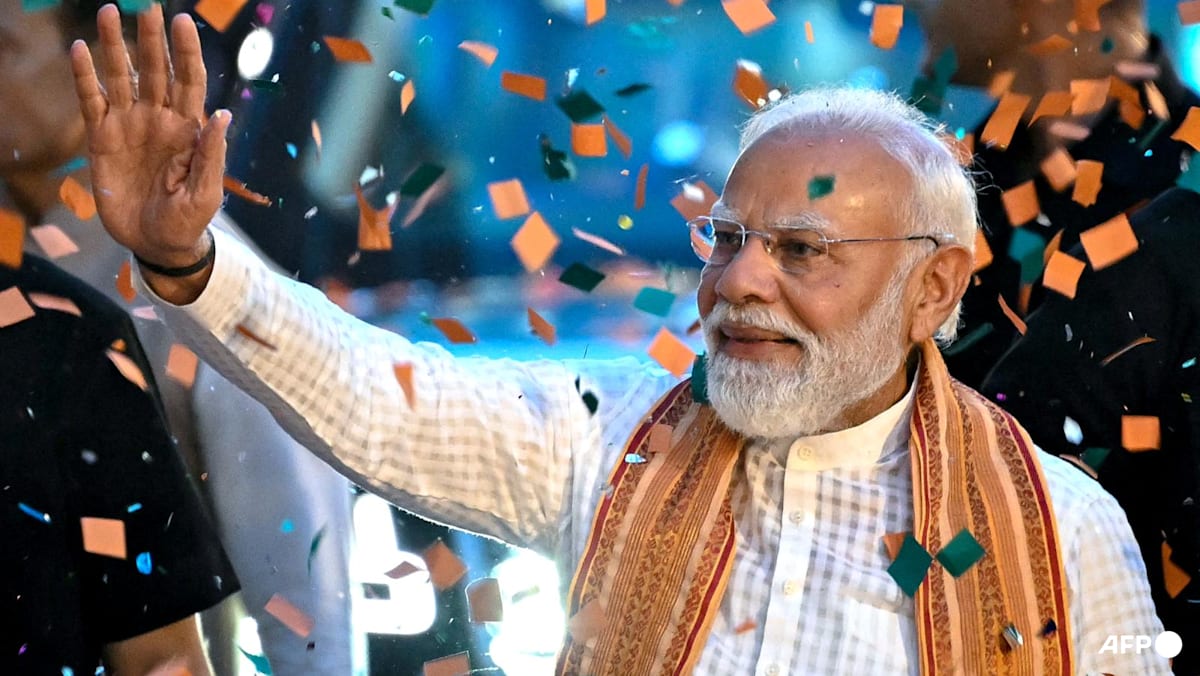
“The 2026 West Bengal Assembly Elections will be remembered forever,” Modi said on social media when election results emerged. “People’s power has prevailed and BJP’s politics of good governance has triumphed.”
Analysts said the outcome reflects a convergence of factors – the BJP’s highly organised campaign machinery and controversial revisions to voter rolls that critics say disproportionately affected minority communities.
The removal of about 12 per cent of West Bengal’s 76 million voters played a role in the BJP’s win, said Dr Ronojoy Sen, senior research fellow and research lead at the Institute of South Asian Studies and the South Asian Studies Programme in the National University of Singapore.
But the scale of the victory suggests broader shifts, Dr Sen told CNA.
He pointed to significant anti-incumbent sentiment and a general feeling that Banerjee might have lost touch with the electorate.
Banerjee suffered a personal blow, losing her own seat of Bhabanipur to BJP’s Suvendu Adhikari by more than 15,000 votes.
“The anti-incumbents … combined with the BJP’s formidable electoral machinery and planning at both the central level as well as at the micro level, resulted in this extraordinary victory for the BJP in Bengal,” Dr Sen said.

