


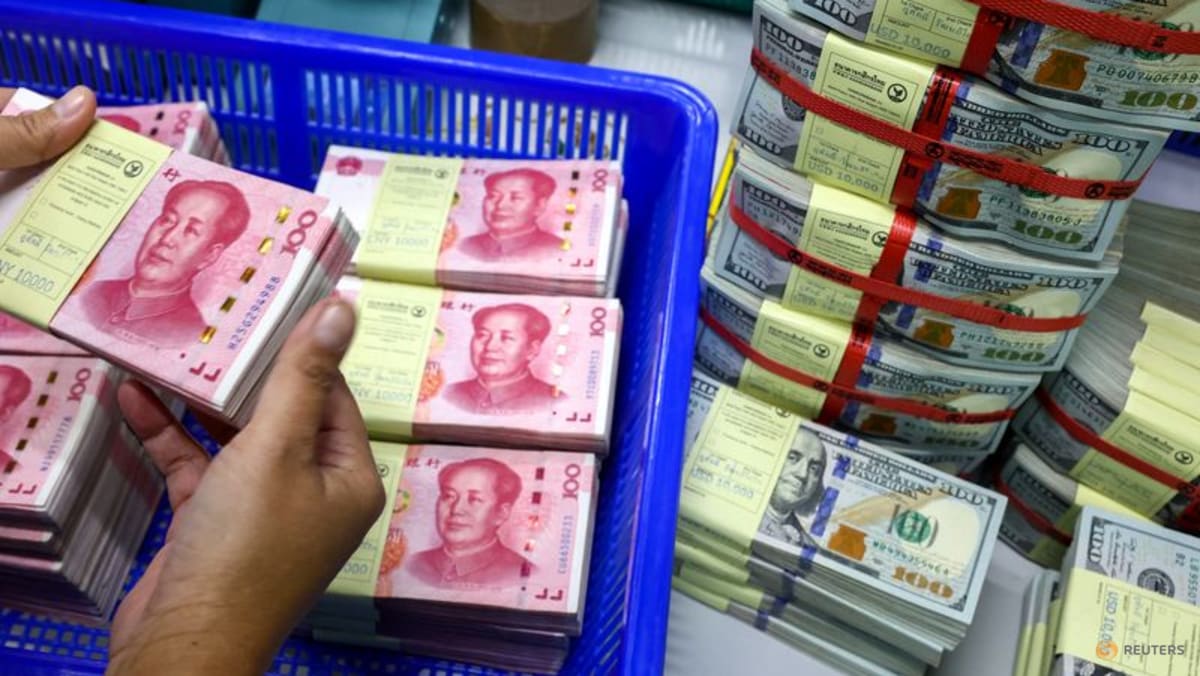
HOW YUAN AND DOLLARS ARE USED
Normally after an empire gains economic might, its currency takes an increasing share of reserves held by central banks. With a 17 per cent share of global gross domestic product, but only 2 per cent of central bank reserves, China is trailing 30 to 40 years behind previous superpowers at a similar stage of their ascents.
Likewise in trade, as an emerging power gains ground, the rest of the world accepts more payments in its currency – even if the new power is not directly involved in the transaction.
Britain at its peak accounted for 40 per cent of trade, but 60 per cent of trade payments were in sterling. China by contrast has a leading 15 per cent share of global trade, but only 2 per cent of trade bills are invoiced in yuan.
A Federal Reserve index captures how heavily the world uses major currencies in trade, currency, debt and other large transactions; since 2000, the yuan’s share of this index has inched up from zero to only 2.5 per cent.
This comes in an era when the world is more “financialised” than ever. Stock markets, bank loans, debt levels – all have been growing explosively as a share of the world economy. In the past half-century, the value of financial assets has surged fourfold to more than 400 per cent of global GDP.

