


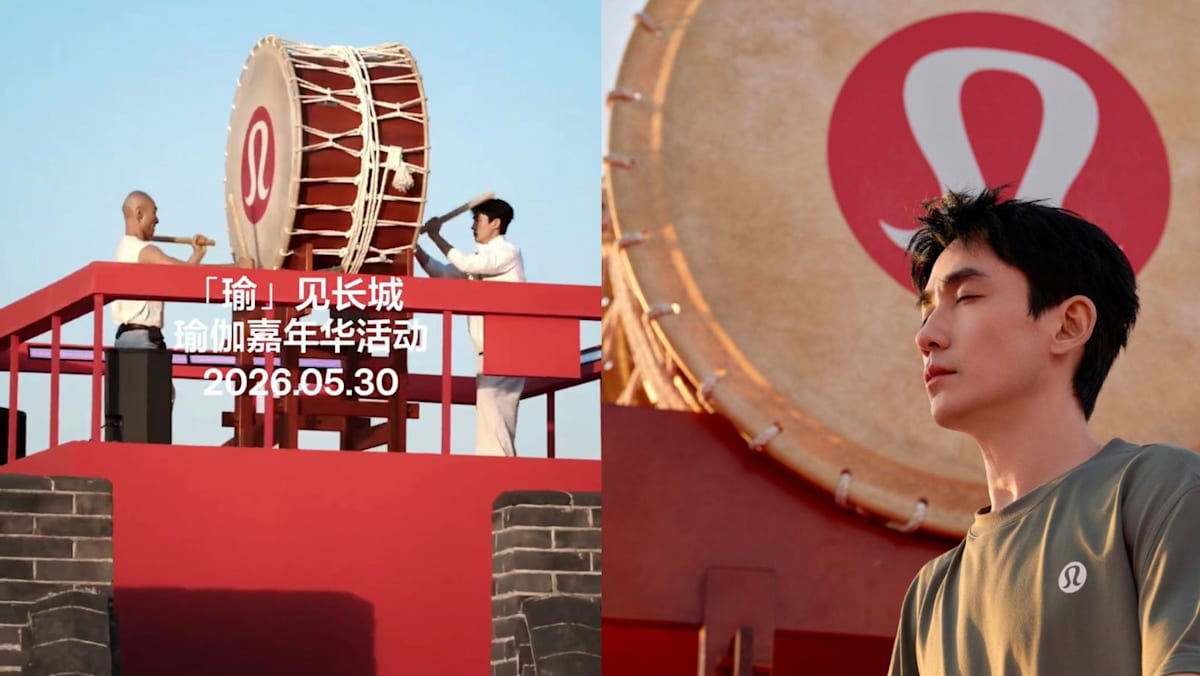
Zhu and the HiiKo Drum Group have also released apologies.
“Going forward, we will study and improve our professional knowledge more deeply, and humbly accept criticism and guidance from all sectors,” said the group’s founder Ye Songyuan.
Zhu and his team “have always been committed to promoting traditional Chinese culture”, his studio said in an official statement shared on Weibo on Tuesday.
“No matter when, where, or under what circumstances, we uphold rigor and accuracy in cultural expression, safeguard traditional culture with our original intention, and remain firm inheritors of Chinese culture,” the statement read.
All related promotional content has since been removed, Lululemon said.
Online, netizens remained critical – with some questioning the delay between when the incident occurred and when official apologies were issued.
“(The controversy) has already been brewing and only now you chose to apologise,” wrote one user on Weibo, responding directly to Lululemon’s post.
“Does your team not surf the internet? Must (something) blow up only for you to respond?”
Other Weibo users noted other cultural controversies the brand has faced.
Founder Chip Wilson, an American-Canadian businessman, drew criticism for mocking Japanese customers’ pronunciation of the brand name and later came under fire for comments seen as body-shaming.
He later resigned from the company’s board in 2015.
This is also not the first time that a notable overseas brand has courted controversy and backlash in China.

