


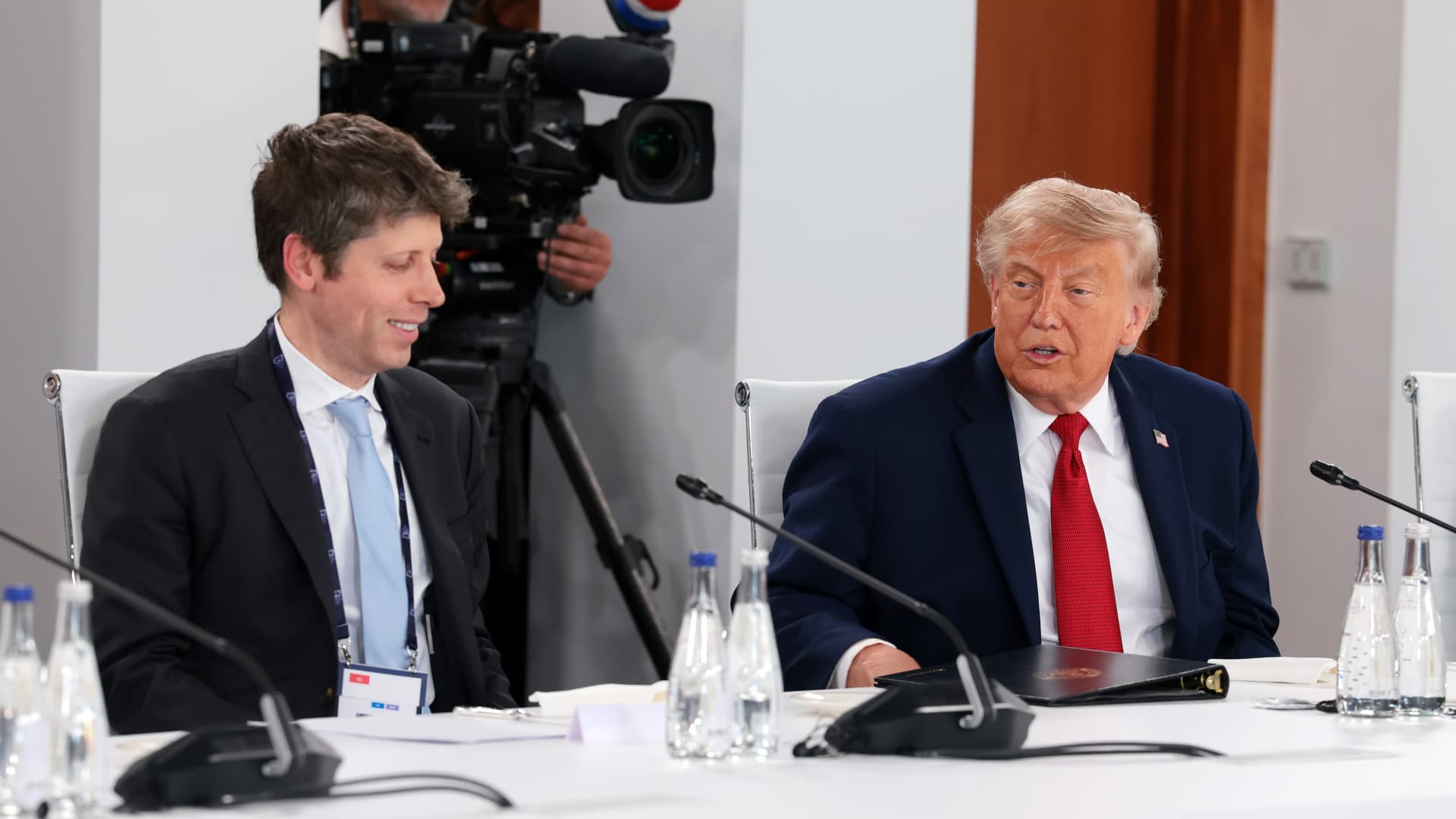
CEO of OpenAI Sam Altman (L) and U.S. President Donald Trump attend a working lunch with G7 leaders, G7 outreach partners, and global tech CEOs on innovation and AI, during the G7 Summit on June 17, 2026 in Evian-les-Bains, France.
Anna Moneymaker | Getty Images
OpenAI has proposed handing the U.S. government a 5% stake in the company, the Financial Times reported Thursday, as the artificial intelligence startup seeks to defuse mounting political pressure in Washington.
A 5% holding would be worth roughly $42.6 billion, after the AI fab closed a record-breaking funding round in March at a post-money valuation of $852 billion.
OpenAI CEO Sam Altman argued that giving the public a financial interest in the company is the best way to share the upside of AI, the FT reported, citing two people familiar with the talks. Altman suggested a stake of that size in early conversations with the Trump administration, according to the report.
It is not clear whether the administration intends to pursue the stake. The White House and OpenAI did not immediately respond to CNBC’s requests for comments.
The proposed arrangement envisions other U.S. AI companies ceding similar stakes to the government, though it’s unclear whether rival labs would participate, the FT said.
The report came after more than a year of talks about a possible government stake in the company, CNBC reported last month, with Altman first pitching the concept directly to the Trump administration in early 2025.
In April, the leading model-maker proposed creating a “public wealth fund” to hold assets capturing growth in AI companies and distribute the economic benefits to the public.
The administration has a precedent for taking a stake in a private company. The U.S. government holds a 10% stake in Intel Corp after an $8.9 billion investment in the chipmaker’s common stock. In May, President Donald Trump said he should have asked for a bigger stake in the company.
In June, Trump described the U.S. taking an ownership stake in AI giants as “a beautiful thing” that would make Americans “partners in this revolution.”

