


Alberta is a major beef producer for Canada, but high prices are opening the market for international competitors.

Grocery stores in Canada have begun selling Australian beef, among other countries — sometimes at a lower price than locally grown beef.
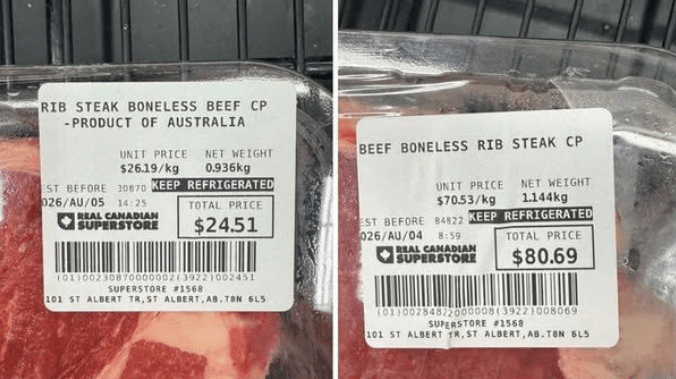
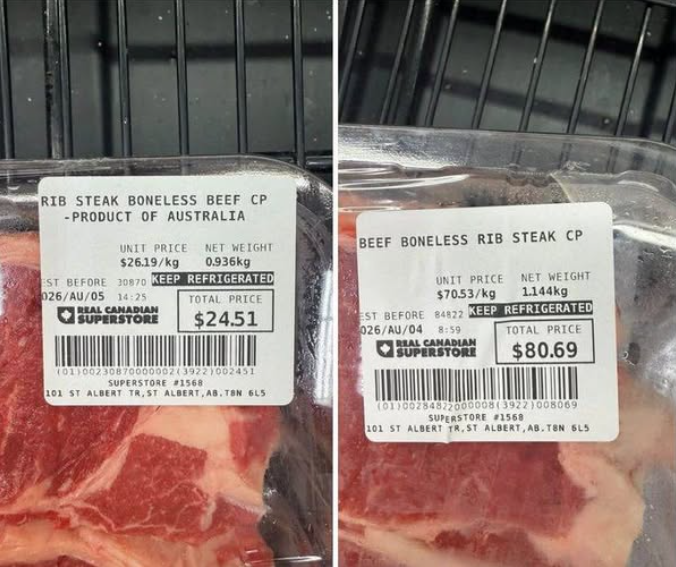
Some prices found at stores across Alberta recently show prices with a more than $40 difference per kilogram, compared similar cuts of domestic beef.
“It may seem extreme and unfair to our cattle producers, but really, the supply chain economics are actually in favour of Australia and New Zealand,” said Sylvain Charlebois, director of the Agri-Food Analytics Lab at Dalhousie University in Halifax.
He says some parts of the country have seen a price increase on local ground beef go up 18 per cent — in July alone.
“Ground beef is the cheapest bovine protein source we have access to and it is really the bulk of beef sales in Canada,” he said.
Facebook posts comparing beef from Australia to Canadian cuts in Alberta grocery stores in August 2026.
For some southern Alberta consumers — where beef production and its related agriculture are major industries — it’s hard to pass on lower-cost meats.
“With such a significant price difference, there’s no way my wife and I would buy the Canadian option if there’s Australian beef that’s less than half the price,” said Brad Pace.

Get breaking National news
Get breaking Canada news delivered to your inbox as it happens so you won’t miss a trending story.
The higher Canadian price is not out of the blue, though, according to Charlebois.
The colder climate in Canada causes higher feeding and housing costs for producers, he said. Paired with cheap shipping costs for countries in Oceania to reach our shores, it’s no surprise.
“Inventories are much lower than a few years ago, which is putting pressure on beef prices at retail, essentially,” said Charlebois.
Alberta Beef Producers finance chair Brenda Rosadiuk told Global News in a statement that inventory challenges could be improving, however.
“Statistics Canada’s January cattle inventory numbers showed early indications of growth. Supportive prices at the auction and good weather can encourage producers to grow their herds,” Rosadiuk said.
But it can’t happen overnight.
“That said, it takes time for farm-level shifts in production to impact supply at the grocery store.”
Rosadiuk said it’s a challenging time right now for Alberta producers, as some have reduced their herd head count in recent years.
“Canadian beef is in a period of tight supplies and strong global demand, which is contributing to higher beef prices at the grocery store,” said Rosadiuk.
Facebook posts comparing beef from Australia to Canadian cuts in Alberta grocery stores in August 2026.
As a result, she says it’s difficult to save money at the checkout.
“Consumers need to make choices that work for them, and that’s especially challenging right now when food costs are high.”
But she says smart cooking can go a long way to helping consumers.
“Canada Beef has some great resources and recipes to help people get the most value from a variety of cuts.”
Higher prices aren’t only affecting beef, however. The entire ‘trifecta of meat’ is facing hikes, according to Charlebois.
“Chicken actually has rallied. We’ve seen prices go up 20 per cent since March. Pork is up 20 per cent since June. That’s all because of beef.”
“”The beef situation is really impacting the entire meat counter.”
Facebook posts comparing beef from Australia to Canadian cuts in Alberta grocery stores in August 2026.
Loblaw, one of Canada’s largest grocers behind brands such as Superstore, Shoppers Drug Part, Extra Foods and No Frills, said it’s selling Australian beef at lower prices to keep meat affordable for Canadians.
“We source beef from a variety of Canadian and international suppliers to ensure customers have access to quality products at competitive prices. Retail prices can vary based on a number of factors, including market conditions, supplier costs and available supply,” the corporation said in a statement to Global News.
However, some Albertans say they’d still rather spend more to support local farmers.
“I still believe Albertan beef is higher quality. So, I’d still lean more toward Albertan beef, even with the insane prices that we have,” said resident Daniel Cockburn.
Charlebois says ongoing competition could, in the long term, be good for Canadian consumers, though he added prices are still uncertain in parts of the country.
© 2026 Global News, a division of Corus Entertainment Inc.

