


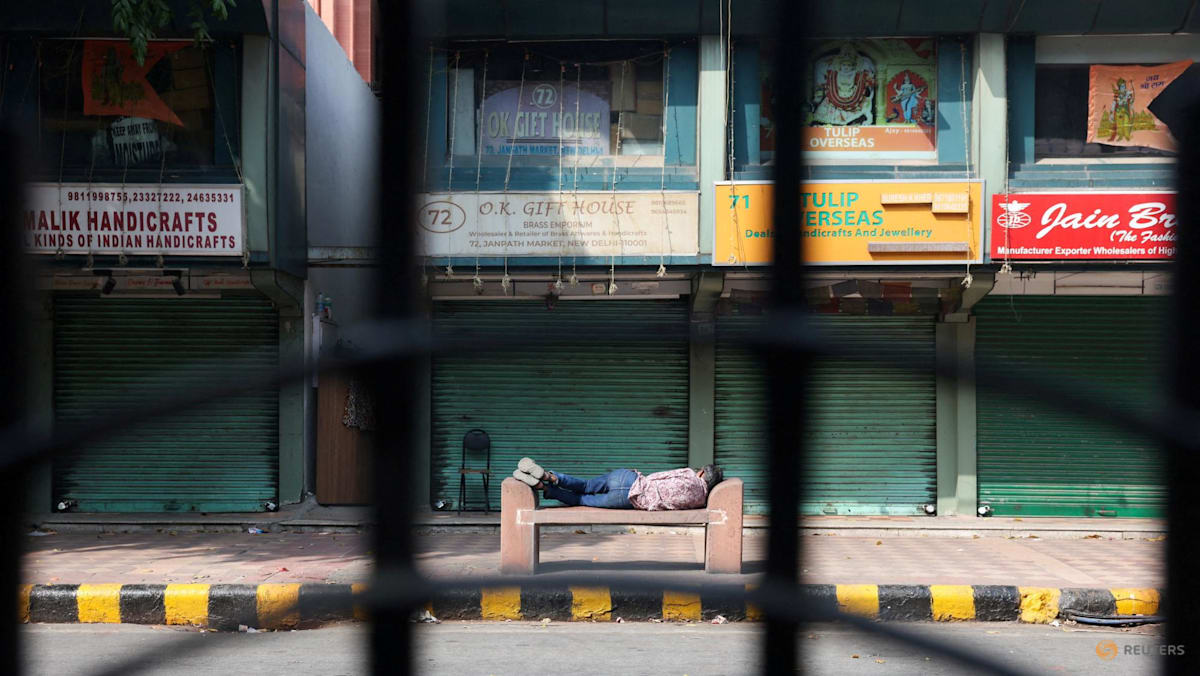
Citing security concerns and insufficient notice, Delhi Police denied protesters permission to assemble at Jantar Mantar on Saturday and instead designated three alternative protest sites.
But road barricades and other restrictions remained in the vicinity for the rest of the weekend.
Organisers had criticised the move, saying that shifting protests away from Delhi’s political centre would reduce their visibility.
The disruption has even been felt away from central protest areas.
Restaurant chain owner Zachariah Jacob, whose Mahabelly branches are largely based in south Delhi – over 15km away from where the protests took place – still recorded a 30 per cent drop in business over the protest weekend.
More people stayed home because of uncertainty over restrictions and travel advisories, he said.
A representative of Nathu Sweets, founded in 1939, said that they had in fact seen “a spike in orders” during earlier protests in July, as people across India placed bulk food orders in support of protesters.
This time, however, wider restrictions and internet disruptions affected deliveries and customers’ ability to reach its outlets, the representative said.
“Because the internet was shut (down), orders – via online delivery services – were shut for us,” the representative said, adding that “all other corporate orders” were also restricted because of areas being “cordoned off”.
Weekend revenue fell to around 20 per cent of its usual level, the representative said.
DELICATE BALANCE
Despite losses, several small businesses and traders said they still recognised the public’s right to protest.
Their concern, however, was how that could co-exist with their right to earn a living.
“Protest is the right. I am not denying it. Livelihood is my right,” NDTA’s Bhargava said, noting that businesses still face mounting costs.
Business owners and traders themselves differ over whether Jantar Mantar remains a suitable site for protests.

