


“If by mid-2027 there are no improvements, the coalition will be fragile and things may eventually fall apart on their own,” they said. Indonesia’s next elections are due in early 2029.
Until now, Prabowo – who marks two years in office this week – has faced little or no pushback. There have been no dissenting votes in parliament on any bills the government has proposed, not even by the one party that is not formally part of the ruling bloc. Nor has the leader of Southeast Asia’s largest economy faced any speeches critical of his policies.
FALLING NUMBERS
Tensions in Prabowo’s coalition have risen as the president’s approval rating has declined.
Last November, the president had an 81 per cent rating, according to SMRC. That fell to 66.4 per cent in March, 51 per cent in July and 44.5 per cent in October.
Positive opinions of the free meals programme have also slumped – from 62 per cent last November to just over a third in the most recent poll.
In June, authorities arrested a former chief of the programme and two other officials on corruption charges.
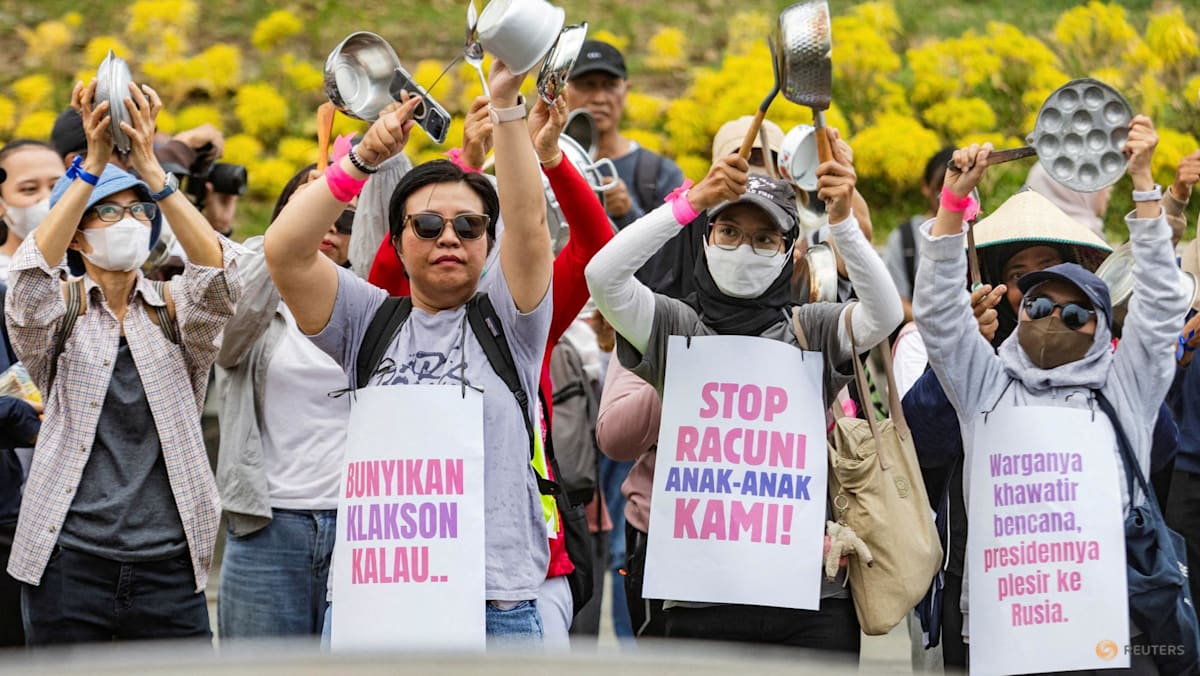
On Aug 31, dozens of families filed a police complaint against the government, marking the first legal action over the programme that started in January 2025. Early last month, about 1,700 people fell ill in four separate incidents after eating the meals, bringing the total number of cases of food poisoning to at least 57,000 since launch.
The president’s office and the National Nutrition Agency (NNA), which runs the initiative, did not respond to requests for comment.
Sugiat Santoso, the Gerindra spokesperson, said the coalition remained strong and the programme was not intended to secure electoral gains.
“Every political party has its own targets and we respect that … Whatever their stance, related to free meals or not, supporting Prabowo or not, we respect it,” Sugiat said, adding that the NNA was working to improve the programme.

