


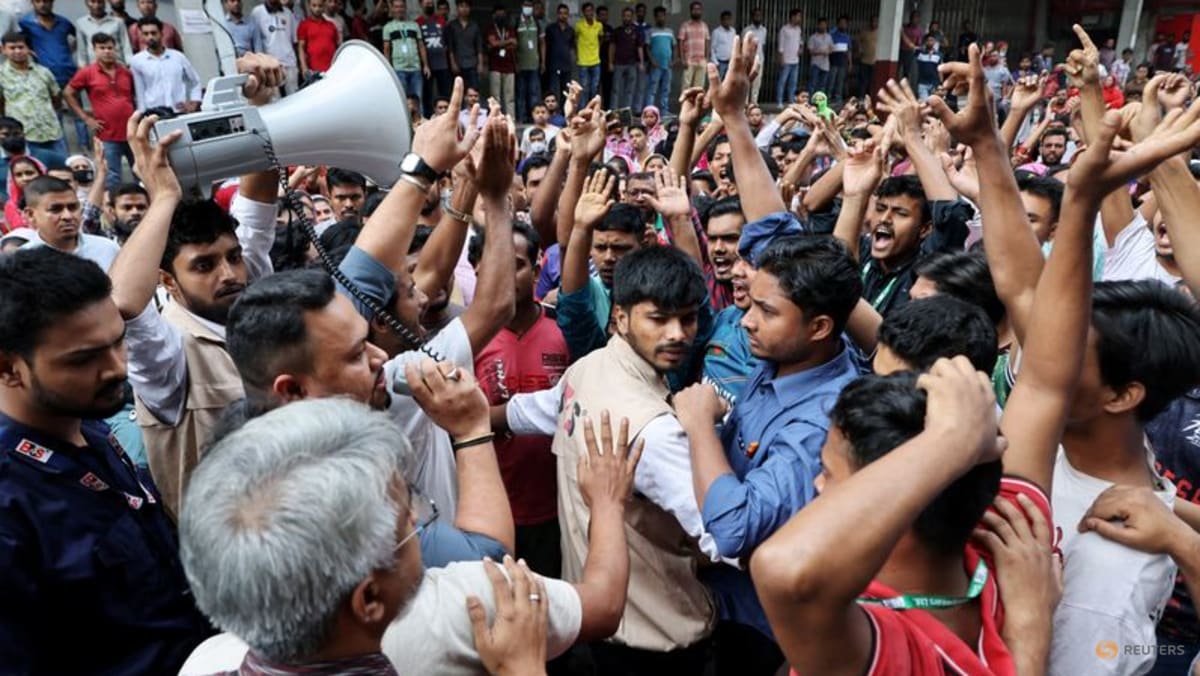
WORKERS MAKE STARK CHOICES
Workers like Khatun say the wage increase has not kept pace with rising prices, forcing them to make difficult choices over everyday spending.
On the hardest days, Khatun’s family survives on puffed rice, she said. Sitting in the small tin-shed room she shares with her husband, she said she had not seen a doctor in three years despite worsening health problems.
Her salary has crept up over five years but not enough to match rising costs. She now earns 13,500 taka (US$108), up from 9,000 taka when she started. With overtime, she earns about 16,000 taka, but the money rarely lasts until the next payday, she said.
Bangladesh has faced a prolonged cost-of-living squeeze since 2022, with inflation averaging around 9 per cent. Food prices initially drove the surge, but non-food costs have remained high.
“I think twice before buying anything, even food,” said Roksana Parveen, a 29-year old sewing operator in a factory in Ashulia on the outskirts of Dhaka. “I know my daughters should be eating better, but I just can’t afford it.”
Parveen and her two daughters often live on little more than rice and vegetables, with meat and fish becoming luxuries beyond their reach. To cut costs, one of her daughters dropped out of school.

