


JOINT EXERCISES AND AI
The Quad statement flagged plans for joint military exercises next year featuring maritime patrol aircraft, and reaffirmed a commitment to an accelerator scheme to coordinate and fund the development of artificial intelligence.
“We want to ensure that the future of this critical technology is dominated by nations that share our values and our common interests and make sure that it turns out to be as good as it can be,” Trump said, referring to the AI plans.
Former US Deputy Secretary of State Kurt Campbell credited Washington’s top diplomat, Marco Rubio, with the timing and reconvening of the Quad, which he said had lost ambition under Trump.
“Part of what he (Rubio) is thinking is that this is probably the best possible signal if you’re going to go into a trilateral meeting,” said Campbell, co-founder of The Asia Group, referring to Thursday’s US-China-Russia talks.
“Today’s meeting has given fresh momentum to our shared vision for a free, open, peaceful and prosperous Indo-Pacific, with concrete goals for the next phase of our cooperation,” Indian Prime Minister Narendra Modi said in a post on X.
PROTESTS IN MANILA
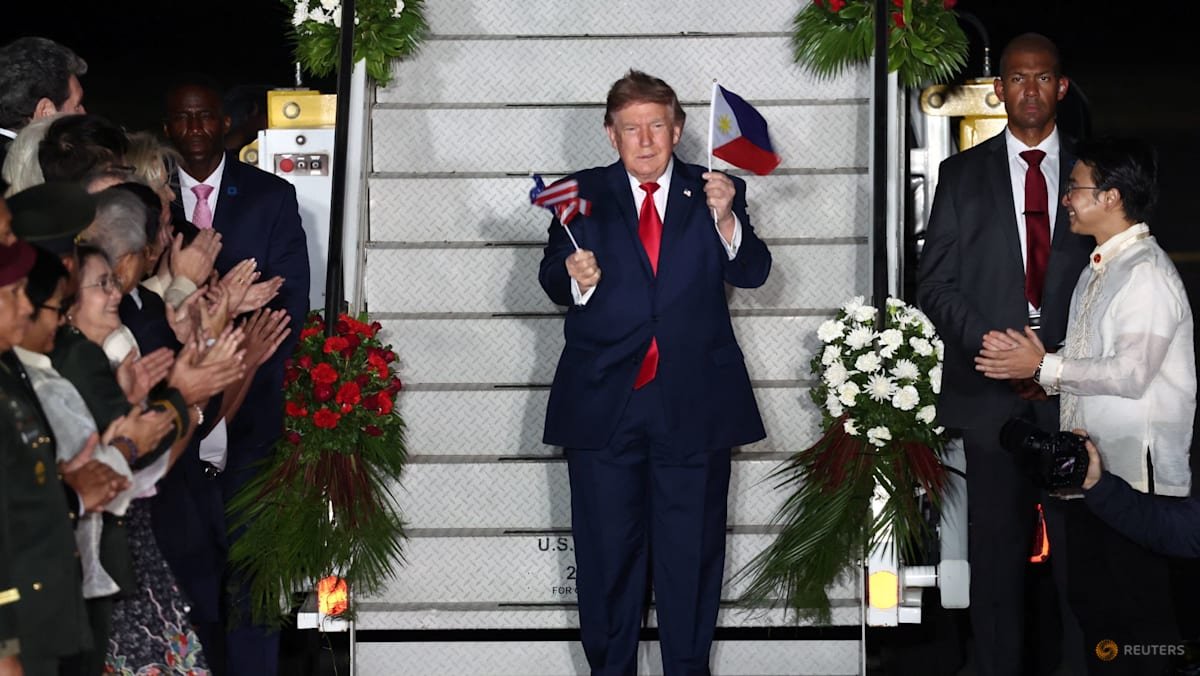
Trump arrived in the Philippines at the end of a summit there of another regional body, the 11-member Association of Southeast Asian Nations. After the Quad meeting, he joined a US-ASEAN “Special Summit”.
He will meet Philippine President Ferdinand Marcos Jr on Wednesday, before heading to Shenzhen.
Demonstrators had gathered in Manila for a fifth day of protests that have included the burning of Trump effigies, calls for an end to the Middle East war and the scrapping of the US-led Pax Silica supply chain initiative.
At the ASEAN summit on Monday, Chinese Premier Li Qiang hailed what he called the “truly extraordinary” economic achievements of China and ASEAN in the face of global trade restrictions, expressing Beijing’s commitment to free trade and the need to “stand united, ward off interference, and work together”.
China is ASEAN’s largest trading partner and a key source of investment, but the biggest economies of the bloc – which has a combined GDP of more than US$3.9 trillion – want to deepen ties with the US despite protracted trade and diplomatic uncertainty under the Trump administration.
ASEAN’s leaders held meetings on Tuesday involving counterparts from Japan, South Korea, China and India.
Japanese Prime Minister Sanae Takaichi pledged to work with ASEAN to boost regional economic and energy resilience and to strengthen supply chains, including on critical minerals.
“While the international order is experiencing a period of great instability, Japan will play an ever more proactive role,” Takaichi said.
Trump also signed a joint statement on trade with Thai Prime Minister Anutin Charnvirakul. He said Thailand would eliminate all tariffs on US exports and remove substantial non-tariff barriers under a trade agreement expected to be finalised in the coming weeks.
The US is Thailand’s largest export market, accounting for 24 per cent of its total shipments this year.

