


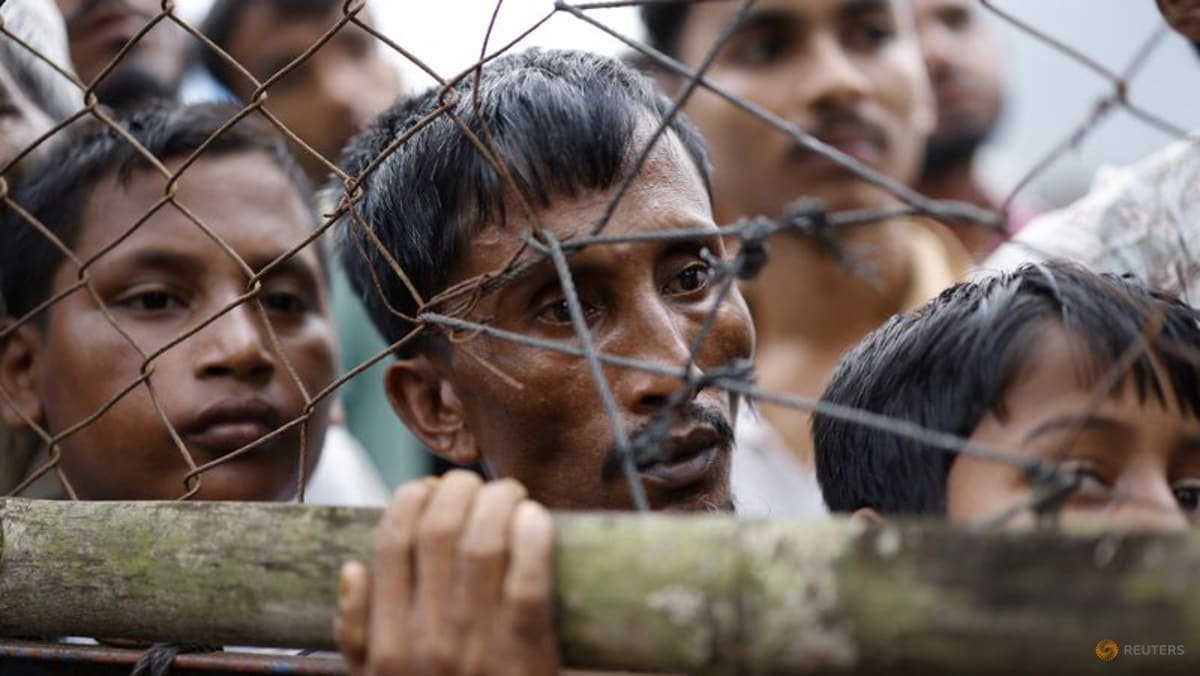
ESCAPE FROM RAKHINE
Khatun was seven months pregnant with her ninth child when soldiers came for her husband in their village in Rakhine state, a coastal province where generations of Rohingya families have lived alongside the Buddhist majority.
“I begged them not to take him,” she said. “I held onto him, but a soldier cut my hand with a machete and dragged him away. That was the last time I saw him alive.”
As violence spread across northern Rakhine, Khatun fled Inn Din with her eight children, walking for days through the rain towards Bangladesh.
Her pregnancy made the journey agonising, leaving her legs so swollen that she could barely walk. The family then spent several days stranded on a sandbank near the border, before a boatman took them across to Bangladesh.
RULING RAISES HOPES FOR RETURN TO MYANMAR
Khatun now lives with her four youngest children, aged 13, 12, 10 and 9, in a cramped bamboo-and-plastic shelter. Her five older children are married and live separately.
After spending nearly a decade in the camps, Khatun yearns to return home to Rakhine, where fighting rages on between the Myanmar military and the Arakan Army rebel group, following a 2021 coup that triggered a nationwide civil war.
“After years of suffering, persecution, and displacement, we hope this historic verdict will pave the way for us to return to our homeland,” she said.
“Not as stateless refugees, but as equal citizens with full rights, dignity, freedom, and the citizenship we have always deserved.”

