


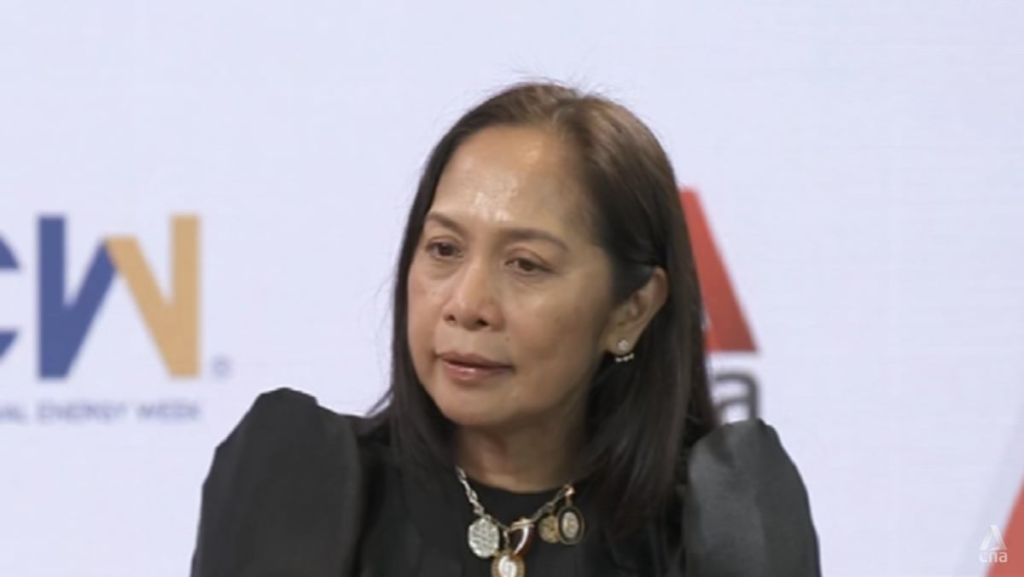
ASEAN POWER GRID REQUIRES BILATERAL AGREEMENTS
Ms Garin also said that progress on the long-discussed ASEAN power grid would depend on individual countries reaching agreements on cross-border electricity connections.
ASEAN member states reached a consensus on an enhanced memorandum of understanding (MOU) for the regional power grid earlier this month.
Ms Garin expressed hope that the document would be finalised at the ASEAN Summit in Manila in November.
She described the consensus as a landmark achievement but stressed that it did not mean construction of new connections would begin immediately.
“It’s more of a political or a sense of community declaration, that we are all in agreement that we need an ASEAN power grid, that we need to share power among ourselves,” she said.
“But how do you implement the project? Basically, it has to be the relationship between one country and another. It is not just because we have an enhanced MOU that everybody will start building now.”
For the Philippines, this would mean negotiating bilateral agreements on potential electricity connections with Malaysia, Indonesia and Singapore.
Asked about a potential undersea power connection between the Philippines and Indonesia, Ms Garin said differences in electricity pricing regulations would have to be reconciled, while both countries would have to agree on a suitable infrastructure route.
The project’s commercial viability would also be crucial, including determining which country would supply the electricity and which would purchase it.
“We have to make sure that for the developers, it’s worth the investment,” she said.