


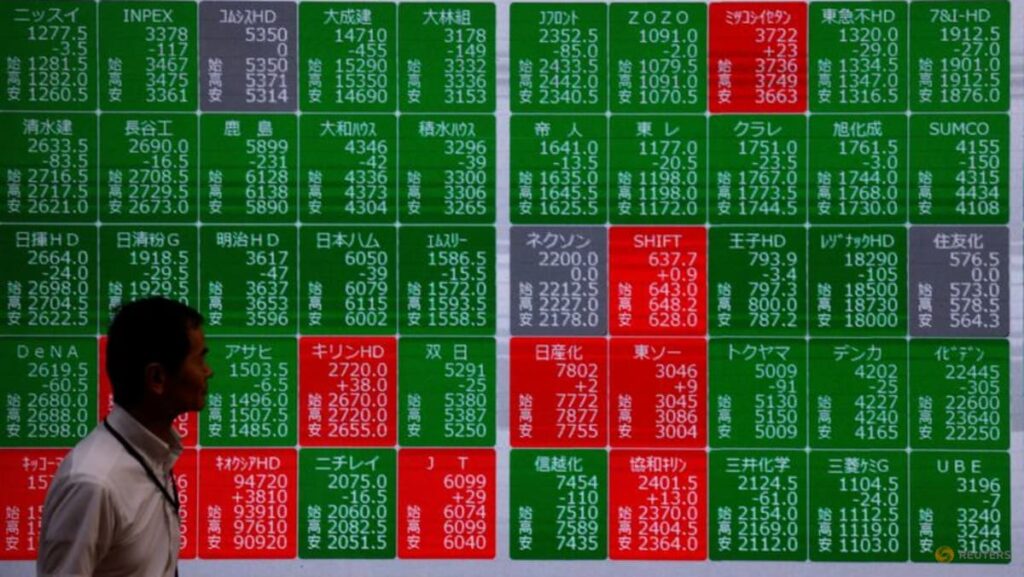
HONG KONG: Most Asian markets sank on Thursday (Aug 6) with tech firms back under pressure after a four-day rebound amid lingering AI worries, while oil rose even as Iran said it was finalising a deal with Oman over the Strait of Hormuz.
Investors have enjoyed a much-needed rally since Friday, following a month-long tech rout that slashed billions of dollars off valuations owing to concerns about the vast sums companies had pumped into artificial intelligence.
The recovery started with Seoul – the poster child of the sell-off since June – soaring almost 18 per cent at the end of last week and recently battered chipmakers SK hynix and Samsung powering more than 25 per cent higher.
That has fuelled speculation that the AI play was back as traders return to pick up bargain stocks.
However, the rally appeared to peter out Thursday following a tech retreat on Wall Street and disappointing earnings from US giants SanDisk and Western Digital that revived concerns over the profitability of the AI investments.
Seoul’s Kospi shed more than five per cent at one point, led by SK hynix and Samsung.
Tokyo’s Nikkei – another tech-heavy index – lost around two per cent, with chipmaker Kioxia down more than 10 per cent and Tokyo Electron seven per cent off. Tech investment titan SoftBank, which is due to report later Thursday, lost six pe rcent.
There was also selling in Hong Kong, Wellington and Taipei, though Shanghai, Sydney and Singapore rose.
While Wall Street was broadly negative, the Dow still mustered a gain to push it to a third straight record close.
Easing tensions in the Middle East and comments from Washington about a US-Iran deal to reopen the Strait of Hormuz have also helped equities this week by pushing oil prices down and tempering inflation and rate hike concerns.
However, both main contracts edged up Thursday after Iran said it had agreed a route with Oman for ships transiting the waterway and were adding the final touches to arrangements for jointly managing it.
Official sources briefing Iranian media stressed that any reopening would depend on the United States fulfilling what Tehran sees as its commitment to end its own naval blockade of Iran’s ports.
“The factors making the Strait of Hormuz insecure still exist on the part of the United States, particularly the naval blockade and other aggressive and threatening actions against Iran and its interests,” said Iran Foreign Ministry spokesman Esmaeil Baqaei, according to state news agency IRNA.
Investors are keenly awaiting the release of key US jobs data Friday, hoping for an idea about the state of the economy as the Federal Reserve plots its next moves on borrowing costs.
Figures on Wednesday showed hiring in the US private sector was significantly below expectations in July, with industries like leisure and hospitality shedding jobs.