


“NO WORK, NO PAY PROVISION”
Factory owners said the industry faces higher costs, energy market uncertainty linked to conflict in the Middle East and slowing demand in key export markets.
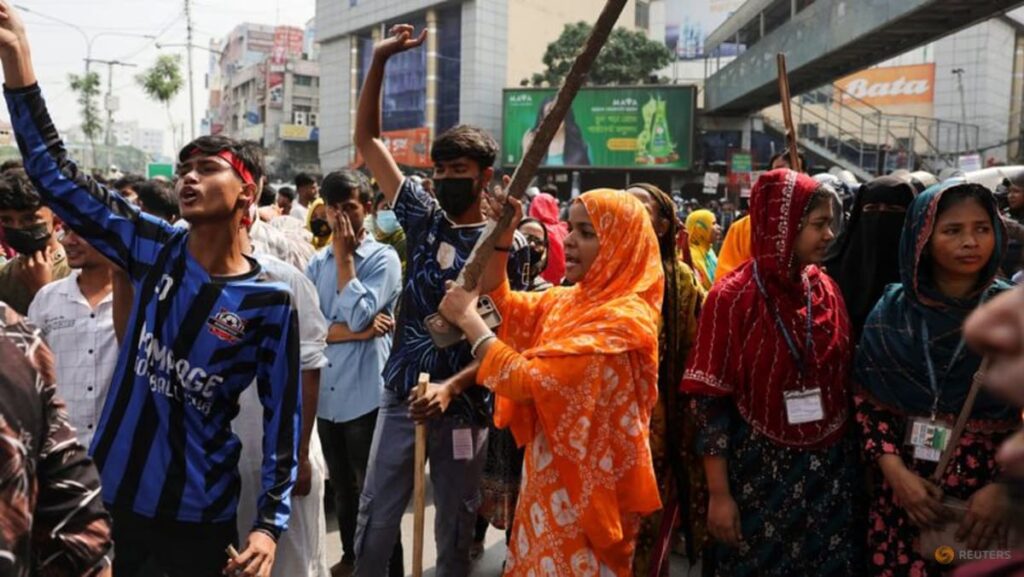
The Bangladesh Garment Manufacturers and Exporters Association (BGMEA) said demonstrations in multiple cities disrupted operations at 529 factories and affected nearly one million workers.
“The government has already taken a step by forming the wage board. We expect workers to allow the review process to proceed,” said BGMEA President Mahmud Hasan Khan.
“If protests break out later in the day and we are forced to shut factories, we will have no option but to invoke the ‘no work, no pay’ provision,” he said, adding industry representatives were scheduled to meet the home minister to discuss the unrest.
Selim Raihan, an economics professor at the University of Dhaka, said workers’ demands were understandable given high inflation and suppressed wages could cause further unrest.
However, he cautioned that a substantial wage increase could raise production costs, squeeze exporters’ profit margins and weaken Bangladesh’s price competitiveness.
“A phased wage adjustment, improved productivity and fairer pricing from international buyers are essential to balancing workers’ welfare with industrial sustainability.”