


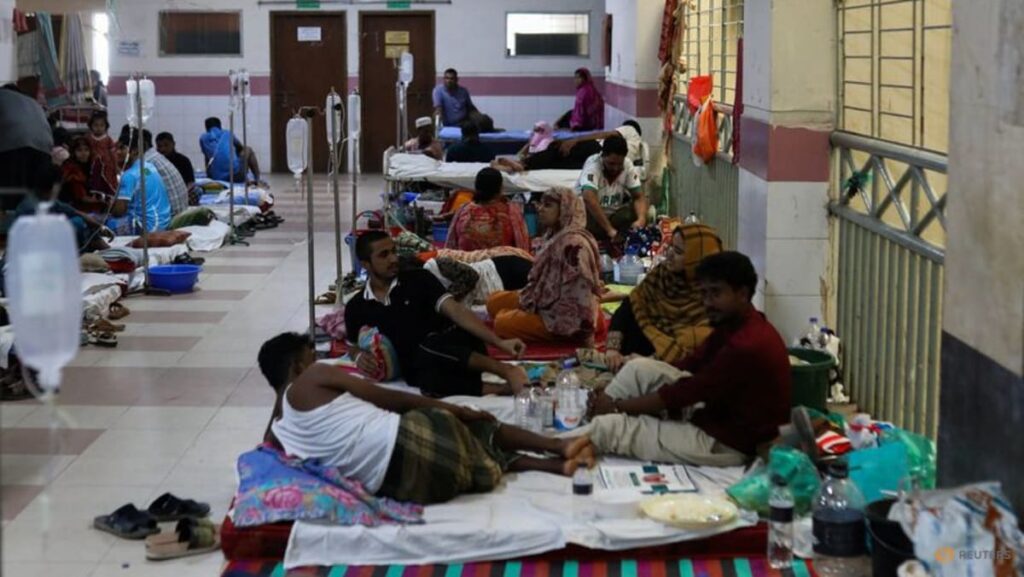
DHAKA: Bangladesh enters October facing a worsening dengue outbreak after its deadliest month this year, as experts warned that weather conditions could fuel further spread, piling pressure on hospitals already fighting the world’s worst measles outbreak.
The resurgence of dengue, with symptoms of fever and pain in the muscles and joints, follows Bangladesh’s deadliest outbreak in 2023 and is adding to pressure on a healthcare system in which measles killed more than 1,100 children this year.
“I was lucky to get a bed, but many dengue patients are still struggling to find one,” said police sergeant Shafiqur Islam, 30, who was discharged this week from hospital after receiving a blood transfusion.
“Many of my colleagues have also been infected. We spend our days serving the public, but often neglect our own health.”
Experts said recent rainfall and changing weather patterns could help sustain dengue transmission through October, traditionally one of the peak months for the disease.
“Our forecasting model indicates that the dengue situation will worsen further in October,” said medical entomologist Kabirul Bashar at Jahangirnagar University, who urged targeted mosquito controls and tougher household prevention.
DISEASE SEEN AS A NATIONWIDE CHALLENGE
The spread of the dengue-carrying Aedes mosquito beyond major cities has turned the disease into a nationwide challenge, Bashar said, warning that fogging with pesticide alone would not be sufficient unless breeding sites were stamped out.
September’s rains could continue driving infections through October, because of a lag of 45 to 60 days between rainfall and dengue transmission, he added.
At least 245 people have died and 79,620 dengue patients been admitted to hospital since January, the health ministry says. September’s tally of 148 deaths was sharply higher than 43 in August and 36 in July.
On Wednesday, six more people died with 1,948 new dengue patients hospitalised, with 5,485 being treated nationwide.
There is no specific treatment for the disease, with doctors recommending rest, fluids and painkillers such as paracetamol, although severe cases require hospital monitoring to avert complications.