


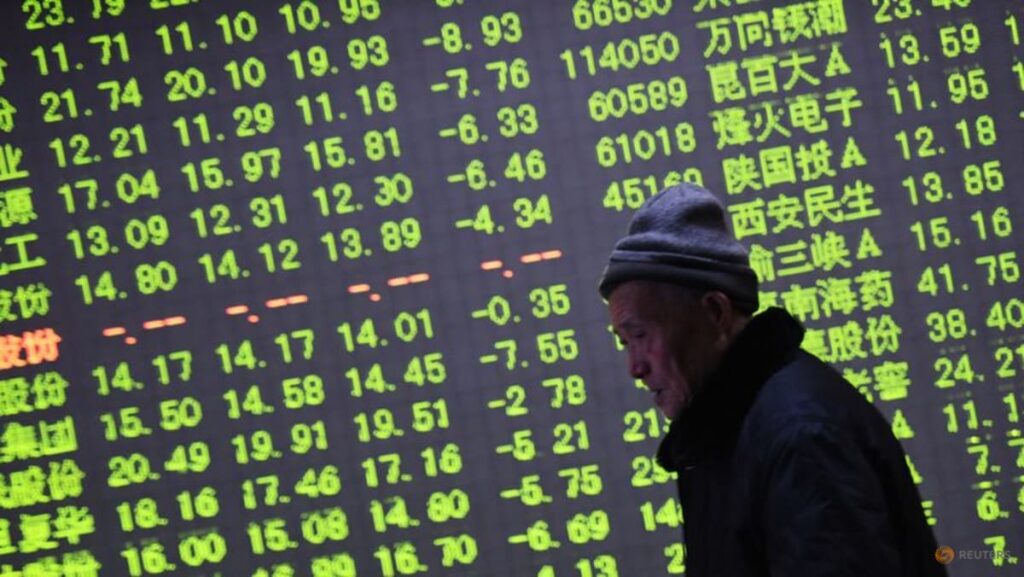
SINGAPORE: In a bid to help stabilise the country’s struggling stock market, Chinese authorities rolled out fresh measures this week to boost liquidity, cut rates for share buy-back loans and ease curbs on leveraged trading.
It comes after the benchmark CSI300 Index plunged 8.5 per cent in October, its worst monthly performance since early 2016.
Sharp falls in tech stocks have also added to investor jitters over the world’s second-largest economy, which has been grappling with sluggish consumption and a prolonged property sector debt crisis.
Beijing is now making it easier and cheaper for financial institutions and companies to buy shares in an effort to stem the market’s slide, analysts told CNA.
But the latest intervention appears aimed more at preventing further losses than sparking a sustained rally, they said – noting that a lasting recovery would require stronger economic growth, improved corporate earnings and a revival in investor confidence.
So what has prompted Beijing to step in, how will the new measures work – and can they stop the sell-off?
WHAT MEASURES HAS CHINA INTRODUCED?
The measures aimed at making more money available for stock purchases and encouraging companies to buy back their own shares.
First, the People’s Bank of China (PBOC) is making it easier for major financial institutions to raise funds to invest in stocks.
Under a mechanism known as a swap facility, securities firms, fund managers and insurance companies can exchange assets they already hold, such as government and corporate bonds, for more liquid assets from the central bank.
These can then be used to obtain funding to buy stocks, without the institutions having to sell their existing investments.
The PBOC said it would conduct a fresh round of swap operations on Tuesday (Nov 3) – potentially channelling more than 100 billion yuan (US$15 billion) into the stock market.