


REAL-WORLD APPLICATIONS
At the expo, CNA observed industry players finding ways to stand out from the competition.
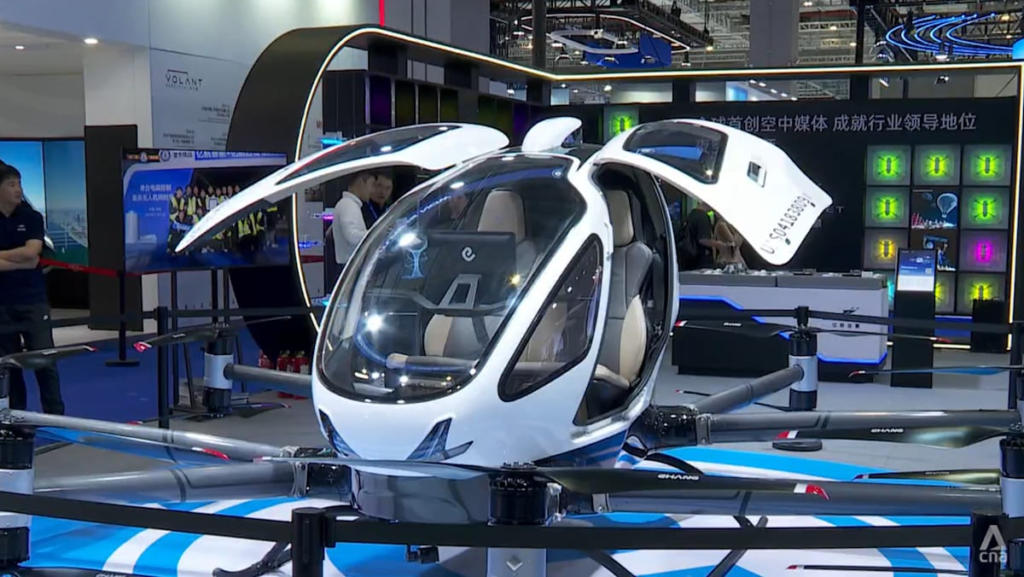
Beyond taking flight, exhibitors showcased practical innovations that demonstrated how their flying machines can be used in the real world, giving trade visitors more reasons to buy or lease them.
One of E-Hawk’s drones, for example, was fitted with a robotic arm capable of retrieving objects, cleaning high-rise windows, and performing jobs that are dangerous, difficult or expensive for human workers.
E-Hawk said its drones can also be fitted with tools to extinguish high-rise fires more efficiently, by breaking through glass windows and dousing the flames directly.
Another company, Shenzhen-based Damoda, showcased a containerised drone light show system that can deploy more than 500 drones in under a minute, reducing the manpower and preparation needed to stage large performances in the skies.
Meanwhile, Anhui-based Dashu Aviation is marketing an open-frame single-seat personal aircraft, which it says has attracted interest from niche overseas customers, including large farm operators, recreational users and high-net-worth buyers.
Despite the technological advances, industry players say regulation remains one of the biggest obstacles to wider adoption.
“Not just in China, but around the world as well, standards, regulations and management systems for advanced air mobility are still incomplete,” said EHang’s He.
“Once those rules are established, companies will know the legal boundaries within which they can develop and innovate.”
E-Hawk’s Cai likened the challenge to “paving roads in the air”, saying governments will need systems to regulate and track aircraft, manage airspace and respond to emergencies before low-altitude aviation can scale.
“So the low-altitude economy depends heavily on governmental efforts,” he added.