


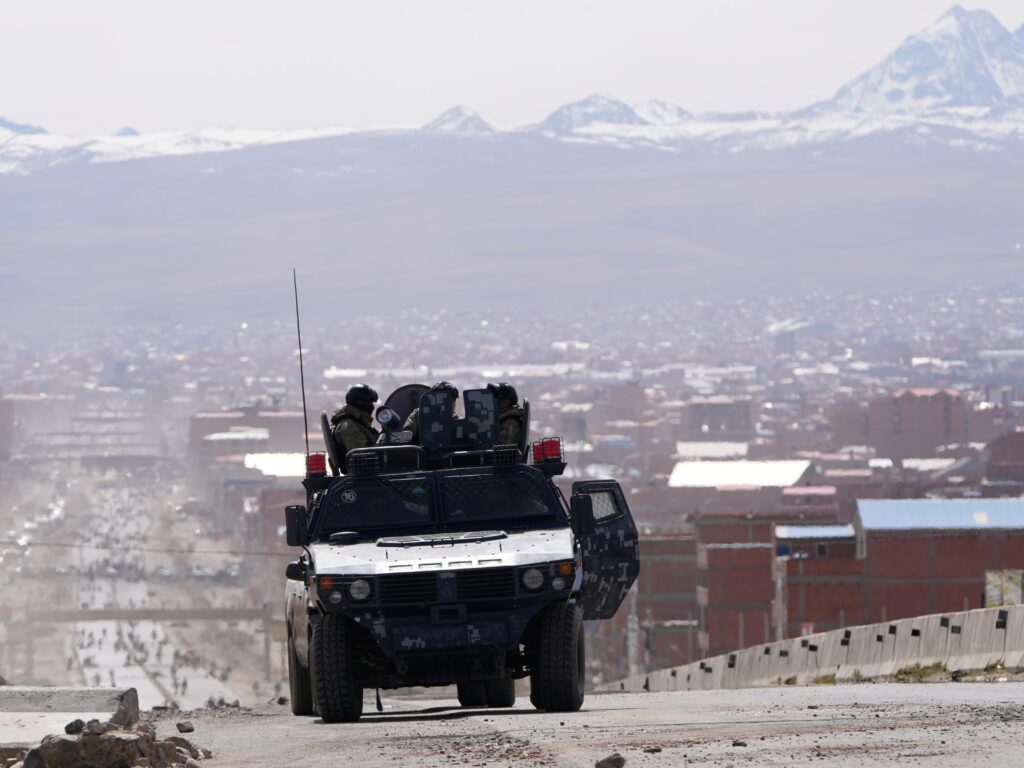
State of emergency permits deployment of military to support police amid five weeks of anti-government protests.


Published On 21 Jun 2026
Authorities in Bolivia report no active road blockades in the country, the day after President Rodrigo Paz declared a state of emergency in response to weeks of protests.
Early on Sunday, the South American country’s Legislative Assembly approved Paz’s decree, which prohibited “blocking streets, avenues, roads and highways in ways that affect transportation and supplies”.
Recommended Stories
list of 3 itemsend of list
The order also permitted Bolivia’s armed forces to support police “in restoring order, reopening roads and protecting the population”.
The signs of calm on Sunday coincided with several other breakthroughs with protesters, who launched demonstrations calling for Paz’s resignation after he imposed austerity measures that included cutting fuel subsidies earlier this year.
In Santa Cruz, officials and protest leaders signed an agreement to lift a critical blockade in the town of San Julian.
A federation of groups representing rural and Indigenous residents announced a pause in protests in La Paz, while maintaining they had not abandoned their demands.
Five weeks of road blockades have stranded trucks and choked supplies of food, fuel and medicines to many areas.
Bolivia’s ombudsman’s office and human rights organisations have said that at least 17 people have died, many linked with disruptions to medical care caused by the blockades.
Violent confrontations between demonstrators and riot police have led to 365 arrests and 37 injuries, according to authorities.
While Bolivia’s national highway authority reported no active protest blockades on Sunday, it warned that many roads still required significant clean-up and repair.
Despite the early signs of progress, rights observers have warned that a harsh government response that fails to address the underlying issues could compound unrest in the long term.
Police and military forces remained deployed on Sunday.