


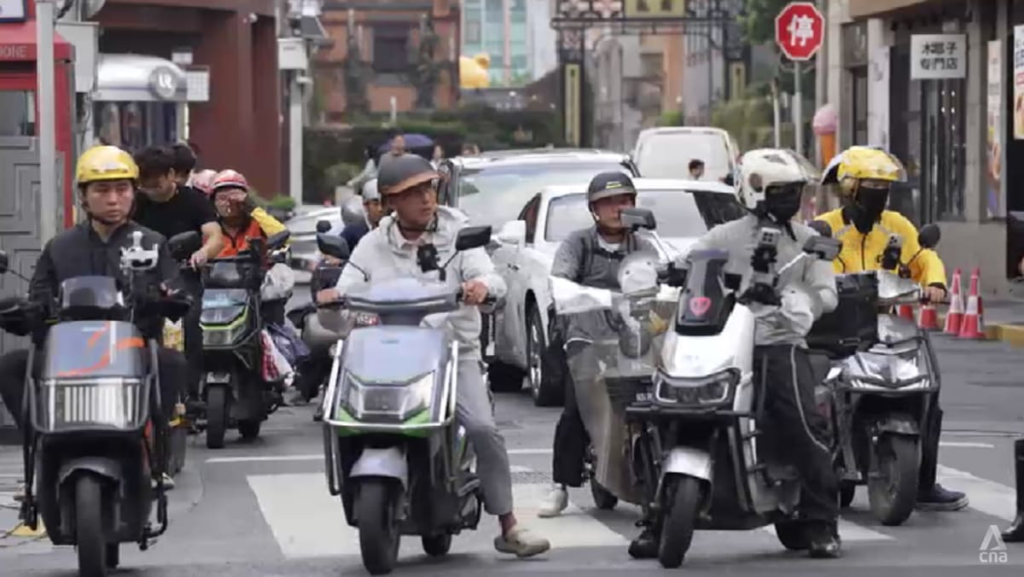
That ease comes about because registered e-bikes that meet China’s national standards are treated more like bicycles rather than motorcycles.
Among the key requirements is a maximum design speed of 25kmh. Riders of compliant e-bikes also do not need to take driving lessons or pass a driving test.
That classification, and the relative ease of adoption, have helped create a massive domestic market for e-bikes.
According to market research firm GEP Research, about 68 million units were sold in China in 2025 – nearly 57 per cent of global e-bike sales.
Regulators also tightened national safety standards last year, strengthening requirements covering batteries, fire resistance and protection against modifications.
Intense competition at home also puts pressure on manufacturers to improve their products.
Weckmann said battery performance is one area where Chinese manufacturers have done well.
“They’re really big (on) batteries … and the main issue of (a) scooter is you need a good battery. If you have to charge it every day, it’s not convenient,” he said.
He added that his vehicle only needs to be charged about once every four days, despite a 7km commute each way.
But China’s e-bike market is already mature, with replacement purchases increasingly important to sales. Sluggish domestic consumption is also prompting manufacturers to look elsewhere for growth.