


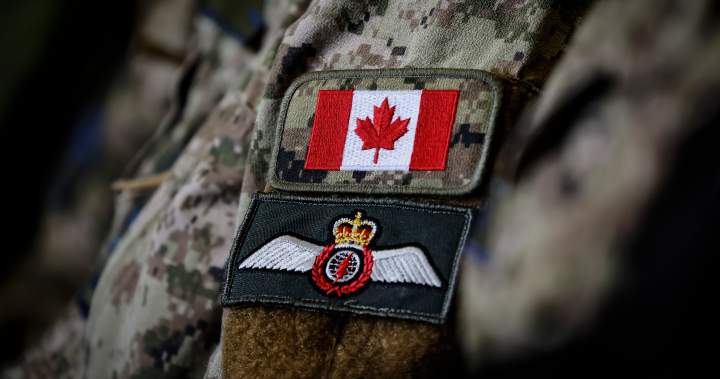
The Liberals have laid out plans to dramatically boost defence and security spending over the next five years, including committing $451 billion to core military spending alone.


At the same time, the Liberals are nearly doubling Canada’s domestic spy agency’s budget in a bid to make the Canada Security Intelligence Service (CSIS) less reliant on “foreign partners.”
The significant spending boost comes at a time when Canada’s traditional security and defence partner, the U.S., has grown increasingly hostile to allies and less dependable as an ally.
While the 2026 budget does not provide a complete breakdown of planned defence spending, it does break out a few details — such as $2.3 billion for the Defence Drone Initiative, a program aimed at acquiring and developing new unmanned aerial systems (UAS) for both the Canadian Armed Forces (CAF) and the Canadian Coast Guard.
Prime Minister Mark Carney committed to boosting defence spending part of his election platform. For years, Canada lagged behind NATO’s target of spending two per cent of GDP on defence.
The Liberal government announced they had hit that target in 2025, and pledged to reach NATO’s new benchmark of five per cent of GDP by 2035. While Carney’s first budget maintained that promise, it did not break down planned spending.
The budget document also committed $7.6 billion over five years to extend Operation Reassurance, Canada’s largest foreign deployment, which has thousands of CAF personnel stationed on NATO’s eastern flank in Latvia. The budget notes that money will come from existing National Defence resources.


Get breaking National news
Get breaking Canada news delivered to your inbox as it happens so you won’t miss a trending story.
The NATO commitment includes both core defence spending and a category of “security and defence-related funding” — investments on critical infrastructure like highways, civil preparedness, public safety and research.
Taken together, core defence spending and security-related funding are projected to reach 4.1 per cent of GDP in 2030-2031, according to the budget documents, or roughly $700 billion over the five-year planning horizon.
The budget also includes a significant boost for Canada’s domestic spy agency, the Canadian Security Intelligence Service (CSIS).
The agency will receive $6 billion over 10 years, starting in 2027, and $579.5 million in ongoing funding to “expand its presence and capabilities.”
It’s a significant increase in CSIS budget, which came in at roughly $700 million in 2024-25.
The budget documents said the increased funding would help CSIS “better protect Canadians from terrorism, foreign interference, espionage and other evolving threats.”
Canada — and CSIS — rely on international partners, particularly the U.S., to share vital intelligence about threats to the country. While that’s unlikely to change, the budget document also suggests the bigger budget would also reduce CSIS’s “reliance on foreign partners” to do its job.
In a broadcast address earlier this year, Prime Minister Mark Carney said that Canada’s traditional “strengths based on our close ties to America have become our weaknesses. Weaknesses we must correct.”
Since those comments in April, relations between the U.S. and Canada have further deteriorated— although both intelligence and defence officials stress a good working relationship between the two countries, away from the politics of the moment.
Some of the agency’s files — notably guarding against foreign interference and economic espionage — have taken on greater urgency in recent years.
In the government’s recently released national security strategy, Carney noted that the combination of “our geography, interconnectedness and a rules-based international order” is no longer a substitute “for Canadian sovereign capacity to protect ourselves.”
© 2026 Global News, a division of Corus Entertainment Inc.