


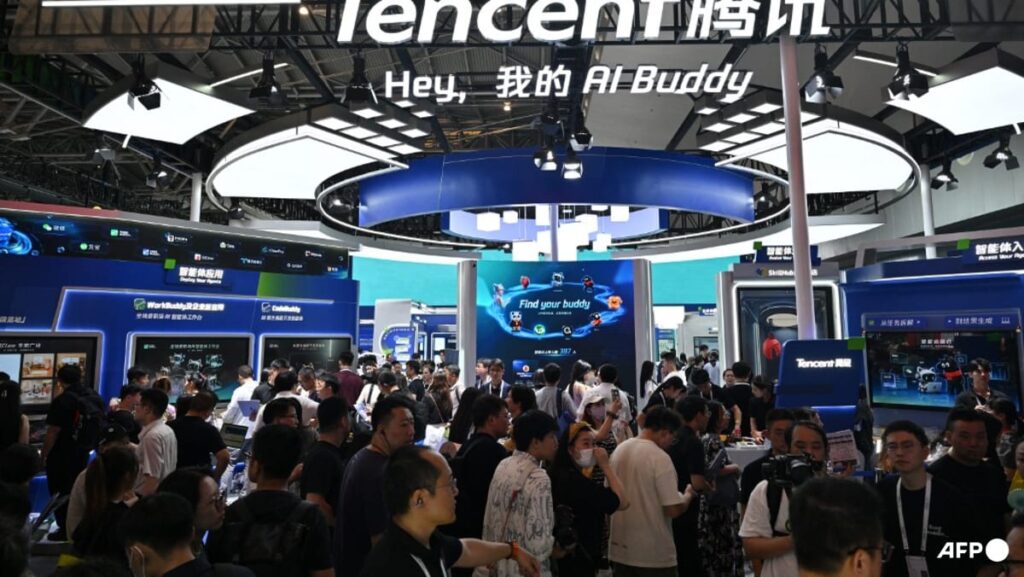
A NEW BATTLE FOR TECH DOMINANCE IN CHINA
For much of 2026, Tencent has faced questions about whether it is falling behind in China’s AI race. The company has already lost ground in short-form videos, and its AI chatbot Yuanbao trails competitors including ByteDance’s Doubao.
According to analytics firm QuestMobile, Doubao had 382 million monthly active users in June, compared with about 50 million for Yuanbao.
“The Chinese AI industry is super competitive because it’s highly fragmented,” said Rui Ma, founder of Tech Buzz China, a platform that provides analysis and commentary on China’s technology industry.
She highlighted the large number of companies competing in China’s AI market, in contrast to what she described as an almost duopoly between OpenAI and Anthropic in the United States.
Independent tech analyst Pei Pei said the emergence of AI companies was changing the competitive landscape, which had previously been dominated by China’s major internet giants.
“There used to be a narrative centred on Tencent, Alibaba and Baidu. Then it became a Tencent-versus-ByteDance story. But that narrative has only lasted five years or so. Now, it’s shifting again to a story of traditional tech versus AI,” he noted.
Pei cited the rapid rise of AI developer Zhipu. The Hong Kong-listed company briefly surpassed HK$1 trillion (US$128 billion) in market value in June.
“Increasingly, the competition could be between traditional tech giants that fail to keep up with the AI trend, those that successfully embrace it and a new generation of AI startups,” he added.
One concern is that AI could eventually take over some of the roles played by platforms such as WeChat and Douyin – ByteDance’s short-video app and the Chinese counterpart of TikTok – while also enabling new industries to emerge and expand rapidly.
Investor concerns over Tencent’s AI strategy have also weighed on its Hong Kong-listed shares. But while rivals have moved aggressively into AI, Tencent has been more measured, raising questions about whether it can keep pace.