


Why and how do firms buy carbon credits?
Carbon credits allow companies to compensate for emissions generated by activities such as air travel, shipping and manufacturing, by paying for emissions reductions or removals elsewhere.
One carbon credit represents 1 tonne of greenhouse gas emissions reduced or removed from the atmosphere.
Forest conservation projects, for instance, can generate credits by preventing deforestation and the release of carbon stored in trees and soil. Other projects earn credits by removing carbon dioxide already in the atmosphere.
Before these credits can be sold, the emissions saved must be calculated and independently verified.
Unlike projects that reduce emissions by replacing fossil fuels with cleaner energy, forest projects face an additional risk: Carbon stored in trees and soil can later be released through fires or deforestation.
Do forest fires wipe out the credit?
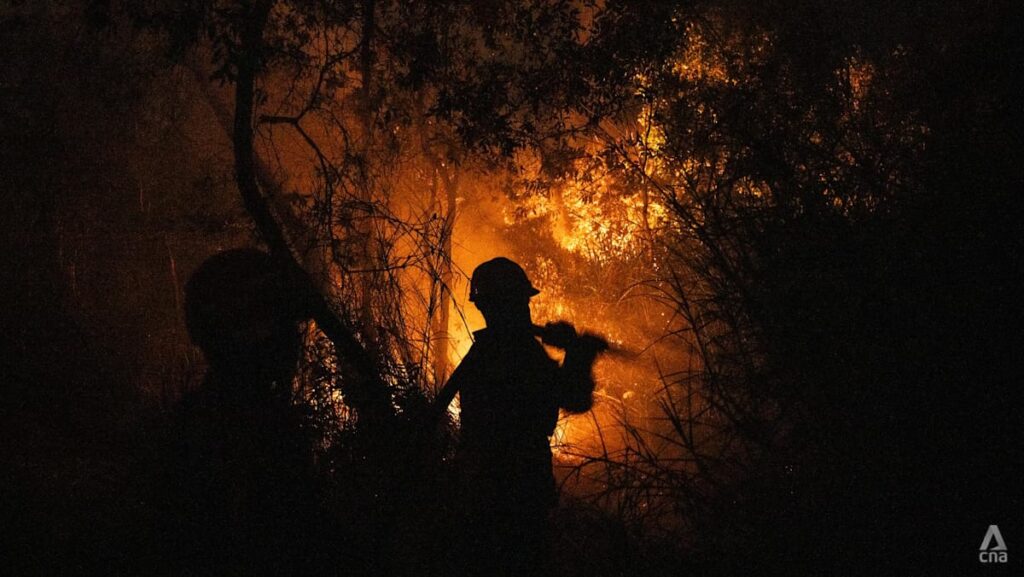
When a protected forest burns, carbon stored in its vegetation and soil can be released back into the atmosphere, potentially undoing some of the emissions savings that the project was credited for delivering.
However, a fire does not automatically invalidate all the carbon credits previously issued by a project.
Experts must first determine the extent of the damage and how much carbon has actually been released.
While satellite images can identify fire hotspots and burnt areas, they may not capture the full extent of the damage, particularly in peatlands where fires can continue burning underground.
Mr Bjorn Fonden, Asia-Pacific director at the International Emissions Trading Association (IETA), said assessing a fire’s impact requires looking beyond the visible damage to determine whether the project has delivered its intended climate benefits.
“When we look at the fires, the question we ask is not simply are the trees still standing, but if the project prevented emissions that otherwise would have happened,” he said.
He added that independent verifiers must conduct scientific field measurements, including assessing how much underground peat and biomass has burnt.
These findings are then used to establish whether previously credited emissions savings have been reversed.
A project affected by fire may generate fewer new credits in subsequent years. If the fire releases carbon associated with credits already issued, the loss may also need to be compensated for.
How are carbon credit buyers protected?
One of the main safeguards used by carbon credit programmes is an arrangement known as a buffer pool.
Under this system, a portion of the credits generated by forest projects is withheld from sale and placed in a shared reserve.
These credits act as insurance against unforeseen events, including wildfires, floods and other disasters.