


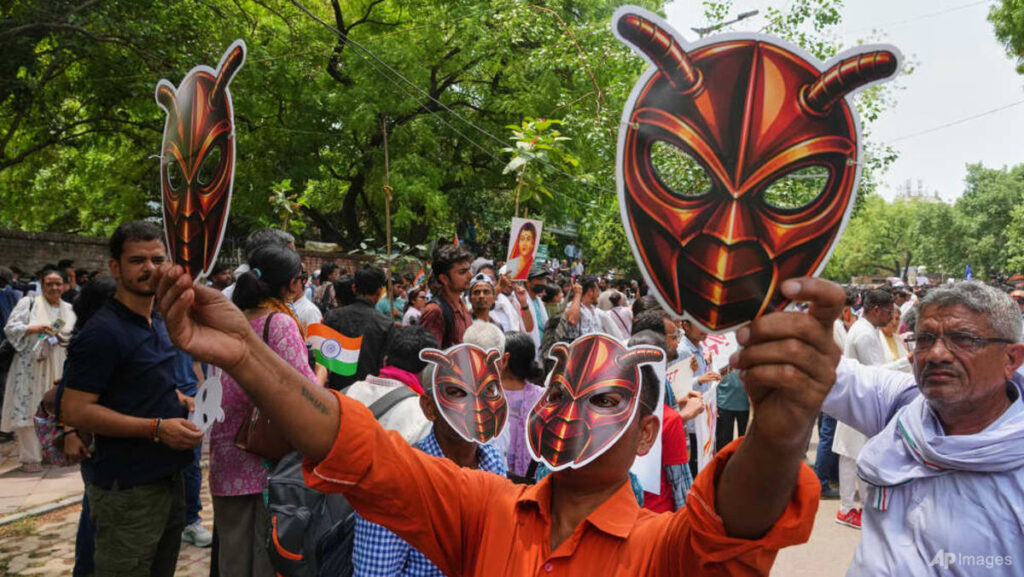
India’s Cockroach Janta Party (CJP) began as an online satire. It is now at the centre of one of the country’s biggest youth-led protest movements in years, drawing thousands to the streets.
Sparked by repeated exam paper leaks, the protests have forced the government into talks – and exposed deeper frustrations over the education system, jobs and fairness.
What’s driving the movement, and can it lead to real change?
Why are young people so angry?
The latest protests were triggered by the cancellation of India’s highly competitive and prestigious undergraduate medical entrance exam after question papers were leaked, affecting about two million students.
The fallout was severe, with about a dozen student suicides reportedly linked to the disruption.
But analysts said the episode was only a tipping point.
Years of recurring exam leaks, widening inequality and a shortage of jobs had already eroded trust in the education system. For many young Indians, what is breaking down is a long-standing social contract that education and hard work will lead to upward mobility.
“Families make enormous financial and emotional sacrifices because a degree or a competitive examination is still seen as the main pathway towards a secure middle-class life,” Uday Chandra, visiting professor at Ashoka University, told CNA.
“That contract is now under strain.”
India has seen a rapid expansion in the number of graduates in recent decades, but job creation has not kept pace. Urban youth unemployment stood at 13.6 per cent in 2025, while one in four people aged 15 to 29 was neither employed nor in education or training.
At the same time, inequality is shaping outcomes even before exams begin.
“Wealthier families can pay for private schooling, coaching, repeated attempts, and years of foregone income. Most families cannot,” Prof Chandra said.
“When a public exam paper is leaked, cancelled, incorrectly graded or delayed, students now see it as a theft of time and, more importantly, of a bright future they were promised.”
Independent political researcher and columnist Asim Ali said that the exam leak issue has become a proxy for broader anxieties.
The issue has come to represent a wider crisis of dwindling opportunities and blocked upward mobility. “The political order faces the classic problem of a restless, unemployed educated youth population. There are simply not enough jobs to go around,” he said.