


APPREHENSION IN VIETNAM
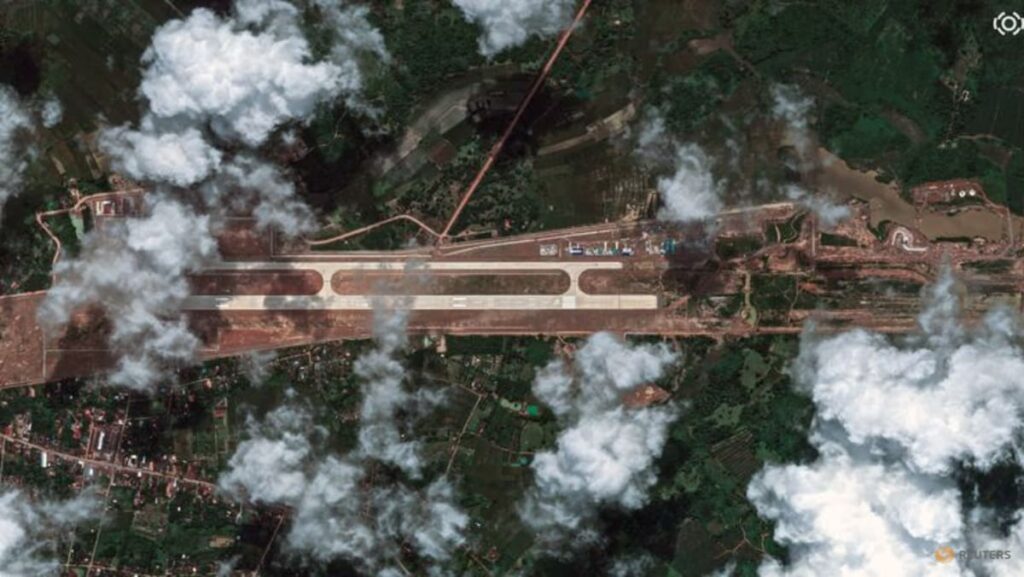
Laos’ defence ties with external powers are, of course, a domestic matter. But for Laos’ neighbours, China’s presence at Ban Keun, which reportedly already includes PLA attack jets, is bound to raise apprehensions.
And nowhere more so than in Hanoi.
Cambodia and Laos constitute Vietnam’s western flank, an area Hanoi views as its traditional sphere of influence. To preserve its strategic interests, Vietnam maintains friendly relations with both countries and tries to ensure neither becomes a forward operating area for geopolitical rivals, especially Beijing which has overlapping territorial claims with Hanoi in the South China Sea.
But as China’s economic heft in Indochina has grown, so too has its political clout, sometimes at Vietnam’s expense.
Since the late 1990s, China has become Cambodia’s closest economic and security partner, and recently gained privileged access to the Ream Naval Base.
Over the past two decades, Laos’ economic dependence on China has also deepened, and due to the construction of several Chinese-funded infrastructure projects, most notably a high-speed railway, Vientiane now finds itself deeply in debt to Beijing. The Ban Keun facility suggests that China may be leveraging its economic power to advance its security interests in Laos.
Aside from the prospect of increasing Chinese arms sales to Laos, and strengthening military cooperation between the PLA and LPAF, the Ban Keun station gives China an additional strategic pressure point on Vietnam’s western flank.
It will not greatly enhance the PLA’s operational capabilities, as it has much larger air force bases in Yunnan and Hainan provinces. But together with the Ream Naval Base and new military facilities under construction in the Paracel Islands, Ban Keun shows that China is increasingly encroaching into Vietnam’s strategic space.