


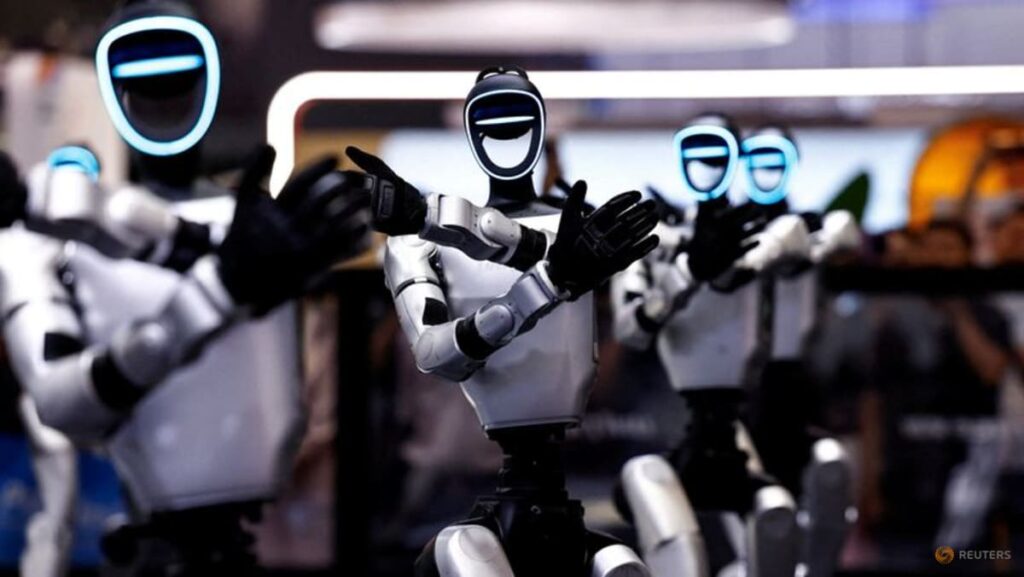
INVESTMENTS IN HUMANOID ROBOTS
So why are billions being invested into building humanoids? The obsession with the human form may be the main culprit. We are building robots in our image not because it is efficient, but because it is emotionally resonant. Yet for 99 per cent of industrial tasks, a humanoid shape is a structural liability. And to try to replicate bipedal balance, manufacturers are using algorithms and specialised motors known as servos at astronomical cost.
None of this is to dismiss the genuine progress being made. Advocates for humanoids raise two counter-arguments that merit consideration.
The first advantage is environmental fit. Our world – factories, hospitals, homes – was built for humans. Retrofitting it for specialised robots is costly and slow. A humanoid can use existing spaces and tools as is. This unlocks markets in logistics, care and rescue – no wheeled robot can traverse a collapsed building’s rubble.
The second is software. AI models that simulate how the physical world works could enable real-time reasoning, not just rote moves. Because humanoids share our form and mimic our mobility, they can learn from vast video data of human activity – unavailable to other designs. This hardware-AI synergy could eventually bring robotics its “ChatGPT moment”, allowing one platform to be updated for many tasks.
But while these are serious prospects, they are distant ones. Lab demos are far from factory-floor reliability. Environmental fit doesn’t justify humanoids’ cost and complexity when most tasks suit optimised machines. Their flexibility remains a solution looking for a problem better solved more simply, for now.
Robots are, of course, the future. They are already reshaping our world. But the machines that are having most impact, at least in the near future, are specialised and decidedly non-humanoid.