


WEAKENING PILLARS
The fundamental problem with the Trump administration’s approach to India is that it prioritises short-term interests (in this case quelling inflationary pressures ahead of the upcoming US midterm elections) over long-term strategic considerations.
Two key pillars of the India-US relationship have weakened under Trump: the countries’ shared democratic values and India’s role as a counterbalance to China. The values debate is non-existent in Trump’s might-is-right, hemispheric worldview, and the “China factor” has lost salience, as each country is independently seeking to reset relations with Beijing.
Earlier this year, Deputy Secretary of State Christopher Landau said the US would not repeat the “mistake” it had made with China by allowing India to emerge as an economic competitor to the US. This was a far cry from the stance of previous US administrations, which helped to facilitate India’s rise.
Looking ahead, a long-delayed bilateral trade agreement and a Quad leaders’ summit are key watchpoints for a structural shift in the bilateral relationship. Both face obstacles: India’s finance minister says trade talks have hit a “plateau”, and no Quad leaders’ summit has taken place in over two years. Nonetheless, recent claims that a deal is near and plans for a Quad leaders’ summit in Manila in November are cause for some hope.
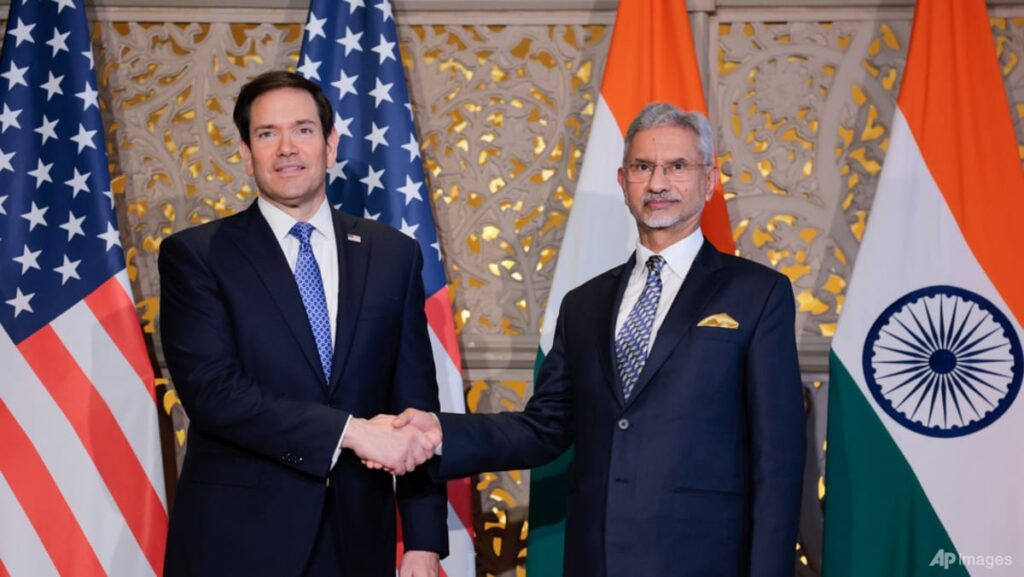
Rubio’s visits to India’s financial and energy capitals help to strengthen India’s strategic indispensability to the US. However, a lasting reset in the bilateral relationship needs to go beyond episodic achievements. Rather than platitudes or dealmaking, the strategic rationale of the India-US relationship needs to be rediscovered and revived.
Dr Chietigj Bajpaee is senior research fellow for South Asia in the Asia-Pacific Programme at Chatham House. This commentary first appeared on Lowy Institute’s blog, The Interpreter.