


NEWYou can now listen to Fox News articles!
There are already nearly 4,600 data centers in the United States, and thousands more in the works. In 2025, companies spent almost $400 billion on U.S.-based data centers, with spending trending even higher this year.
From New York to Texas, the backlash is growing. “Leading the nation” read a sign on the podium as New York Democrat Gov. Kathy Hochul introduced a statewide moratorium on hyperscale data centers. Texas followed on Aug. 3, when Republican Gov. Greg Abbott announced a pause on new data center grid connections until state agencies can audit the projects. At least 14 other states are considering similar actions, including Maryland, Michigan, Minnesota, Wisconsin and even Virginia, whose northern suburbs are the data center capital of the world.
These misguided efforts seek to protect residents from data centers by ensuring they miss out on the benefits. Communities that excluded canals and railroads in the 19th century often found themselves bypassed by new economic activity.
TEXAS GOV. GREG ABBOTT EFFECTIVELY PAUSES NEW DATA CENTER PROJECTS PENDING STATEWIDE GRID AUDIT
States that make it hard to build artificial intelligence (AI) infrastructure risk a similar mistake. Compute can be accessed remotely, but the communities that permit the necessary physical infrastructure – like data centers – will still attract capital, expand their tax base and create jobs and other opportunities that other areas may miss out on.

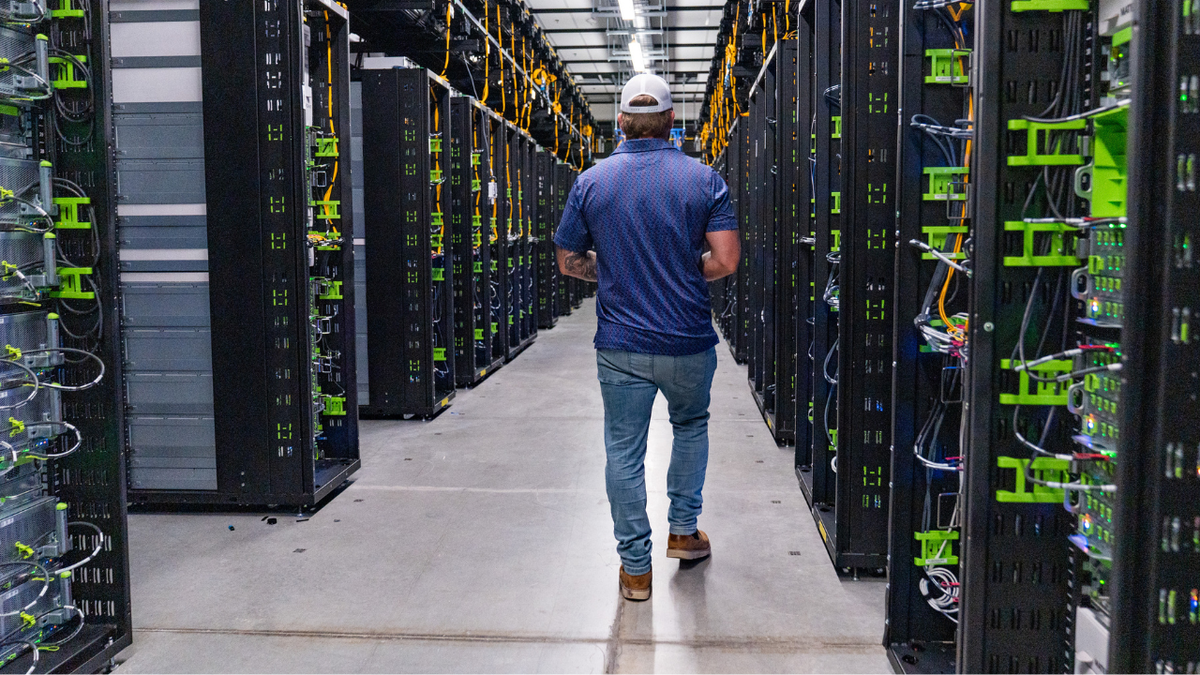
Data center development is surging across Texas, with North Texas taking the top spot in a new global ranking of the industry’s leading markets. (Mikala Compton/The Austin American-Statesman/Getty Images)
The resistance does not come from nowhere. The biggest worry is that data centers will drive up local prices for power. Overall, however, this just hasn’t happened. When the Lawrence Livermore National Laboratory explored why retail electricity prices rose above inflation from 2019-2024, it offered seven explanations, none having to do with data centers.
Still, it’s fair for people to worry that data centers’ voracious need for power will stress the grid and squeeze consumers. Policymakers and the hyperscalers, major cloud computing and data center providers, themselves are taking steps to minimize this risk. Utilities in 19 states, for example, have imposed “large load tariffs,” in which big power consumers pay for new generation and transmission (and sometimes more).
The White House announced in late July that Amazon, Google, Meta, Microsoft, OpenAI, Oracle, xAI and more than 200 other players have agreed to pay for 100% of the power infrastructure required by data centers.
FOUR WAYS TO HARDEN AMERICA’S POWER GRID BEFORE OUR GLOBAL ENEMIES STRIKE
Once the power problem is sorted, the remaining issues, such as noise and traffic, are local. So are the potential benefits, such as tax revenue and construction jobs. Communities should therefore have the right to decide whether the benefits are worth the disruption. This is a version of the Coase Theorem, an economic theory that holds that private parties (in this case, one side being a community) can negotiate solutions to externalities on their own without heavy government intervention.
And localities are indeed proving themselves willing and able to negotiate good deals for their residents. Lancaster, Pa., for example, secured commitments that will limit noise and water usage, along with $20 million for the city’s economic development and sustainability efforts. Cedar Rapids, Iowa, struck a community betterment agreement with Google and QTS that included job and wage guarantees. Teachers in Richland Parish, La., received bonus checks of as much as $51,000 thanks to higher local sales tax revenues generated by the construction of a nearby massive data center.
CLICK HERE FOR MORE FOX NEWS OPINION
State-level restrictions also carry a whiff of luxury belief, with people who don’t live in areas where data centers could be built imposing their preferences on those who do. Many struggling communities with more land than prosperity would love the chance to negotiate with a hyperscaler.
AMERICA’S AI BOOM IS A JOBS OPPORTUNITY, NOT AN EXCUSE FOR UNIVERSAL BASIC INCOME
To be sure, the principle cuts both ways. Just as states should not enact blanket bans, they should not force projects on unwilling towns or counties. States and communities also should not rush to offer tax benefits or other incentives to hyperscalers that have proven willing to invest massive sums on compute. At the very least, the public should always know exactly, and beforehand, what kind of incentives are being offered.
The White House announced in late July that Amazon, Google, Meta, Microsoft, OpenAI, Oracle, xAI and more than 200 other players have agreed to pay for 100% of the power infrastructure required by data centers.
CLICK HERE TO DOWNLOAD THE FOX NEWS APP
AI will become an ever-greater part of our economy, whether the data center is near or far. What can be done is to embrace the opportunity, while limiting the potential harm. When it comes to data centers, that balance is best struck by those who will live near them.