


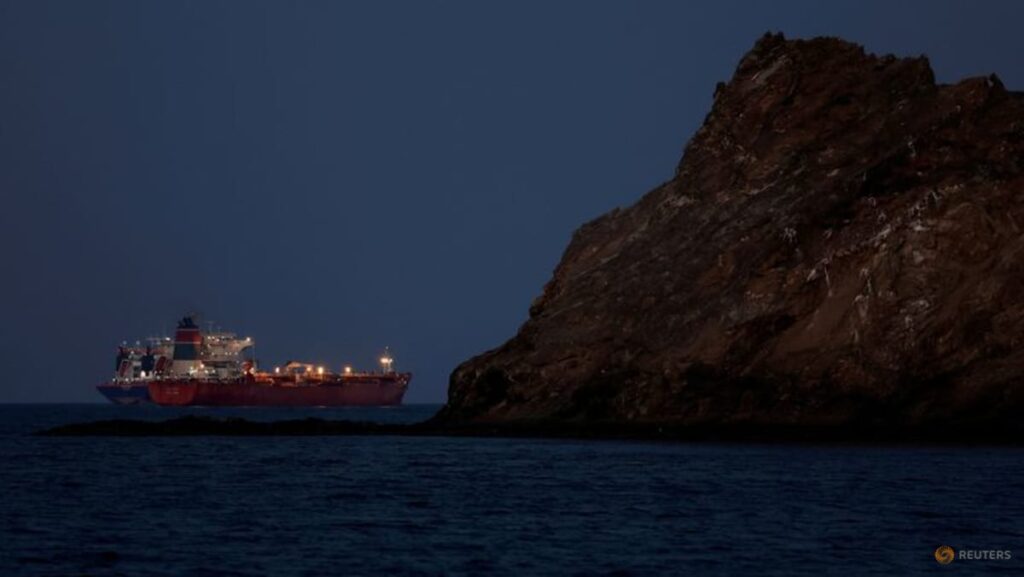
Nazery, the maritime scholar, said Iran could be planning “various tiers” for countries seeking access to the Strait of Hormuz: friendly countries, countries indirectly supporting the US or Israel, and the enemies themselves.
“There are those granted free passage and those on whom toll charges are imposed based on Tehran’s discretion,” he said.
“It is also possible countries deemed to be indirectly supporting US-Israel would be imposed with toll fees on their vessels or cargoes bound to their ports.”
DIVERSIFYING ENERGY ROUTES AND SOURCES
On that note, Nazery said countries would do well to diversify their sources of imported energy, and turn to countries like China and Russia as well as those in Africa and Latin America.
“In other words, obtaining supplies from countries which are not located in areas prone to conflict, such as the Gulf region,” he said.
Seah from the ISEAS-Yusof Ishak Institute said ASEAN in particular needs to diversify its supply sources, but acknowledged this will take time. In the meantime, gaps can be filled through intra-regional trade, she added.
This could include fertiliser for farming, she said, a commodity whose supply has been disrupted by the war as a third of fertiliser shipped by sea comes from the region via the Strait of Hormuz.
“Can urea be sourced from within the region? Can we enlist the other countries such as China, Japan, South Korea, Australia and New Zealand, basically countries on this side of the Pacific, in our diversification efforts?” she asked.
Seah observed that several events in the past five years – the COVID-19 pandemic, the Russia-Ukraine war, and Red Sea shipping disruptions – had exposed ASEAN’s supply chain resilience.
“But there were no sustained strategic actions at the regional level,” she said, calling on ASEAN to develop trade resilience measures for “highly volatile” emergency situations.
The Strait of Malacca, for one, is a “major potential chokepoint”, Seah said, stressing that “if taken or blocked, will be this region and East Asia’s worst nightmare”.
The Strait of Malacca is a narrow waterway in Southeast Asia connecting India via the Andaman Sea to China and East Asia via the South China Sea. It is one of the world’s most important and busiest shipping lanes, handling over 25 per cent of global trade.
“I think that ASEAN countries need to urgently discuss how to ensure the safety of passage (in the Strait of Malacca) … and to do this under worst-case scenarios,” Seah added.
“The region’s maritime security and safety planners should sit together to discuss possible measures.”