



NEWYou can now listen to Fox News articles!
A rare filing from prominent economists and former government officials highlighted the high stakes in the Supreme Court’s decision allowing Lisa Cook, a top official at the Federal Reserve, to remain in her role while her legal challenge to President Donald Trump’s firing moves forward.
In a 5-4 ruling, the justices concluded that the Federal Reserve occupies a unique constitutional position among independent federal agencies, allowing Cook to remain in office as her lawsuit proceeds.
The case drew an extraordinary amicus brief from leading figures in American economic policy, who urged the court to preserve the Federal Reserve’s independence and warned that expanding presidential control over the central bank could undermine confidence in U.S. monetary policy.
An amicus brief is a filing by a non-party that offers information, expertise or legal arguments to help a court decide a case.
WHO IS LISA COOK? THE FED GOVERNOR AT THE CENTER OF TRUMP’S SUPREME COURT FIGHT


President Donald Trump and Federal Reserve Governor Lisa Cook are shown side by side in this image. (Andrew Harnik/Al Drago/Getty Images/Getty Images)
It was signed by every living former chair of the Federal Reserve, Alan Greenspan, Ben Bernanke and Janet Yellen, as well as six former Treasury secretaries who served presidents of both parties.
The group, which also includes seven former White House economic advisors, spans roughly five decades of U.S. economic policymaking.
Such intervention is rare, as former Fed chairs and Treasury secretaries typically steer clear of public legal battles.
In the 32-page amicus brief, the group argues that allowing the Trump administration to remove a sitting Fed governor would “erode public confidence in the Fed’s independence and threaten the long-term stability of the economy.”
POWELL WARNS LISA COOK’S SUPREME COURT CASE COULD BE MOST CONSEQUENTIAL LEGAL THREAT IN FED’S HISTORY
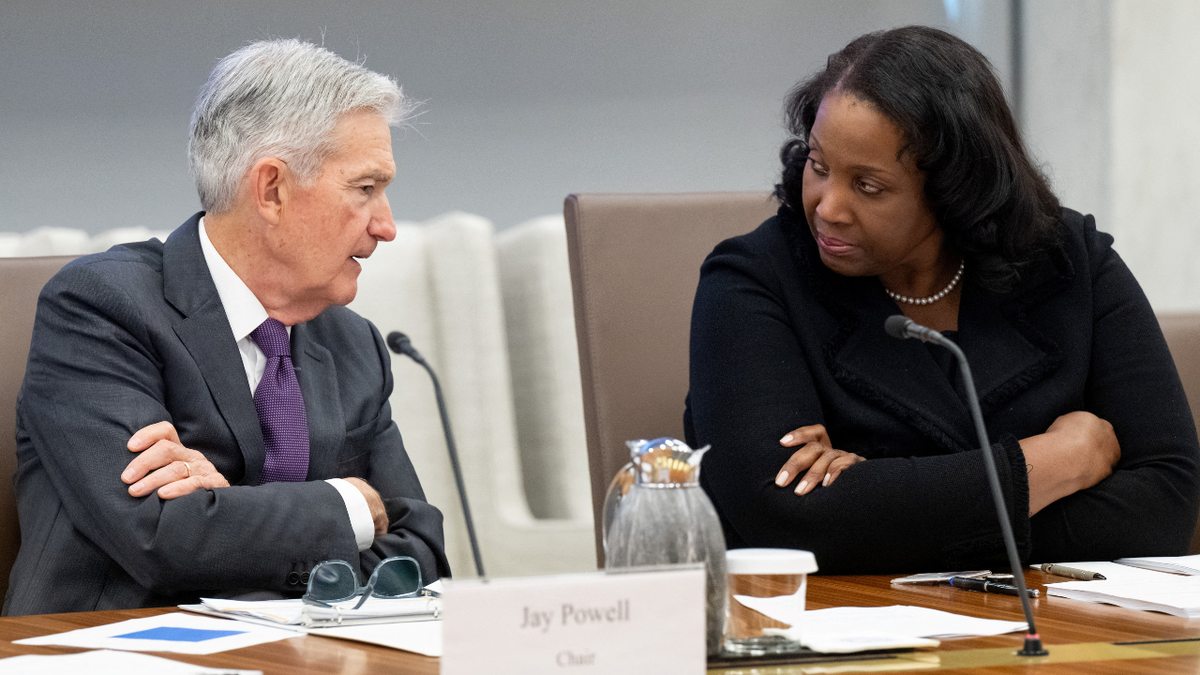
Chairman Jerome Powell speaks with Fed Governor Lisa Cook at the Federal Reserve Board building in Washington, D.C., on June 25, 2025. (Saul Loeb/AFP/GettyImages)
Expanding the president’s power over Fed board membership is “neither necessary nor appropriate” and would be counterproductive, the group writes, because it would weaken the central bank’s independence and risk higher inflation and economic instability.
That concern, the group argues, is already playing out in real time.
“Sectors that pay close attention to the Federal Reserve — including the financial markets, the public, employers and lenders — are watching the current dispute over the President’s removal of Governor Cook to judge how credible the Fed will be going forward.”
Solicitor General D. John Sauer said Cook’s amici filing did not address the “legal issues at the heart of this case.”
CLICK HERE TO DOWNLOAD THE FOX NEWS APP
“Most of Cook’s amici emphasize policy arguments, touting the perceived benefits of the Federal Reserve Board’s independence in setting monetary policy,” Sauer wrote, adding that “policy preferences are not the law, and these particular preferences lack any logical limit.”
The case has emerged as a major test of the legal protections that have long insulated the Federal Reserve from direct political control.
Read the amicus brief here: