


Myanmar has become a haven for industrial-scale scam compounds, which have drafted some 300,000 people from dozens of countries, often against their will, according to the United Nations. One of those compounds is Deko Park, a conglomeration of big, blue-roofed buildings dotted with white satellite dishes near the Thai border.
Data from a sample of devices at Deko Park, provided by International Justice Mission, shows Starlink among the top internet service providers in use from Dec 10, 2025, to Jan 6, 2026, just after two regional telecom companies.
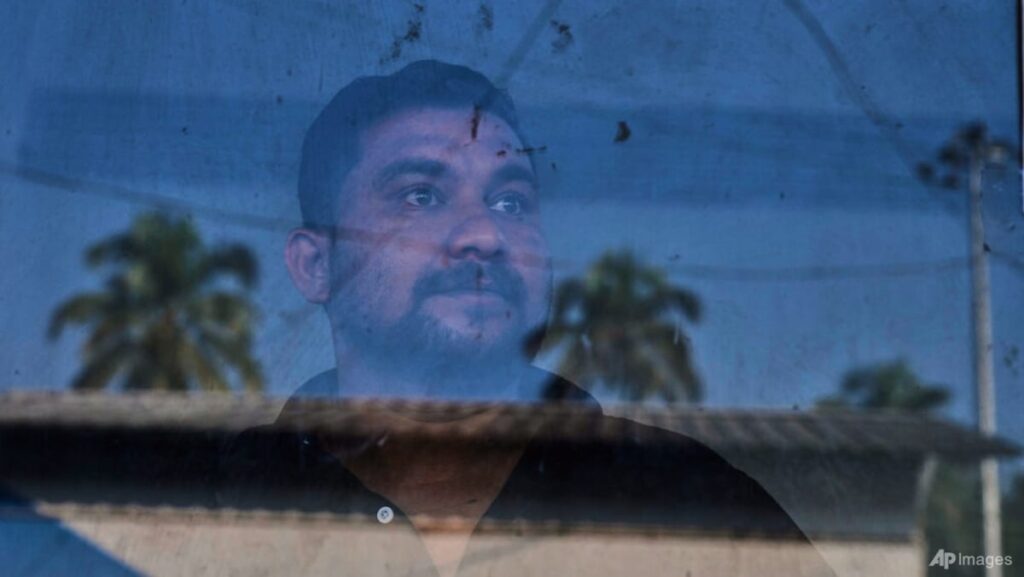
An Ethiopian engineer named Ebisa told AP he used Starlink at Deko Park from December 2024 through December 2025, when he managed to escape. He asked AP to only publish his first name because he wants to protect his privacy.
Ebisa’s job was to collect the WhatsApp numbers of rich, vulnerable men. He said he was constantly punished — beaten, shocked, detained and forced to exercise for hours at a time — for failing to meet impossible performance goals.
One day, he said, he got fed up and tried to evade a beating. He didn’t get very far. He said the security guards at Deko Park beat him so badly he was blinded in one eye. Photographs show his eye injuries and AP spoke with an NGO who helped him seek medical care in Thailand.
“It was hard to survive,” he told AP. “Finally, God helped us out from that hell.”
Speaking from a shelter for human trafficking victims in Thailand in December, he said he wanted to get his eye fixed before going home because his mother’s health is fragile and he worried the sight of his injury might kill her.
“It’s very shameful,” he said. “If God helps me, if I get medication, maybe I can get back my eye.”
He told AP on Monday from his home in Ethiopia that doctors had informed him they could not save his eye. “It’s been a tough reality to face,” he said. “They told me that it’s too late to bring back my sight.”
A Nigerian who was also tricked into working at Deko Park, Obinna Okeadu, never made it back home, according to three co-workers, a human rights activist and reports from his family back in Nigeria.
On the afternoon of Oct 28, 2025, Okeadu and his roommate, Ogbonnaya Tochukwu Agwu — known as Valentine — came off an unsuccessful overnight shift and were called out for punishment.
Back in their dorm room after the beating, Valentine watched as Okeadu began to tremble uncontrollably. Okeadu slid to the ground with a thud, his head lolling strangely, with sharp, anguished sounds rising from his body.
“It’s okay,” a friend told him softly. “We’re here.”
But Okeadu was not okay.
“I’m going to die like this,” Okeadu called out, according to Valentine.
Valentine said Okeadu was taken away — presumably to a hospital. He prayed for his friend. But the next day, Okeadu’s computer disappeared and his name was deleted from work chats.
Valentine never saw him again.
This kind of abuse — and the swelling cost of cyberscams to victims around the world — has led to periodic crackdowns. In early 2025, Thailand temporarily cut off internet connectivity, electricity and gas supplies to scam compounds just over its border with Myanmar.
Starlink was a way around the blockade at the time. Satellite dishes proliferated on the rooftops of scam centers in Myanmar, satellite imagery showed, and Starlink usage in Myanmar surged, according to APNIC data.
In April 2025, as the United States prepared sanctions against foreign scam networks in Southeast Asia, SpaceX reassigned IP addresses from Tanzania to create a dedicated block for Myanmar. It’s not clear why, but experts say that step is usually taken to serve growing demand or prepare for entry into a new market.
By June 2025, Starlink was the number one internet service provider in the impoverished, war-torn country, with a 14 per cent share of the market — despite its relatively high cost, according to APNIC data.
In October, amid another sweeping crackdown, Starlink said it cut services to more than 2,500 units near scam compounds in Myanmar. It lost nearly half of its users in the country and its market share plunged from 15 per cent to 6.5 per cent, according to APNIC data.
But in December, Starlink use surged back, and by February, the company was again number one in Myanmar. Today it has a nearly 20 per cent share of the market, APNIC data show.