


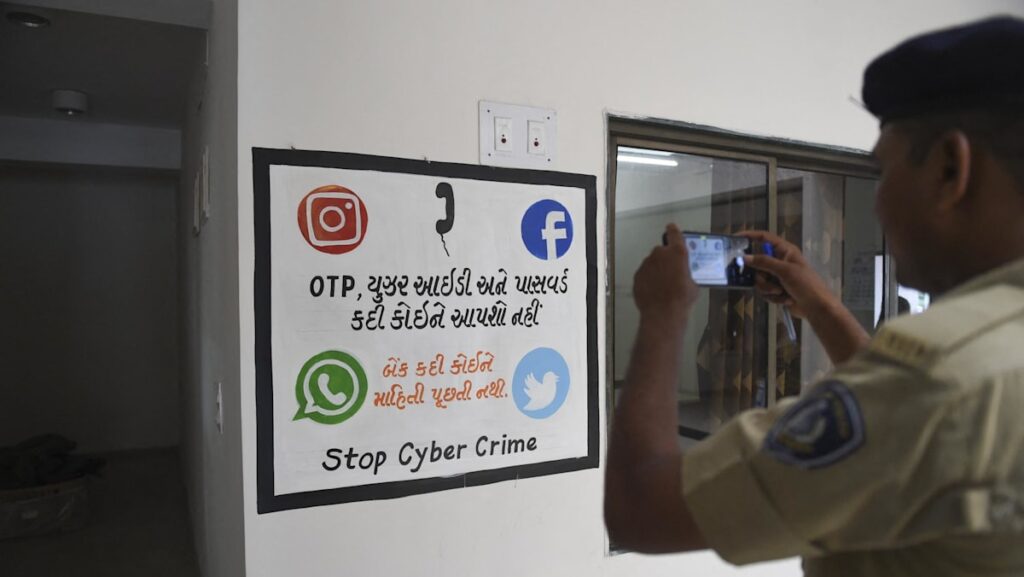
BENGALURU: A video call from a supposed police officer caught retired Bengaluru resident Vijay Mohan off guard. The caller, dressed in police uniform, claimed a parcel addressed to him had been intercepted and found to contain illegal drugs and forged passports.
The fraudsters then shifted the conversation to WhatsApp, sharing documents and instructions that made the investigation appear genuine.
Within hours, Mohan, whose name has been changed to protect his identity, had transferred more than 500,000 rupees (US$5,223) to the scammers.
Reported digital arrest scams – in which fraudsters impersonate officials, threaten victims with arrest and demand money – and related cybercrimes in the country rose over threefold to 123,672 cases in 2024 from two years prior.
During the same period, reported losses surged more than 20 times to 19.36 billion rupees, according to India’s Ministry of Home Affairs.
As scams grow larger, faster and more sophisticated, the Indian government is extending its oversight across the digital ecosystem.
In recent months, it temporarily restricted Telegram during the medical entrance test re-examination, asked Meta to pause WhatsApp’s username rollout, tightened rules for caller identification platform Truecaller, and introduced new requirements for domain registrars and hosting providers like GoDaddy.
“Rather than waiting until cyber scams happen and issue takedown notices, the regulators (in India) have been proactive through these measures,” said Tejas Bharadwaj, senior research analyst with the Technology and Society Program at Carnegie India.
The recent measures signal a shift from relying primarily on removing harmful content after the fact to trying to prevent scams earlier through product design, platform features and internet infrastructure.
Experts that spoke to CNA broadly agree that cybercrime has evolved faster than the systems built to stop it. Modern scams no longer rely on a single app or platform, but exploit multiple layers of the digital ecosystem, from telecom networks and messaging apps to fake websites, payment rails and AI-generated content.
That said, the debate is over how far the government should go: some experts said it must intervene earlier and coordinate action across platforms, others warn that attempts to shape product design and technical systems could give the state powers far beyond fighting cybercrime.
INDIA’S ATTEMPT TO STOP CYBERCRIME AT THE SOURCE
By early 2025, 86.3 per cent of Indian households had internet access, up from just 23.8 per cent between July 2017 and June 2018, according to data from government surveys.
But as more Indians transact, communicate and work online, cybercrime has grown in both scale and sophistication. Indians have lost an estimated US$5.64 billion to cyber fraud over the past six years, according to Carnegie India.