


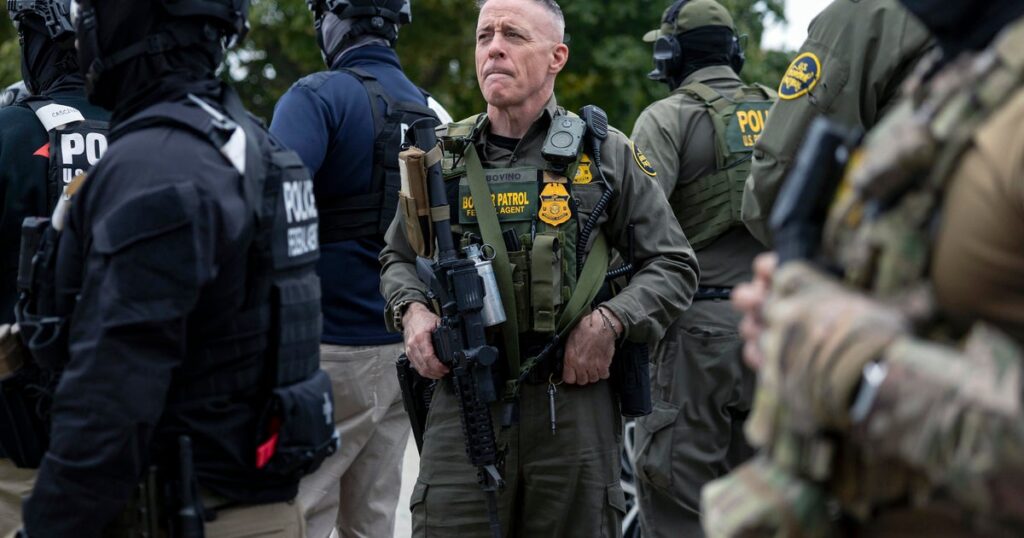
Former Border Patrol commander at large Gregory Bovino, who led the Trump administration’s immigration crackdown in Minneapolis and other major cities, was under internal investigation due to concerns over his testimony in federal court and for past alleged antisemitic comments when he retired, according to records released last week that were reviewed by CBS News.
Customs and Border Protection informed Bovino in an email on March 2 that the agency was “conducting an official Inquiry into allegations of misconduct reported to CBP.” Just 16 days later, Bovino sent an official retirement relocation request.
The investigation was first reported by the Chicago Tribune.
CBS News has reached out to CBP and the Department of Homeland Security for comment.
In a statement to CBS News, a CBP spokesperson said, “DHS does not comment on matters regarding personnel who are no longer with the agency.”
The statement added, “Bovino voluntarily retired from CBP. CBP is not authorized to provide any security for retired personnel.”
While federal privacy rules restrict disclosure of certain personnel records, there is no blanket law or publicly available DHS policy barring comment on former employees.
Bovino, who was a longtime Border Patrol official, was the public face of the Trump administration’s controversial immigration crackdown in Los Angeles, and then Chicago, Charlotte, New Orleans and ultimately, Minneapolis.
Bovino was relieved of his role as “commander at large” in late January after the fatal shootings of U.S. citizens Renee Good and Alex Pretti in Minneapolis — and the response from Bovino and other officials — triggered widespread political backlash.
Immediately after Pretti’s killing, Bovino, citing no evidence, claimed that Pretti intended to “massacre” federal agents.
Border Patrol had already been under investigation for its controversial tactics. A lawsuit filed by the Chicago Headline Club and other groups in Fall 2025 said Border Patrol unleashed an “unnecessarily brutal enforcement of the immigration laws” by deploying agents like teargas, pepper balls and rubber bullets against press and protesters. U.S. District Judge Sara Ellis issued a preliminary injunction limiting use of force and accused Bovino of lying about altercations with agents.
“Most tellingly, Bovino admitted in his deposition that he lied multiple times about the events that occurred in Little Village that prompted him to throw tear gas at protesters,” Ellis wrote.
The letter from CBP sent to Bovino in March addressed this case, asking the former official to consider several questions, including, “Do you agree that District Judge Ellis’ findings about your lack of credibility would have to be disclosed if you were called to testify in a trial?”
The investigator asked Bovino what should happen when a federal judge finds a Border Patrol agent’s testimony to be not credible, then went on to ask whether Bovino believed Ellis’s findings made him “Giglio impaired” — a reference to prosecutors’ obligation to disclose credibility problems that may be used later to impeach law-enforcement witnesses. The line of inquiry suggests CBP was analyzing whether Ellis’s findings created a problem for Bovino beyond the immediate litigation.
The Seventh Circuit later vacated Ellis’s preliminary-injunction order without determining whether or not her credibility findings about Bovino were correct.
He was also asked about alleged antisemitic comments. Rather than ask broadly about his remarks, the investigator puts his alleged statement directly to him: “Did you make a comment to the effect of ‘Do Orthodox criminals also take off Saturday?'” The investigator followed up with, “What did you mean by this comment?”
According to The New York Times, Bovino allegedly learned he was under investigation for disparaging a Minneapolis judge for taking off for Shabbat.
In the CBP documents, Bovino also was asked if he made a comment about “chosen people,” an apparent reference to Jewish people.
Bovino was asked if both his testimony and these comments violated the CBP Standards of Conduct Section 7.7.2, which says, “employees will be professional in their contact with supervisors, subordinates, coworkers, and members of the public,” and 7.7.11, which says, “employees will not make abusive, derisive, profane, or harassing statements or gestures, or engage in any other conduct evidencing hatred or invidious prejudice to or about another person or group on account of race, color, religion, national origin, sex, sexual orientation, age, or disability.”