


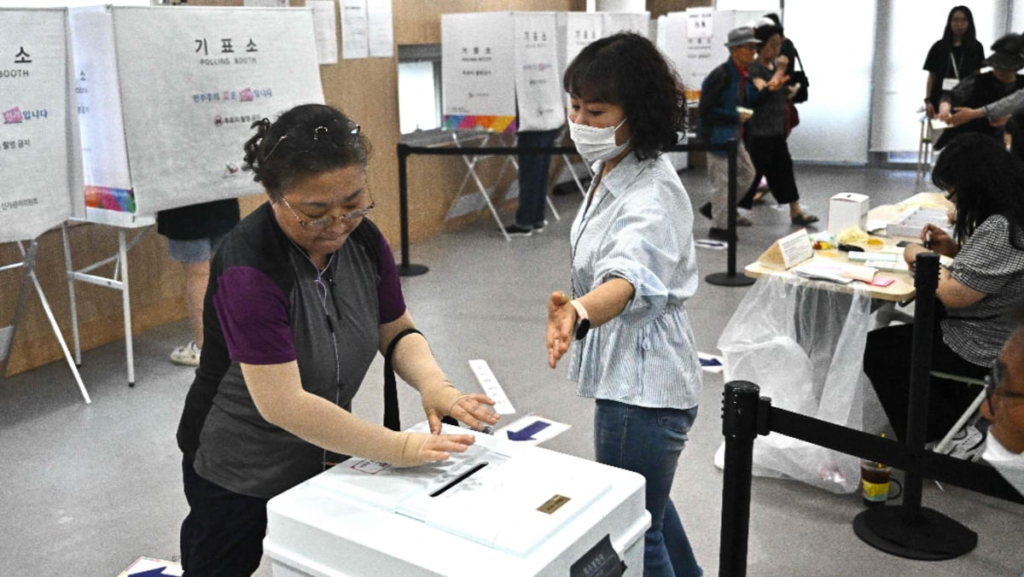
SEOUL: On the streets of Seoul’s Daerim-dong neighbourhood, district council candidate Kang Kwang-bin is making his final appeal to voters.
“Please support candidate number two! Please support candidate number two! Thank you,” he calls out to passersby – in Mandarin.
The language choice has caught the attention of some voters in Wednesday’s (Jun 3) local elections.
In areas like Daerim-dong, home to one of South Korea’s largest ethnic Chinese communities, candidates are increasingly wooing a growing pool of foreign residents who are eligible to vote.
This little-known feature of South Korea’s electoral system – especially rare in Asia – has drawn renewed scrutiny in recent years.
A GROWING FOREIGN ELECTORATE
South Korea allows certain foreign nationals to vote in local elections. Under the law, foreign residents aged 18 or older who have held permanent residency status for at least three years are eligible to cast ballots.
This election, a record 151,000 foreign residents are eligible to vote, according to election authorities. The figure is more than 22 times higher than when the system was first introduced in 2006, when only about 6,700 foreign voters qualified.
As the electorate becomes more diverse, local governments and election campaigns have stepped up efforts to reach foreign voters.
In Gyeonggi Province, the country’s most populous region surrounding Seoul, voter information materials were produced in 13 languages, including English, Chinese, Vietnamese and Nepali.
“I think it’s only natural that we can vote,” a foreign restaurant owner, who has lived in South Korea for 15 years, told CNA.
“If you have lived here for a long time, you should be able to choose someone who will work for this area because it directly affects our daily lives.”
Others say practical issues matter more than the background of candidates and voters.
“I don’t really pay much attention to who gets elected. As long as they do a good job, that’s enough for me. Daily life is more important than politics,” said a Chinese voter in Daerim-dong.
DEBATE OVER WHO GETS A VOTE
The issue, however, has become increasingly controversial.
Critics argue that voting rights should be tied to nationality and reciprocity, pointing out that South Koreans living in countries such as China and Japan largely do not enjoy similar rights.
Public opinion surveys suggest many South Koreans share that sentiment.
A recent poll found nearly seven in 10 respondents opposed granting voting rights to citizens of countries that do not offer South Koreans the same rights.
The debate has focused particularly on Chinese nationals, who make up the vast majority of foreign voters. According to South Korea’s National Assembly Budget Office, Chinese citizens accounted for nearly 80 per cent of eligible foreign voters in previous local elections.