


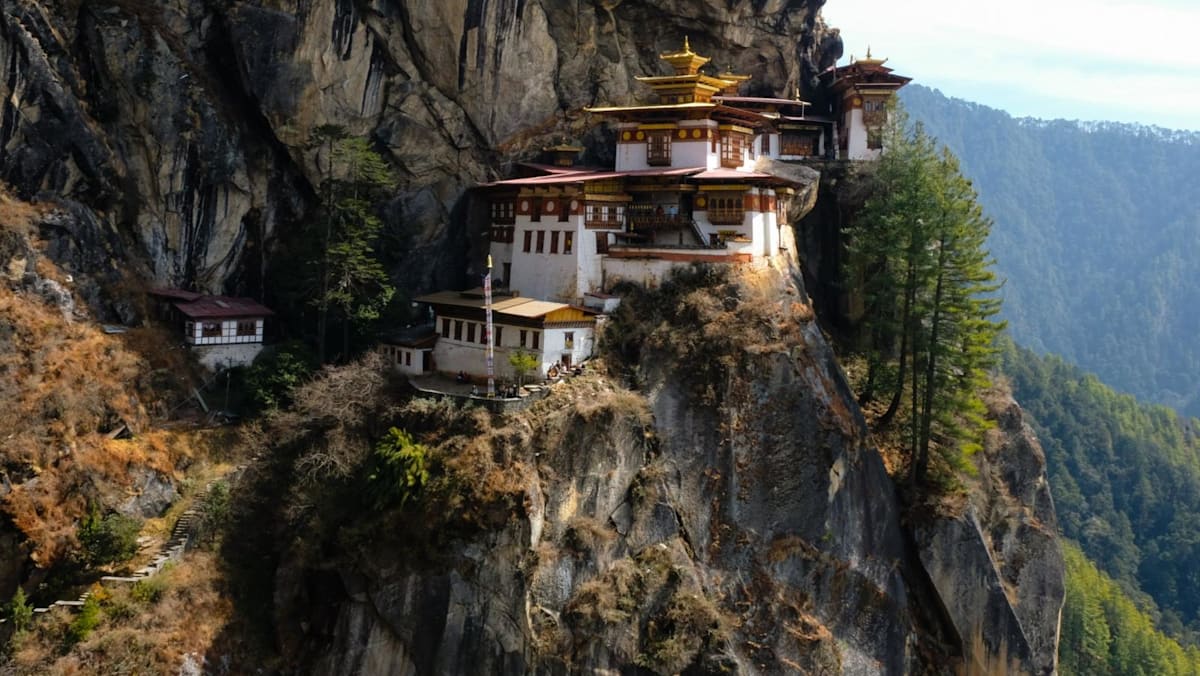
In Bhutan’s Trongsa district, plans are afoot at the Royal Heritage Museum to turn its forested grounds into part of the museum experience, with hiking trails featuring auditory exhibitions on migratory birds, alongside tea tastings using Samcholing village’s bright, sweet green tea.
At Bhutan’s National Museum in Paro, housed in the former watchtower of Ta Dzong, a major revamp is underway. Long home to some 3,000 artefacts – from royal heirlooms and sacred relics to textiles and natural history – the museum is looking to construct a new outdoor amphitheatre, and introduce sound-and-light installations for cultural events.
In June, it will launch the country’s first fully digital immersive exhibition, using 3D and interactive technology to bring Bhutan’s history to life. The shift is reinforced by a new council of 50 youth ambassadors set to be embedded in schools nationwide.
Penjor said museums must now compete for attention in a crowded cultural landscape that includes a new generation of local contemporary artists, including a newfound craze over Bhutanese rap. “We want young people to come into these spaces, co-create with us,and contribute meaningfully back to society,” she said.
The department is also stepping up outreach to elders and rural communities, while partnering with overseas organisations such as the Australian High Commission and international conservation institutes.
Other exciting threads include Bhutan positioning itself as a budding wine destination, and the much-anticipated Gelephu Mindfulness City in southern Bhutan – a forward-looking, sustainable urban experiment that reflects the country’s drive for renewal.

