


Yet observers warn that dependence on Singapore carries risks caused by natural disasters and accidents, which have encouraged Indonesia to diversify its international connectivity.
Muhammad Arif Angga, chairman of the Indonesian Internet Service Providers Association (APJII), said that natural disasters could cause cable disruptions affecting Indonesia’s internet connectivity.
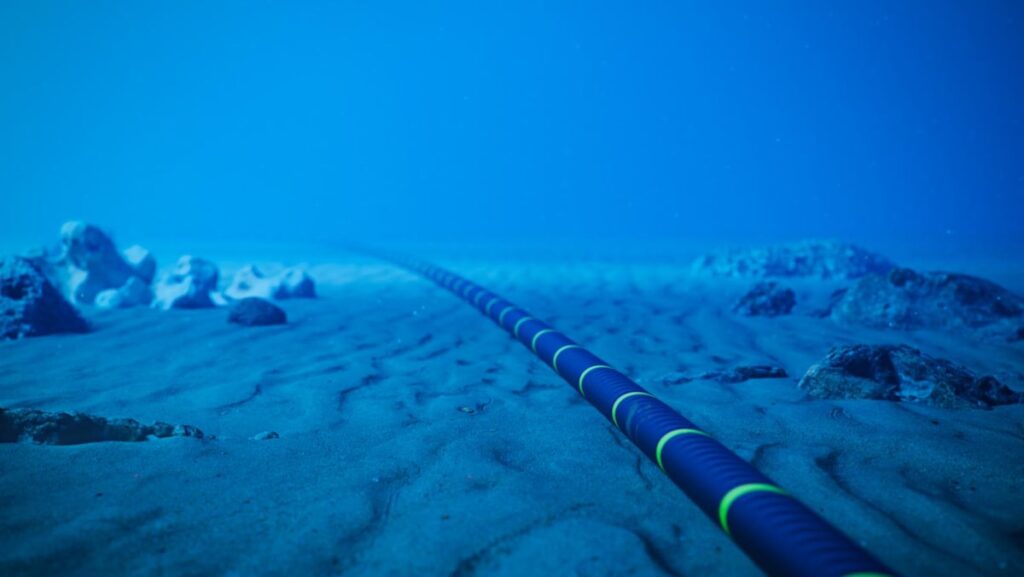
Subsea cable damage can also be caused by ships, anchors, and fishing activities, with around three cable failures weekly, which amounts to 150 to 200 cable failures globally every year, according to the International Cable Protection Committee.
Indonesia inaugurated a new internet connectivity route in Papua in May 2026, giving Papua two independent digital routes that will create new opportunities and accelerate digital transformation, said Indonesia’s Vice Minister of Communication and Digital Affairs Angga Raka Prabowo.
The first route connects through Sulawesi-Maluku-Papua while the second links Vanimo in Papua New Guinea to Jayapura then connects Manado to Los Angeles in the United States.
CHALLENGES TO DIGITAL SOVEREIGNTY
Analysts said that the government’s move to develop subsea cable infrastructure also includes maintaining domestic communications infrastructure, though this has challenges.
This means that Indonesians should be able to be connected through national networks rather than be routed through another country’s networks or interconnection points, said Erza of Monash University.
“If 90 per cent of internet infrastructure passes through Singapore via submarine cables, there are several risks,” he said, citing data security as one of them.
Reducing dependence on Singapore will not be easy however, as Indonesia is not a small territory with closely clustered cable landing stations like Singapore, and has to build and connect digital infrastructure across a vast archipelago stretching from Aceh to Papua.
“We need to become more self-reliant, but that won’t be easy because the required investment is enormous,” Erza added.
Arif of APJII added that only few companies can build subsea cable infrastructure due to high costs and the specialised technical expertise involved.
“From a business perspective, this is a high-level industry. I only know of one or two players interested in opening new routes,” he said, adding that obtaining permits for constructing maritime corridors was also a lengthy process.