


JAKARTA: As soon as Annisa began recounting her days as an intern doctor two years ago, her voice started to tremble. At times, she became so breathless, it was like she was drowning in her own tears.
It was then early 2024, and the 25-year-old junior doctor was undergoing a year-long housemanship at a public hospital in East Java, Indonesia.
Sitting at the bottom of the hospital’s rigid hierarchy, Annisa took on the shifts other doctors avoided and the tasks no one else wanted. Once, she said, she worked for 36 hours straight, covering for more senior doctors who were away for the Muslim holiday of Idul Fitri which in 2024 fell on Apr 9 and Apr 10.
“As tiring as it was physically, mentally it was even worse. Every tiny mistake or the slightest hint of impoliteness could trigger outrage and name-calling, sometimes publicly,” Annisa, who declined to give her full name for fear of reprisal, told CNA.
“Every day I felt like crying. Every day I thought about quitting and giving up on my dream to become a doctor.”
In Indonesia, medical graduates seeking a licence to practise independently must first complete a 12-month housemanship, or internship, at hospitals or clinics, where they undergo supervised, hands-on training under experienced doctors.
Doctors undergoing specialist training must also complete a housemanship programme on top of the housemanship year. This can range between three and six years depending on the specialties.
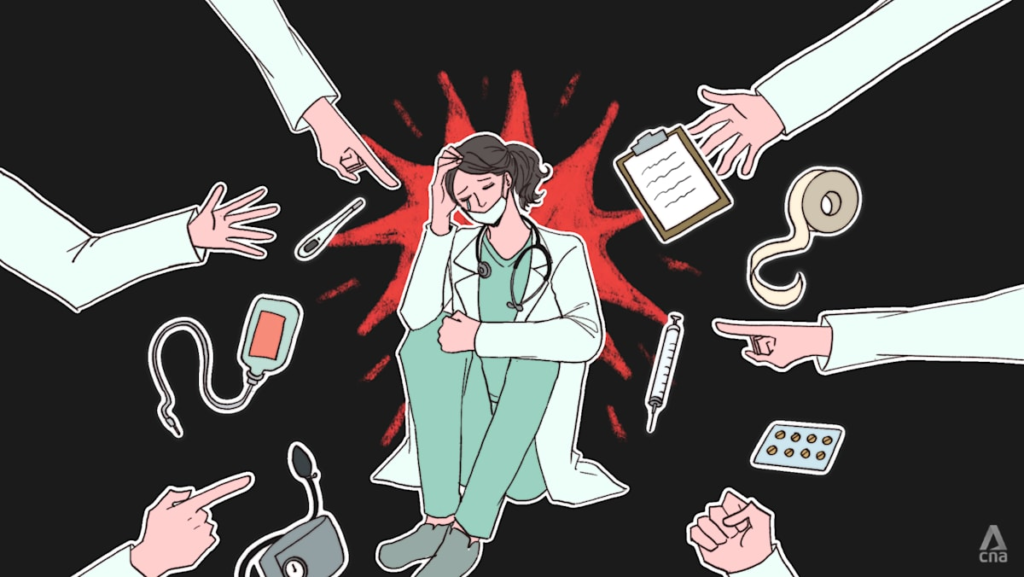
For many doctors, these housemanship periods can be joyful, ripe with valuable lessons and guidance from nurturing seniors. But for others, they can be stressful and traumatising, with serious consequences, as shown in recent cases.
Four deaths amongst houseman doctors since the beginning of the year have pushed the sometimes strenuous workload and highly stressful environment of Indonesia’s intern programmes into the public spotlight.
In the latest case, on May 1, Myta Aprilia Azmy, a 25-year-old doctor interning at Daud Arif public hospital in Kuala Tungkal, a small town in Jambi province, died of a suspected lung infection.
Rudi Supriatna Nata Saputra, acting inspector general at the Indonesian ministry of health said at a press conference in Jakarta on Thursday (May 7) that there were “indications of overwork” among the 30 housemen at the hospital.
Myta and the other housemen were given 12-hour shifts every day and were only allowed four days sick leave during the entire programme, Rudi said.
The housemen were told that they had to compensate for additional sick leave days by staying longer with the programme. Every time they were absent, the housemen had to find colleagues willing to step in their shoes.
“This could be one of the reasons why (Myta) was reluctant to report her illness and continued to work,” Rudi said.
Myta, the inspector general said, first experienced symptoms of high fever and shortness of breath on Mar 26. She chose to self-medicate, at times prescribing herself oral medicines and injecting intravenous liquid with the help of another doctor.
Between Apr 15 and her death she was hospitalised multiple times, first in Kuala Tungkal, then in the city of Jambi, some three hours drive away and later in Palembang, South Sumatra, a further eight hours drive away.
These long drives were done using a private car arranged by Myta’s family and not by an ambulance, which Rudi said violated proper medical procedure considering her low oxygen saturation.
In Palembang’s Mohammad Hoesin Hospital, one of the biggest in Sumatra, Myta was diagnosed with a lung infection and put in intensive care. She died three days later.
Rudi said the investigation was ongoing but added that there were indications that the hospital violated the work hour limit while doctors responsible for the housemanship programme tried to manipulate data and hide evidence
Speaking at the same press conference, Health Minister Budi Gunadi Sadikin promised to evaluate Indonesia’s housemanship programme.
“This year alone, four doctors have died. I am saddened, mournful and this should never happen again,” he said.