


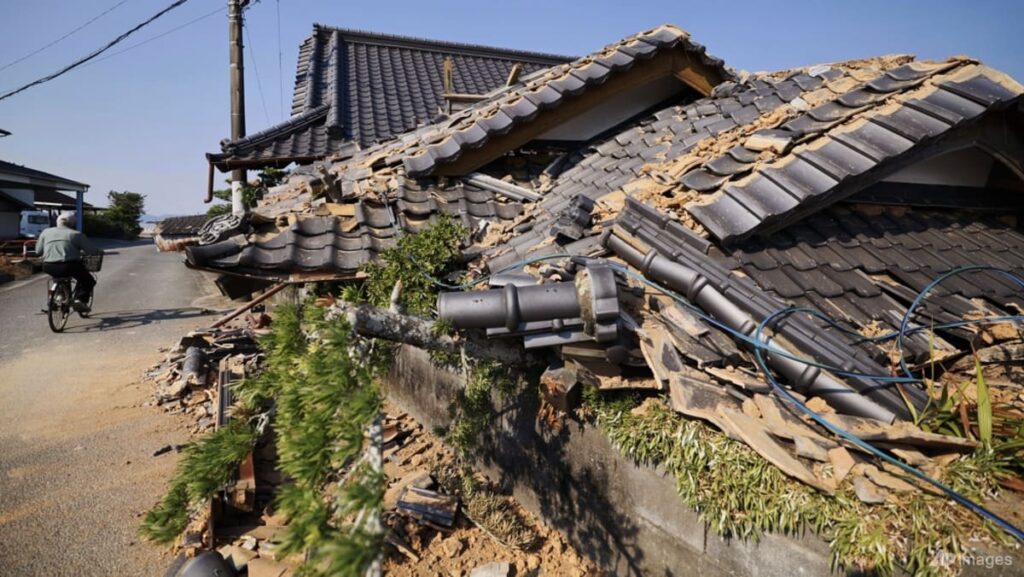
Hosono, who was the minister in charge of the Fukushima nuclear crisis, said he wants to use his expertise from the 2011 disaster to strengthen the agency.
But there are worries that the nation is unprepared for future disasters.
A reconstruction agency was established to help northern Japan’s recovery from the 2011 disaster, including the Fukushima nuclear plant’s decontamination and decommissioning effort, something that required long-term support, but there was no centralised disaster agency.
Less than half of municipal officials in Japan have received disaster management training in the past five years. Only 15 per cent of Japanese municipalities have evacuation contingency plans for elderly and handicapped residents requiring assistance, Hosono said.
Japan used to have reactive disaster response units, with officials from different ministries and departments gathering and working as a temporary team, without a cross-departmental command centre.
JAPAN WANTS TO ADDRESS EXISTING RISKS
Experts have cautioned about the possibility of major quakes in the coming decades and, although specific timing and locations cannot be predicted, officials want people to be prepared.
The biggest worry is a megaquake linked to the Nankai Trough, an undersea trench in the Pacific off southeastern Japan, which could cause an estimated 298,000 deaths, 6.5 million evacuees and 2.35 million lost homes, according to government assessments.
“If this actually hits, our future will be at stake,” Hosono said.
The government also estimates nearly 200,000 deaths could result from a megaquake from two troughs off Japan’s northern coasts. A separate major quake striking metropolitan Tokyo could cause an estimated 18,000 deaths, 4.1 million evacuees and the loss of 400,000 homes.
A Mount Fuji eruption could affect 790,000 people and their homes, while disrupting transportation, power lines and key infrastructure.