


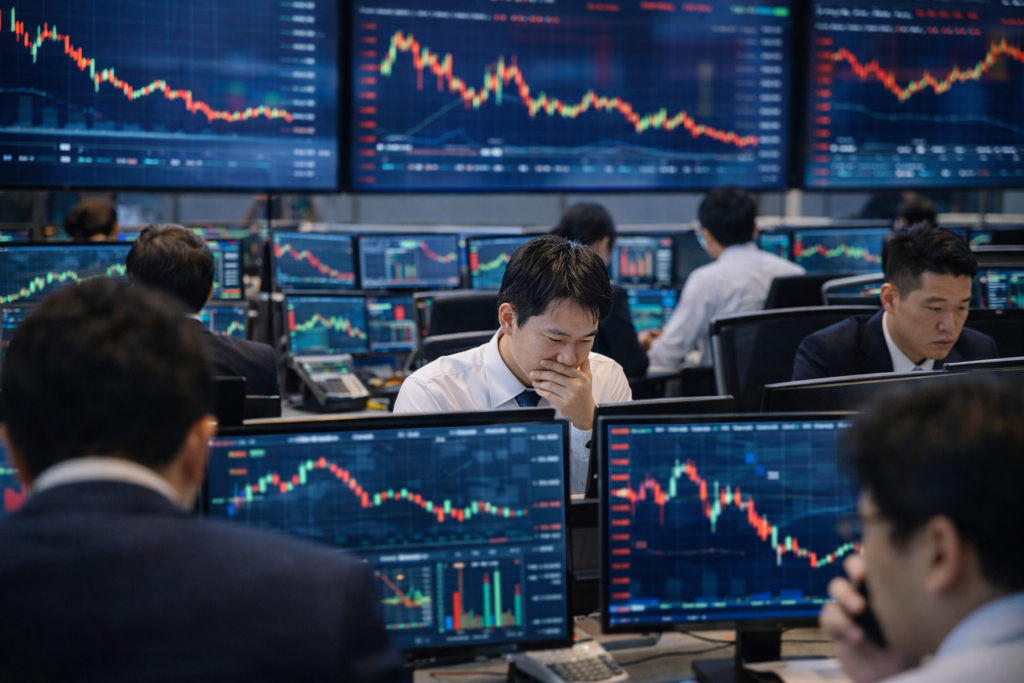

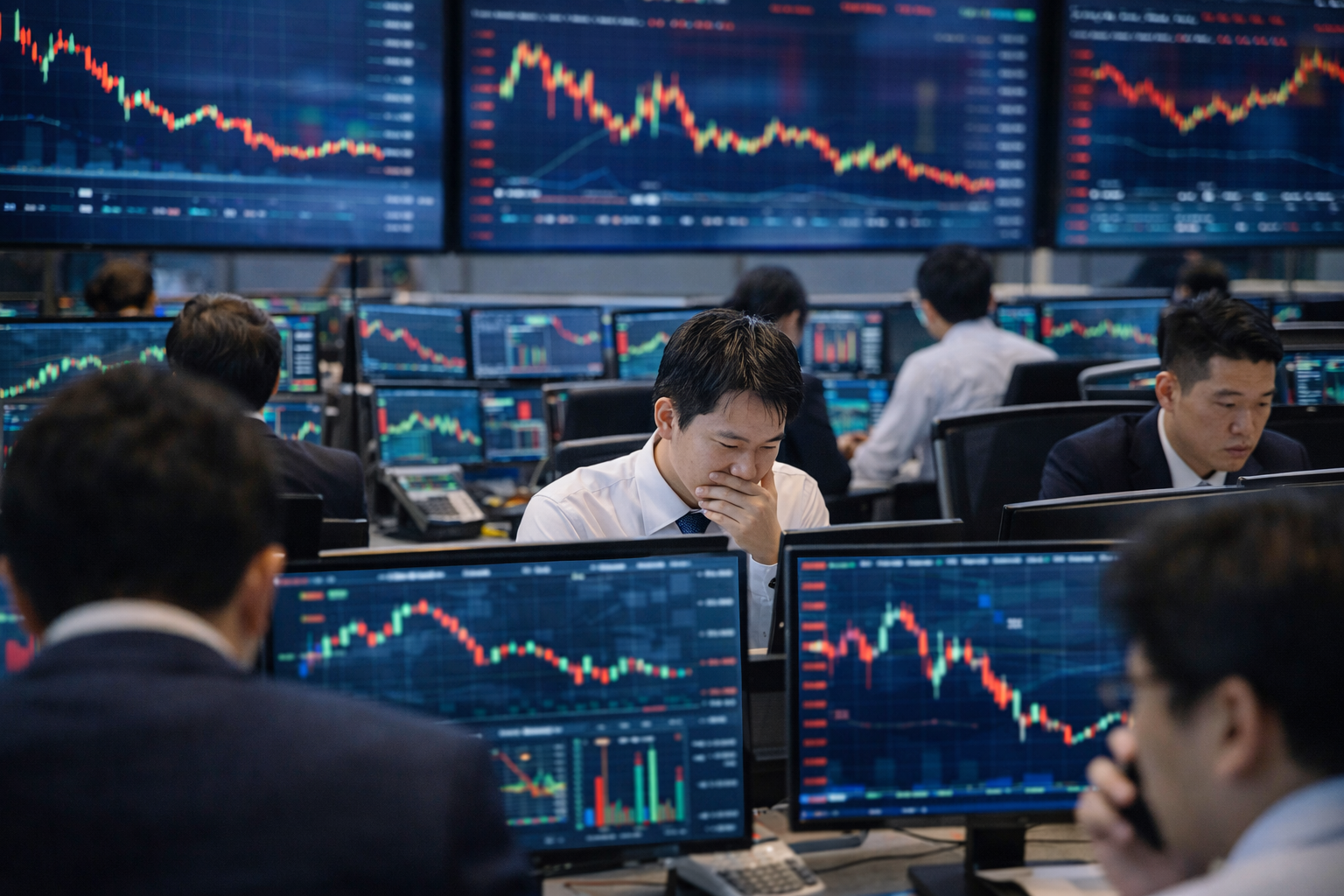
Asian markets fell sharply on Monday after drone strikes in the Gulf reportedly triggered a fire at a nuclear power facility in the UAE, lifting oil prices and reigniting fears over inflation, tighter monetary policy and slower global growth.
The renewed geopolitical tensions pushed investors away from equities and into defensive positions, while global bond yields climbed to multi-month highs amid concerns that elevated energy prices could delay central bank easing and even revive the prospect of further interest rate hikes.
Oil and bond yields surge
Brent crude rose 1.9% to $111.34 a barrel, while US West Texas Intermediate crude gained 2.3% to $107.84 after reports of the attack in the UAE and Saudi Arabia’s interception of three drones over the kingdom.
The escalation also revived concerns over the security of the Strait of Hormuz, a critical shipping route for global oil supplies.
Analysts warned that a prolonged disruption could sharply increase inflationary pressures across major economies.
Some economists estimated that if oil prices remain elevated through the end of the year, inflation in the UK and euro zone could approach 10%, potentially pushing interest rates back towards recent highs and increasing recession risks.
The sell-off in global bonds intensified as investors reassessed the outlook for inflation and monetary policy.
The benchmark 10-year US Treasury yield climbed to 4.631%, its highest level in 15 months, after rising 23 basis points over the week in its biggest weekly jump since March 2020.
The 30-year Treasury yield also hit a 15-month high at 5.159%.
Japanese government bond yields meanwhile reached levels last seen in 1996 after reports that Tokyo may issue fresh debt to fund economic support measures linked to the Middle East conflict.
Markets are now pricing roughly even odds that the Federal Reserve could raise interest rates again this year, reflecting concerns that higher energy prices may keep inflation elevated for longer.
Equities struggle for direction
Equity markets across Asia weakened as rising yields and geopolitical uncertainty weighed on investor sentiment.
Japan’s Nikkei 225 dropped 1.1%, while South Korea’s Kospi slipped further into negative territory for the year. MSCI’s broadest index of Asia-Pacific shares outside Japan also edged lower.
US equity futures pointed to further weakness on Wall Street, with S&P 500 futures down 0.6% and Nasdaq futures falling 0.8%.
In Europe, EURO STOXX 50 and DAX futures both lost around 1%, while FTSE futures were little changed.
Strategists said the recent equity rally remains heavily dependent on a narrow group of companies, particularly large technology firms tied to artificial intelligence.
According to Citi strategist Scott Chronert, a small group of roughly 20 stocks has driven most of the recent earnings upside for major US indices.
He said markets would need broader earnings growth and stronger corporate guidance across more sectors before equities could sustain another meaningful leg higher.
China data disappoints
Weak economic data from China added to the cautious mood.
China’s April retail sales rose just 0.2%, far below expectations for a 2% increase, while industrial output growth slowed to 4.1%.
The disappointing figures reinforced concerns over fragile domestic demand in the world’s second-largest economy at a time when global growth is already facing pressure from geopolitical risks and tighter financial conditions.
Dollar strengthens as investors seek safety
The US dollar strengthened against major currencies as investors sought safe-haven assets.
The Japanese yen weakened to around 158.91 per dollar, remaining close to levels that previously prompted speculation about intervention by Japanese authorities.
Gold, however, failed to attract strong safe-haven demand and slipped 0.2%.
What investors are watching next
Investors are now focused on several major catalysts that could determine the direction of markets in the coming weeks.
Finance ministers from the Group of Seven are meeting in Paris to discuss energy security, the Strait of Hormuz and supply chains for critical raw materials.
Attention will also turn to the release of Federal Reserve meeting minutes on Wednesday for further clues on the central bank’s policy stance.
Corporate earnings from Nvidia and Walmart are also expected to provide crucial insight into the strength of AI-driven investment and the resilience of consumer spending.
For now, markets remain caught between resilient corporate earnings and mounting fears that prolonged conflict in the Gulf could fuel another wave of inflation and volatility across global assets.
The post Kospi slides as Gulf strikes rattle oil, bonds and Asian markets appeared first on Invezz