


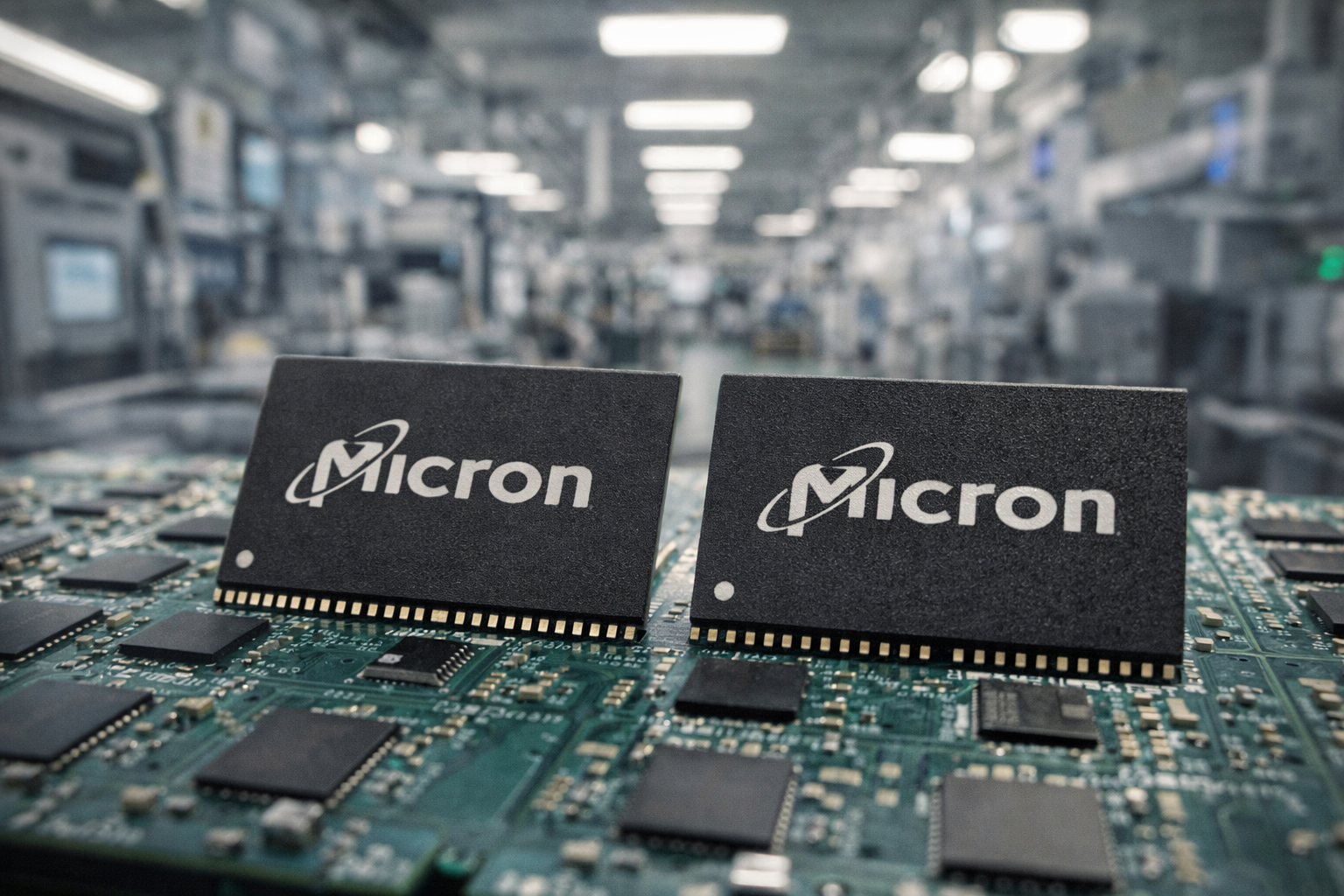
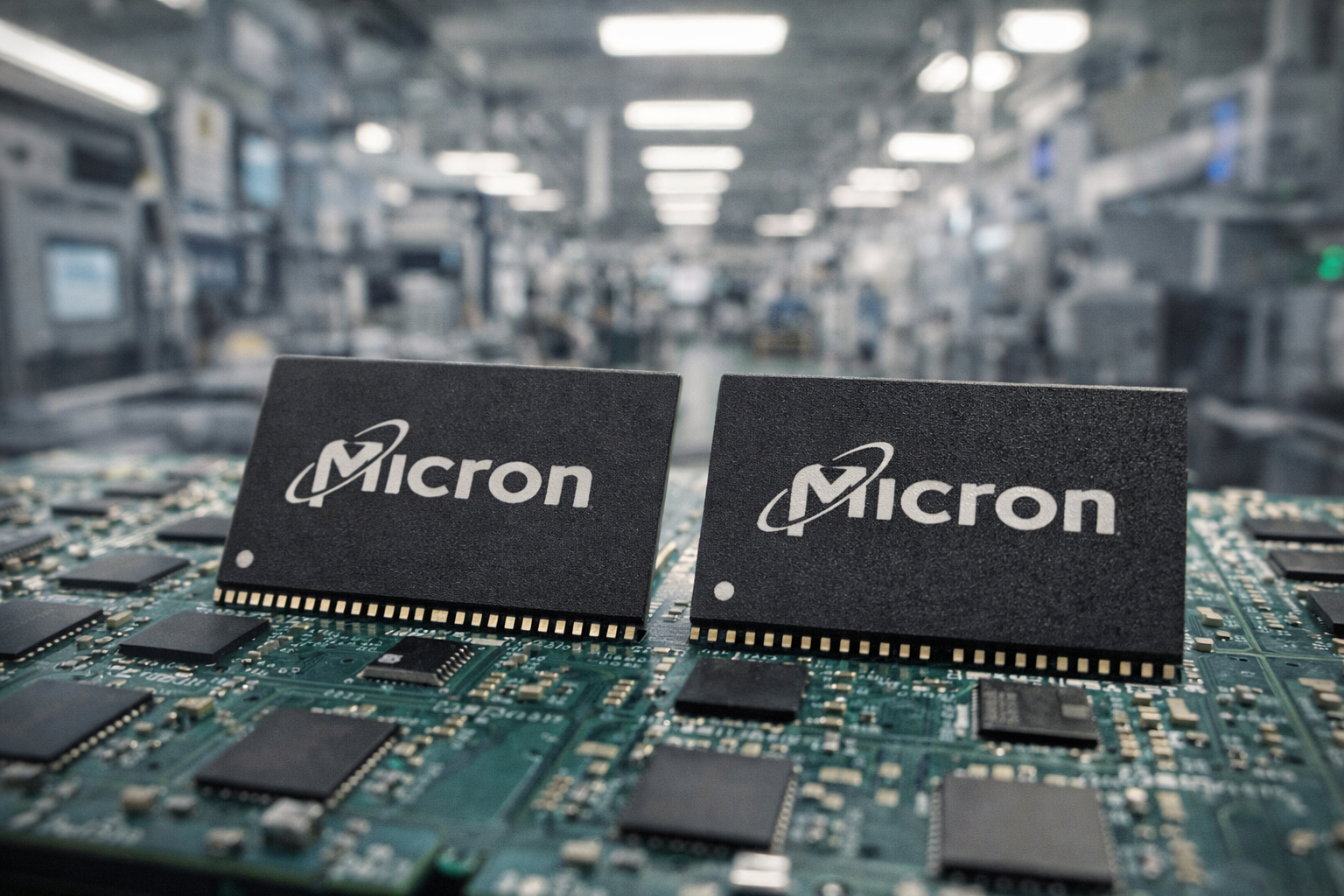
Shares of Micron Technology have come under pressure in recent sessions, extending declines alongside other memory chipmakers as investors grow cautious about the sustainability of the current memory cycle.
However, analysts suggest the recent pullback may be overdone, with structural demand drivers from artificial intelligence continuing to support the longer-term outlook.
The stock has slipped 6% on Thursday, taking the five-day decline to 18%.
The fall has been compounded by concerns that the memory boom could be nearing its peak.
At the same time, peers such as SanDisk and Western Digital have also fallen 20% and 11%, respectively, in the last five sessions.
AI demand challenges traditional memory cycle concerns
The memory market has historically been cyclical, often marked by periods of oversupply and pricing pressure.
This dynamic has led some investors to worry that rising capital expenditure and flattening spot prices could signal a peak.
However, Morgan Stanley analyst Joseph Moore pushed back on that narrative, arguing that comparisons to past cycles may not fully capture the current environment.
Looking at previous memory cycles as an analogue to the current boom “misses the point,” Morgan Stanley analyst Joseph Moore said in a Thursday note.
With artificial intelligence driving demand, supply constraints remain significant. “There isn’t enough left over for other sectors, and everywhere we look we see indications that it is a true bottleneck,” Moore said, pointing to disruptions in personal-computer and smartphone manufacturing.
This suggests that, unlike previous cycles, demand may remain more durable as AI infrastructure continues to expand.
Google’s efficiency breakthrough sparks near-term concerns
Investor sentiment was further dented after Google unveiled a new compression algorithm aimed at improving memory efficiency in AI models.
The technology, known as TurboQuant, can significantly reduce the memory required to run large language models, raising concerns that demand for memory chips could weaken.
However, analysts offered a more nuanced view. Morgan Stanley’s Moore noted that improvements in key-value cache efficiency are unlikely to materially reduce overall memory demand, particularly because such processes rely on high-bandwidth memory with fixed capacity constraints.
Other analysts pointed to the broader implications of improved efficiency. Morgan Stanley’s Shawn Kim said, “If models can run with materially lower memory requirements without losing performance, the cost of serving each query drops meaningfully, resulting in more profitable AI deployment,” he wrote.
This aligns with the concept of Jevons Paradox, where increased efficiency can ultimately drive higher overall demand.
Structural tailwinds suggest buying opportunity
Despite the recent correction, some analysts see the pullback as a potential entry point.
Micron shares have declined about 22% from their all-time highs following recent earnings, even as industry fundamentals remain strong.
Rising investment in AI infrastructure continues to support demand, with major hyperscalers such as Amazon and Google expected to collectively spend around $650 billion this year on data centres and related technologies, including memory chips.
Tight supply conditions have also supported pricing.
According to Wedbush, some memory prices could surge by more than 100% amid ongoing demand-supply imbalances, which would benefit companies like Micron.
Meanwhile, Citigroup reiterated a “Buy” rating on the stock and raised its price target, citing a bullish outlook for both the company and the broader memory market.
While near-term volatility persists due to macro and technological uncertainties, the underlying demand for memory driven by AI workloads appears intact.
For investors, the recent selloff may reflect short-term concerns rather than a fundamental shift, positioning Micron as a potential opportunity in a structurally evolving market.
The post Micron stock selloff deepens: is this dip a buying opportunity? appeared first on Invezz

