


SHIFTING ATTITUDES
High-level education has expanded rapidly in China in recent decades as an economic boom pushed up living standards – as well as parental expectations for their children’s careers.
Yet the job market that fresh graduates enter is no longer as rosy as it once was, with high youth unemployment a significant concern.
Roughly one in six Chinese between the ages of 16 and 24, excluding students, are jobless, according to official data.
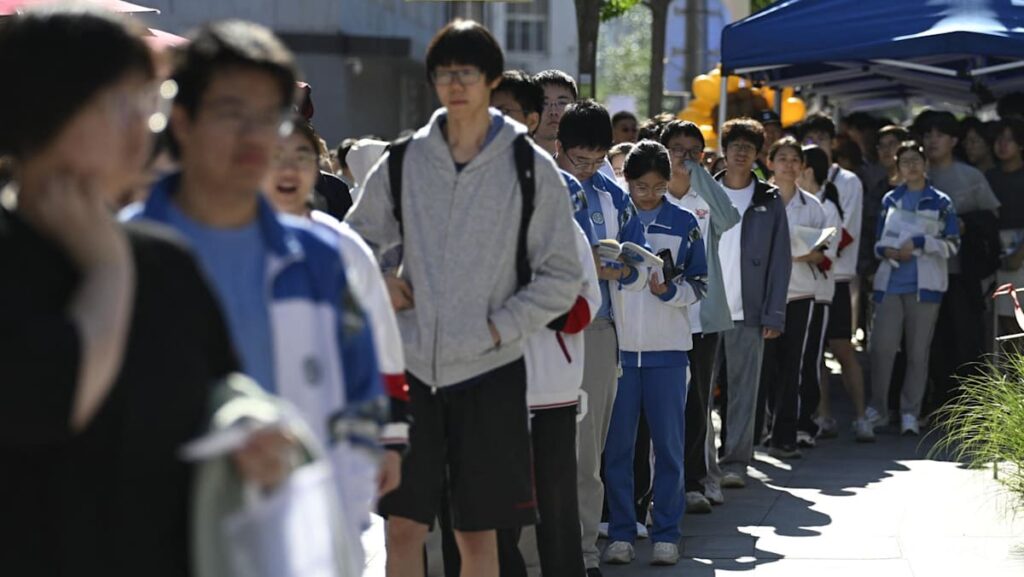
Attitudes toward the test are changing, with students and parents more and more unwilling to trade physical and mental health for high test scores.
“I’m pretty free range,” said mother Deng Ju, standing across from the exam hall holding a stack of practice books for her daughter, revising last minute with her friend nearby.
“Just perform normally; that’s enough,” said Deng, 53. “I care more about physical health; the test is just a formality.”
For Deng, whose daughter isn’t aiming for a “name school” such as the elite Tsinghua or Peking University in the capital, doing away with the gaokao would be ideal.
“No more gaokao. Let’s not gaokao anymore,” she told AFP. “But that’s impossible,” she said, smiling.