


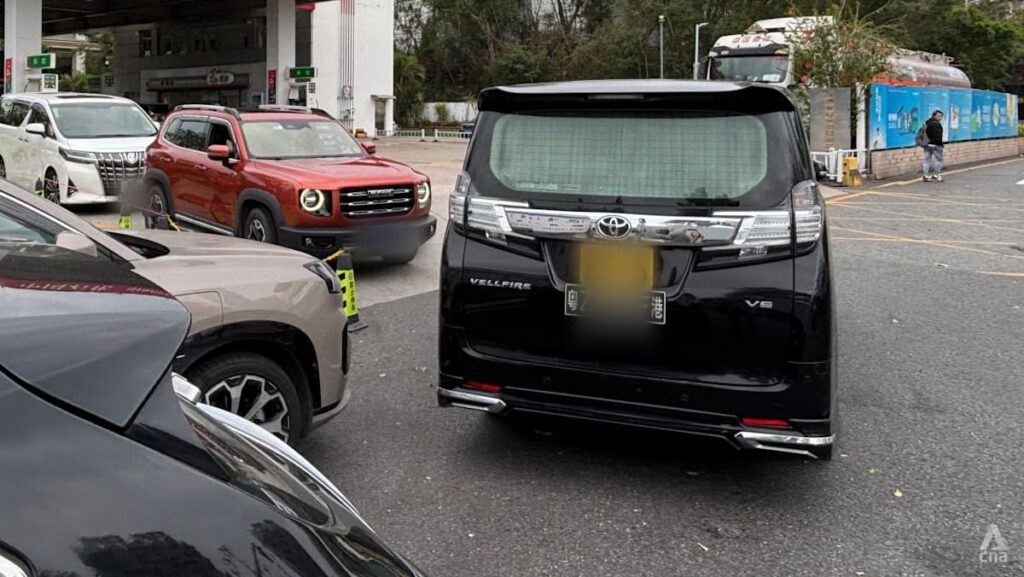
Lai said cross-border refuelling is often tied to broader travel patterns rather than driven solely by cost savings.
“In this context, refuelling (petrol in mainland China) is seen as a secondary convenience of the trip, meaning people will continue to do it even if the financial benefit is marginal,” he added.
Instead, drivers who do not regularly travel to the mainland may turn to alternatives like electric vehicles (EVs) if petrol prices remain high.
Chin, the 55-year-old driver, is among those who have made the switch.
“Petrol prices in Hong Kong are too high but driving to the mainland just to refuel takes too much time,” he told CNA.
He has since switched to an EV, under a government “one for one” scheme that offers tax incentives for replacing older petrol cars.
“Now that the economy is not doing so well, I will save (as much as I can) save,” he said.
BUT IS IT WORTH THE TRIP?
For Hong Kong drivers, the cost effectiveness of pumping petrol across the border also depends largely on the type of vehicle and how trips are made.
“It is tied to fuel tank capacity and fuel efficiency,” said Lai from PolyU.
Larger vehicles like SUVs or 7-seaters, with tank capacities of up to 90 litres, stand to benefit more, Lai added.
Even so, time cost can offset any savings.
“The trade-off of sacrificing several hours just to save a few hundred dollars” means efforts “don’t always pay off”, said Lai.