


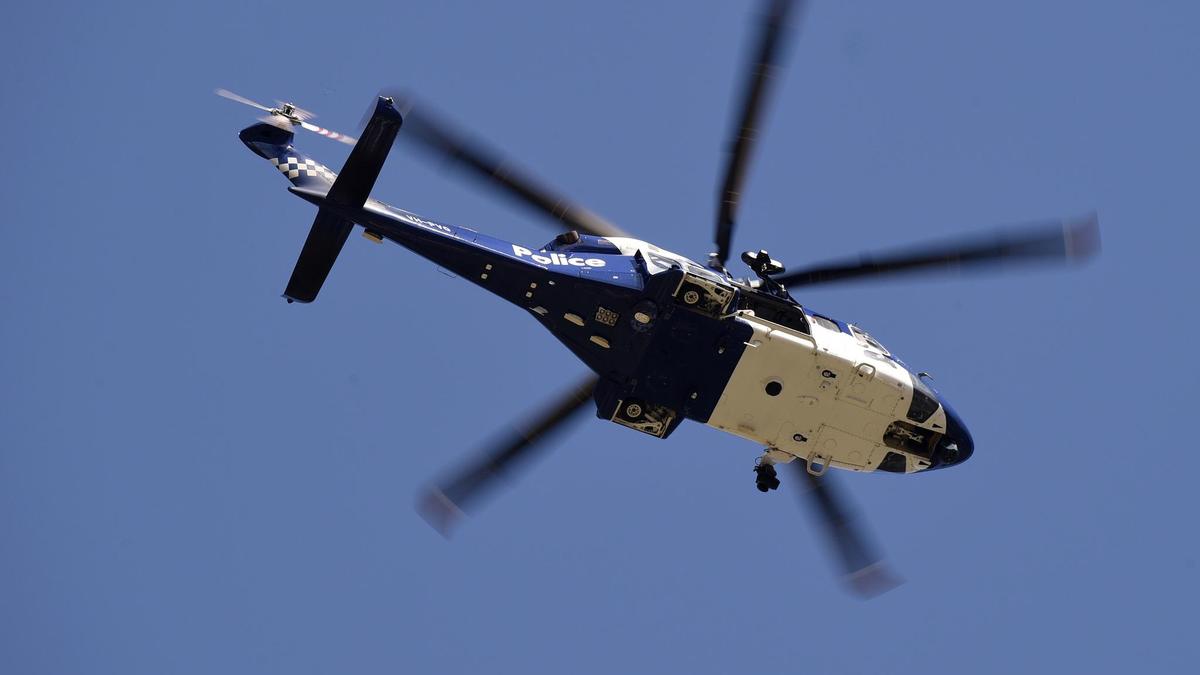
Dezi Freeman is one of the few Australians who managed to evade the grasp of police for almost a year before his capture and death.
For more than seven months, the double cop killer was in hiding among Victoria’s dense and challenging bushland, sparking major questions about he was able to evade officers for so long.
On Monday about 8.30am, the mammoth manhunt for the self-proclaimed “sovereign citizen” came to an end.

Officers from the Special Operations Group (SOG) swarmed a shipping container on a property in Thologolong on the Victoria-NSW border.
WA’s biggest courts and crime stories to your inbox
Sign-up to our weekly newsletter for free
Sign up
For three hours, SOG officers tried to negotiate with the fugitive.
However, when he failed to exit peacefully, officers in a BearCat used a “claw” to launch flashbangs into the structure, forcing Freeman outside in nothing but a blanket and wielding a handgun – believed to be stolen from one of the officers he killed in August.
He was then shot more than 20 times and left looking like “Swiss cheese”, a police source told the Herald Sun.
Freeman’s death marked the end of a seven-month saga that gripped the nation.
As one of most wanted men in Victoria’s history, he was one of four significant fugitives who have managed to evade police for extended periods of time.


Lack of digital footprint hindered police search
Macquarie University criminologist and former police officer Vincent Hurley told NewsWire Freeman’s regional location made it “incredibly hard” for police to track him down.
“If that was to happen in the city then there’d be a (load) of CCTV,” he said.
“He’d be on public transport, so he might have to use his (Myki) card or the equivalent to get around. There would be automatic face recognition in shopping centres.
“The fact that he’s gone bush or went bush means that there is no electronic footprint to follow, which means that it (was) incredibly hard for police to actually try and find him.”
Dr Hurley said police would have had to resort to old-school tactics to try and hunt him down.
“(Detectives were) resorting back to basic bush skills of searching, grid searches or spiral searches, or whatever search they used to try and contain him, which he obviously slipped through,” he told NewsWire.
“So it actually goes against the grain of what police are traditionally used to.”


How did Freeman evade police for so long?
While the hunt for Freeman required plenty of old-school police work, new technology was used to locate the fugitive in hard-to-reach places.
However, changes to the seasons would have impacted their effectiveness, Dr Hurley said.
“In summer, police would have used drones or aerial surveillance, (which) picks up thermal imaging of the body heat of an individual,” he told NewsWire.
“So in winter, he would have been fairly easy to find if he was out in the open, but if he was in the cave then they wouldn’t be able to find him because of thermal imaging.”
Dr Hurley said the fugitive likely “found somewhere to go” – be it in a cave or on the ground – anywhere that wouldn’t get picked up by thermal technology.


Dr Hurley said Freeman’s movement of about 200km wasn’t that surprising, either, considering his “sovereign citizen” ideology.
Generally speaking, sovereign citizens exclude themselves from the rest of society in almost every aspect.
They don’t think they need to obey the rules and laws that other Australians follow, be it having a car registration or paying taxes.
Others become “preppers” – proactively preparing for disaster by hoarding stashes of food and supplies, becoming equipped with survival skills and sometimes harbour themselves in bunkers.
“If he was a ‘prepper’ as they say … that would sustain him for an extra period of time,” Dr Hurley said.
Freeman’s “drive for survival” would have pushed him even further.
“His greatest motive for survival would have been being a sovereign citizen, because he’s wedded to that political ideology that the state, police, courts and government, are ‘never going to find me’,” he said.


Did police know he was alive?
Earlier in 2026, Victoria Police said they had strong belief that Freeman was already dead.
“We do believe strongly that he is in this area deceased,” Detective Inspector Adam Tilley said in January.
Obviously, this wasn’t the case.
Dr Hurley believed that police were under the impression Freeman was dead due to a lack of confirmed sightings, and didn’t try to use the message to lure Freeman out.
He said it was unlikely police lied about this piece of evidence, lest it fractured trust with the community.
“I genuinely believe that that’s what they thought, because there was nothing else to suggest otherwise that we know of at this point in time anyway,” he told NewsWire.
Instead, he argued Freeman probably believed he could “outwit” the police by staying underground as long as possible.


Freeman joins list of infamous fugitives
Freeman is not the first person to evade police following a heinous crime in Australia.


Bank robber Brenden Abbott, who was nicknamed the “Postcard Bandit”, made headlines when he escaped Fremantle Prison in 1989 and spent more than five years on the run before he was recaptured in 1995.
He made another dash from Sir David Longland Prison in Queensland in 1997 and was on the run for six months before he was discovered.
Darko Desic was an inmate at a Grafton jail who escaped incarceration in 1992 and was on the run for almost three decades.
He was homeless and living in the sand dunes in Sydney’s Northern beaches when handed himself into police in 2022.


Another infamous long-term fugitive is Malcolm Naden, who murdered two young women, assaulted another girl and attempted murder of a police officer in NSW in 2005.
For seven years, Naden was on the run from police, hiding in bushland in Gloucester and Scone, before he was captured by authorities in 2012.
John Bobak evaded police after allegedly murdering two people at a unit on the Gold Coast in 1991.
More than 30 years since the alleged murders, Bobak is yet to be captured by police.

