


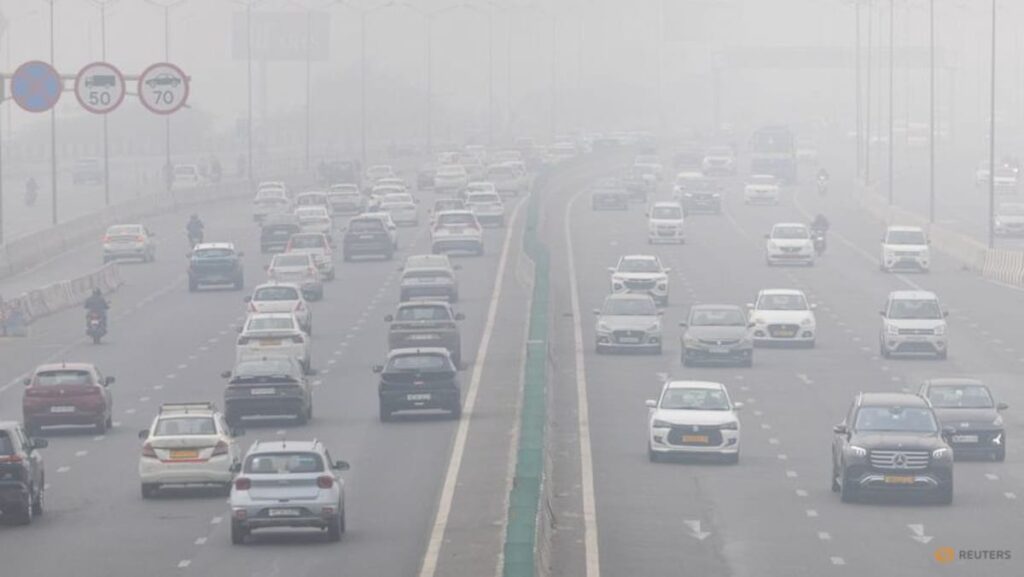
Delhi’s government has already rolled out a range of pollution-control measures over the past month, including a ban on rubbish burning and restrictions on food stalls using coal or firewood.
But similar efforts in previous years have done little to prevent the annual smog that engulfs the megacity from November to January, when cooler temperatures trap pollutants close to the ground.
Major sources of pollution include vehicle emissions, coal-fired power plants, industrial activity, construction dust and the burning of crop residue in neighbouring states.
Vehicles account for 23 per cent of Delhi’s winter pollution, while biomass burning, including farm stubble fires, contributes 20 per cent, according to India’s environment ministry.
Industry, including coal-fired power plants, contributes about 9 per cent.
Levels of PM2.5, tiny cancer-causing particles that can penetrate deep into the lungs and bloodstream, frequently exceed 300mcg per cu m during peak winter months, around 20 times the World Health Organization’s recommended daily limit.
In 2025, pollution levels peaked at 846mcg per cu m, or 56 times the WHO guideline.
On Nov 1, monitors recorded PM2.5 at 201mcg per cu m, over 13 times the safe limit, a reading that was likely helped by intermittent rain over the last few days.
A 2024 study published in The Lancet Planetary Health estimated that 3.8 million deaths in India between 2009 and 2019 were linked to air pollution.