


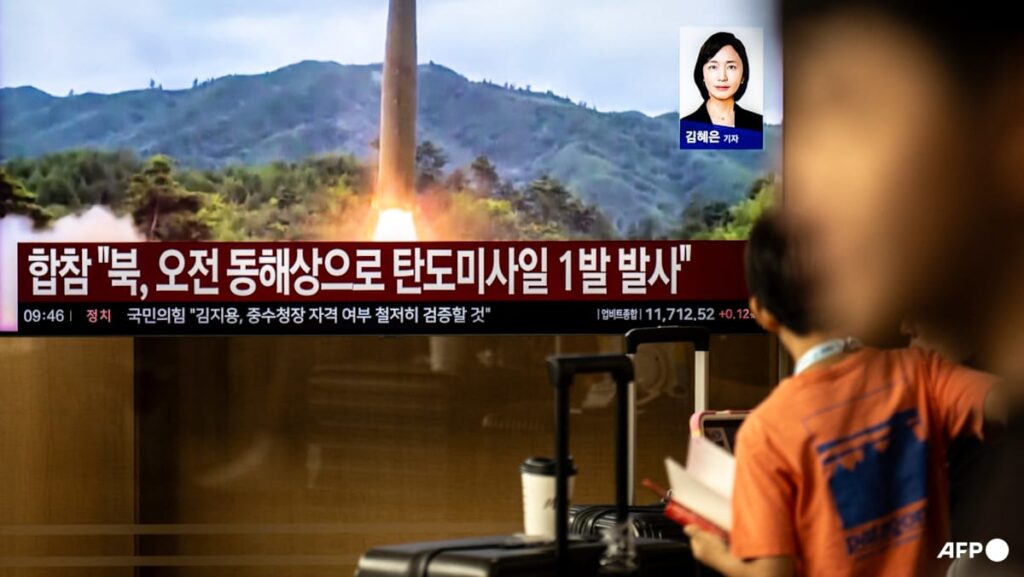
Kim Yo Jong, the powerful sister of North Korean leader Kim Jong Un, said the North’s Oct 3 launch featured a missile “capable of changing its flight orbit at a low altitude and AI was introduced into it”.
Seoul said days later that it had tested a domestically produced hypersonic glide vehicle (HGV), a weapon carried into the upper atmosphere by rocket boosters or ballistic missiles before gliding towards its targets.
South Korea’s presidential office said the HGV offered “a new deterrence capability capable of striking key targets within the Korean Peninsula’s operational environment”.
Since the Sep 21 landmine incident, Seoul has demanded an apology, something Kim Yo Jong has blasted as “despicable”, while rejecting a planned transfer of medical equipment from Seoul.
“If they (South Korea) truly wish to restore relations between the DPRK and South Korea, they should be mindful of the other side’s feelings in every word and deed, and first demonstrate the utmost respect, consideration and sincerity,” she said Thursday, using her country’s official acronym.
The DMZ is one of the world’s most heavily fortified frontiers, and landmine incidents have previously heightened tensions between the two Koreas.
Seoul and Pyongyang remain technically at war since the Korean conflict ended in 1953 with a truce, not a peace treaty.