


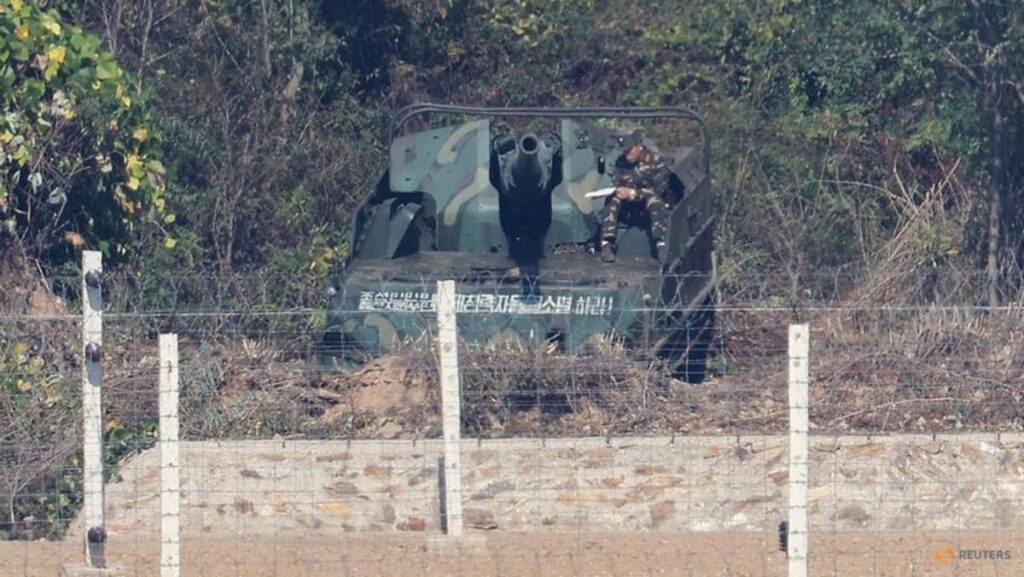
The DMZ remains a draw for foreign and local tourists despite periodic flare-ups in tensions between the two Koreas, which remain technically at war.
Hannah Robbins, a 28-year-old tourist from Canada, said her tour group had only found out about the artillery pieces after their guide told them about the weapons at the observatory.
“We’re a bit scared obviously,” she said. “The tour guide was like ‘don’t worry, they won’t shoot’ but then it’s a bit of a worry that we have right now.”
Analysts identified the weapons as M-1981 122mm self-propelled howitzers, an older North Korean artillery system believed to have entered service in the late 1970s.
They have a maximum range of about 24km, putting areas such as the South Korean town of Gimpo where the observatory is located within reach, although they are less powerful than newer artillery systems, said Yang Uk, a military expert at Seoul’s Asan Institute for Policy Studies.
“I would view this more as a display of firepower than a meaningful increase in combat capability,” Yang said.
“The fact that it was positioned where it can be easily seen suggests it was deployed to be noticed.”
South Korea’s military also described the weapons as an older system.
“While North Korea has mentioned new weapons systems in its recent statements, we believe that this cannot be considered as such,” Seoul’s Joint Chiefs of Staff spokesperson Jang Do-young told a briefing on Tuesday.