


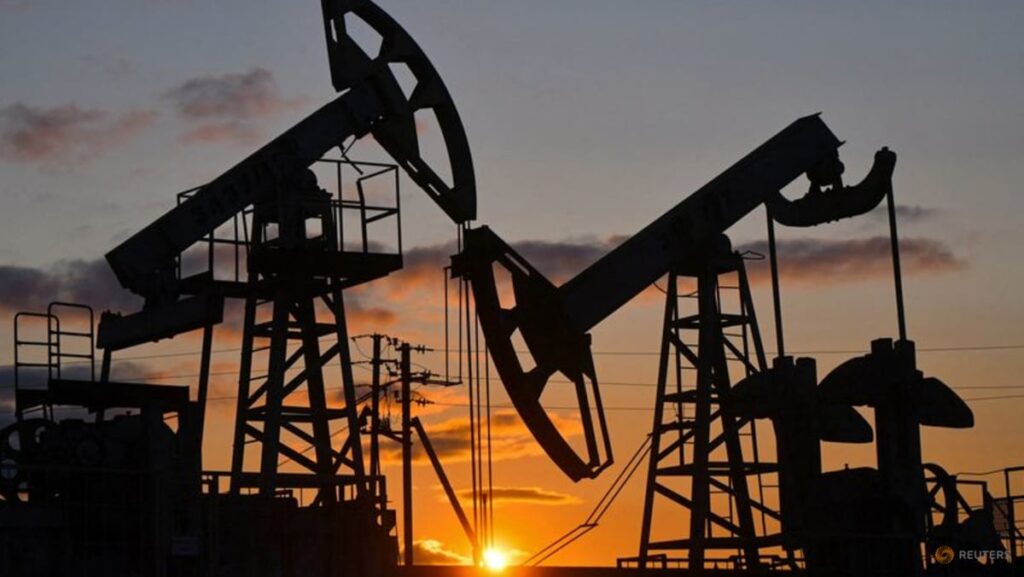
HONG KONG: Oil prices jumped more than 4 per cent Monday (Jul 13) after another flare-up between the United States and Iran that threatened their already fragile truce, while South Korean stocks plunged as tech firms were hit by a fresh rout.
The renewed hostilities in the Middle East followed last week’s exchange of fire and came as negotiators struggle to reach a lasting peace deal to keep the crucial Strait of Hormuz open.
The US military launched a new wave of strikes on Sunday after renewed fighting over the waterway saw several of Washington’s Gulf allies targeted.
Both main oil contracts, which have tumbled since the announcement of the agreement, spiked as much as 4.5 per cent, fanning fresh concerns that inflation – already elevated because of the war – could force central banks to hike interest rates.
The renewed fighting followed an Iranian attack on a commercial ship in the strait early on Sunday, with the crew forced to abandon it after it went up in flames.
Iran’s Revolutionary Guards said after the incident that “the Strait of Hormuz will be closed until further notice and until the end of American interventions in this region”, according to state news agency IRNA.
CENTCOM countered on X that the strait was “open to all vessels seeking to lawfully transit”.
“One can easily imagine the situation spiralling quite rapidly,” said Fawad Razaqzada, a market analyst at Forex.com.
“Of course, rhetoric can soften. We’ve seen that movie before. But for now, traders are forced to assume the worst.”
But while the resumption of hostilities has led to another spike in crude prices, IG analyst Fabien Yip said they were unlikely to hit the lofty levels that followed the outbreak of war on Feb 28.
“Oil’s return towards pre-war levels in June reflected markets pricing in a best-case outcome for the fragile US-Iran arrangement,” she wrote, adding that the “re-escalation exposes how fragile that assumption was”.
“Near-term, the risk premium should keep prices supported, though a repeat of the earlier spike appears unlikely, as demand remains slow to recover while stranded-tanker releases and OPEC+ output quota expansion continue to add barrels to an already oversupplied outlook.”