


EMERGENCY DELIVERIES BEGIN
In the hardest-hit districts, helicopters are dropping tents, food and other emergency supplies provided by neighbouring India, said Raja Ram Basnet, a spokesperson for Nepal’s army.
More than 5,000 army and police rescue personnel joined the rescue effort that retrieved 125 people on Thursday, including 20 foreigners, he said.
Nepal’s Prime Minister Balendra Shah left by road to assess the flood situation in one of the worst-affected districts of Nuwakot, his office said on social media.
Early reports from Nepali officials suggested an earthquake in the area could have caused the lower part of a glacier to collapse and trigger the floods.
The US Geological Survey said an earthquake with magnitude initially reported as 4.4 was in fact seismic energy generated by the collapse of glacial rock and ice, followed by debris flow.
Chinese authorities have identified risks from a still-dammed lake in Gyirong, upstream from the mudslide and flood-stricken Tibet-Nepal border crossing that could complicate rescue efforts, particularly as rains are forecast, CCTV said.
Last July, the rapid drainage of a lake atop the Purepa glacier in Tibet unleashed deadly flooding in Nepal.
Many of this week’s victims were pilgrims headed to Kailash Mansarovar, a high-altitude site in Tibet revered by Hindus and Buddhists, among others.
Mount Kailash, which Hindus believe to be the abode of Lord Shiva, lies on the banks of Lake Mansarovar and is also held sacred by many.
Sagar Pandey, the chief executive of a Himalayan tourism operator, said 15 Indian-Australians on a pilgrimage tour with the company were missing.
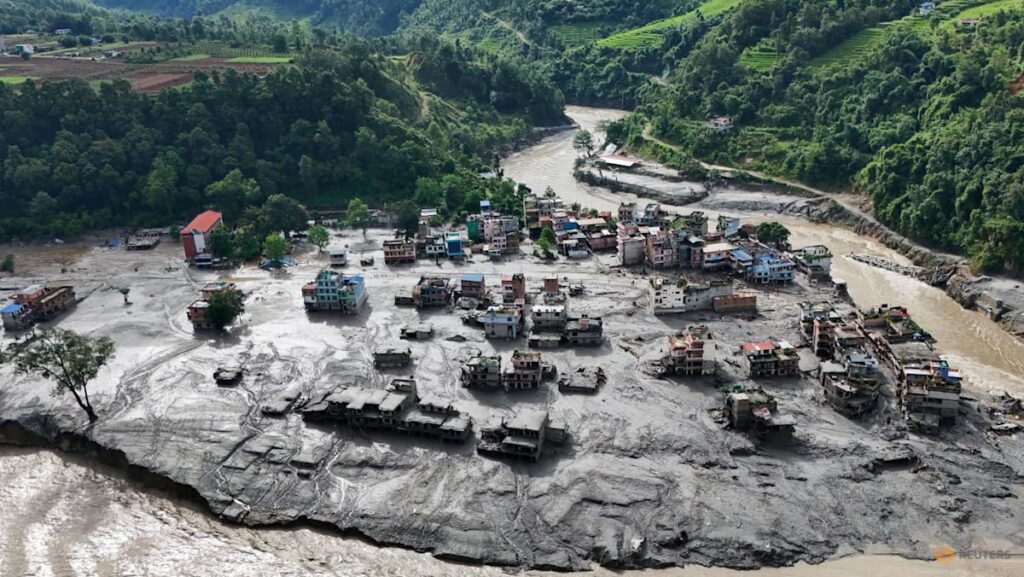
“There are no human-made things, no human settlement left. Everything is just flat,” he told Reuters after flying over the zone in a helicopter. “So anyone in the hotel, the restaurant, or the car, I believe that everybody is gone.”
Australian Prime Minister Anthony Albanese said details on the disaster were scant.
“Nepal … is a developing country,” he said. “It doesn’t have the resources that an event like that would have in Australia, so information is difficult.”
The US State Department said it was sending a disaster response adviser and providing assistance of US$500,000.
Canada was also closely following the situation, Prime Minister Mark Carney said on X, describing the floods as “absolutely devastating”.
UN teams and partners were sending supplies and personnel to support affected Nepali communities, Secretary-General Antonio Guterres said.