


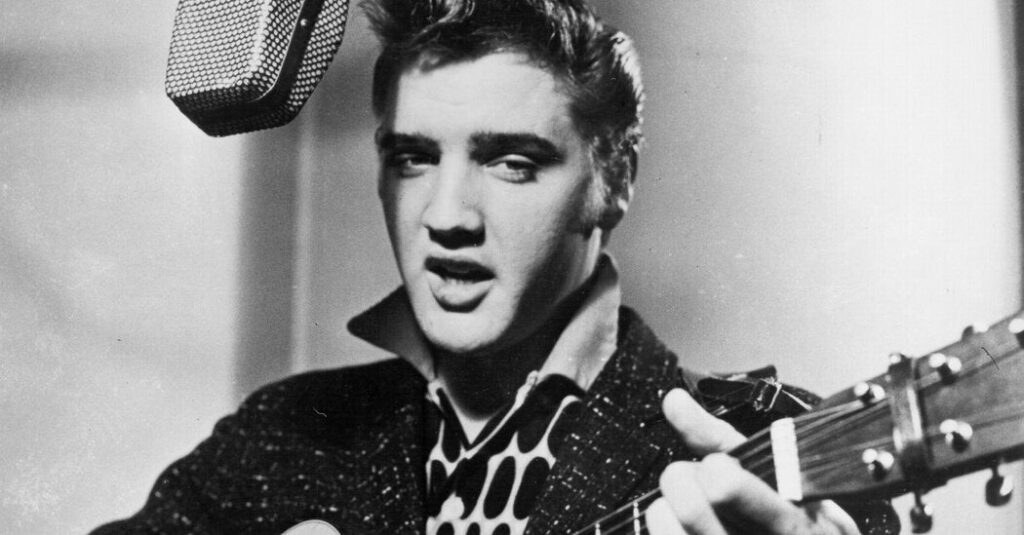
The owners of Elvis Presley’s music sued the artificial intelligence company Anthropic, saying it trained its models on more than 200 of Presley’s songs without their permission, and accusing it of copyright infringement.
The suit, filed on Friday in the U.S. District Court for the Northern District of California on behalf of several parties, seeks a jury trial and more than $41 million, or $150,000 per song, in damages.
The owners of the music, who include the licensing company Authentic Brands Group, Raleigh Music Publishing, multiple trusts and at least one individual, also accused Anthropic, the company behind the popular chatbot Claude, of circumventing measures used to protect the music and removing or altering copyright management information from the songs.
“The Elvis plaintiffs bring this action to enforce these exclusive rights against the defendant that has built its entire business model based on copyright infringement at a scale never seen before,” the lawsuit said.
Anthropic infringed on 274 of Presley’s songs, the lawsuit contends, including hits like “All Shook Up,” “Can’t Help Falling in Love” and “Return To Sender.”
A representative for Anthropic said in a short statement on Sunday that the company disagreed with the claims and that it intended to defend itself against the case.
A lawyer representing the owners of Presley’s music did not immediately respond to a request for comment.
Last week, the music company Reservoir sued Anthropic, accusing it of stealing copyrighted lyrics and melodies from songs like “Big Yellow Taxi,” by Joni Mitchell, and “Papa Don’t Preach,” by Madonna, as well as songs by Kings of Leon and Evanescence. Anthropic told Billboard magazine that it disagreed with the allegations.
Anthropic was also sued for $3 billion by Universal Music Group in January. UMG claims that the A.I. company built Claude using “pirated libraries” of songs. This month, Anthropic asked a judge in the case to rule that its actions are protected under fair use laws.
The A.I. music company Suno, whose song creation tool has divided the industry, has faced its own copyright lawsuits from record labels. That company repositioned itself as a partner to those labels and artists, and released an A.I. model trained on songs licensed from the Warner Music Group. Warner settled its suit against Suno, though UMG and Sony have so far not done the same.
In the wider landscape of A.I. and the music industry, there are continuing discussions over whether artists should adopt the technology, the ethics around its use and the demand for guardrails for musicians.
Other industries are also grappling with A.I. The New York Times has sued the artificial intelligence company OpenAI and Microsoft, claiming copyright infringement of news content related to A.I. systems. The two companies have denied those claims.
In the lawsuit concerning Presley’s catalog, the plaintiffs say they are “deeply protective” of the music, describing it as “some of the most valuable in the world” with “some of the most renowned lyrics and melodies in music history.”